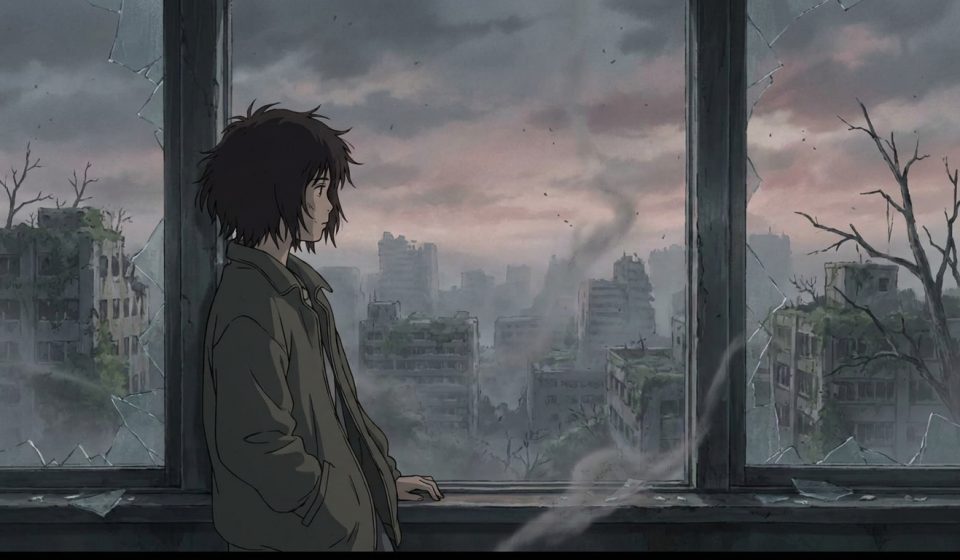

From the first note of birdsong that never came, Yume Arai knew it was over. The world had fallen under a bone-pale sky, dead still, the wind choked silent. Do you remember the last time the sun felt warm? She pulled her threadbare coat tight and peered past the burnt window, searching for hope while her lungs burned with sour ash.
Yume wanted to find her little sister, no matter what. She had not seen Nao in two days, since the blackout. Every sure thing—the train, the water pump, phone lines, town clocks—stopped at 3:44 am when the cloud came. The city was now a husk picked over by those left behind, each haunted by strange sounds in the mist. Is surviving without hope still living?
Sumire, the half-wild girl with storm-dark hair, found Yume when dusk came like a bruise. “Get down!” she hissed, yanking Yume to the crawlspace as the first walkers shambled past. Their faces were velvet gray, mouths slack, eyes glossy in odd light.
Sumire had sworn never again to trust anyone. And yet, she didn’t let Yume wander off—fear and sorrow held them both. Maybe company beats being a ghost. Still, trust had a price, and Yume wasn’t sure if she could pay it.
A bitter silence settled through the city each night. The girls made for the old music school, hearing odd slow notes—a music box melody that rang unlike any made by human hand.
“The songs used to be joy,” Sumire muttered, knuckles white on her bat. “Now they just lead them to us.” Her lips trembled, but Yume pressed on. At the locked doors, a figure leaned against the washed-out wall—a man with paint on his face and a crude violin shaped from pipes.
“If you’re looking for a child,” he crooned in weird singsong, “sometimes you must walk backward to go forward.” The sound hung heavy. Was he mad or the only sane one left?
They joined him in a cold, singed lobby. Ryo Ohmuro, a former street performer, talked in stories: he’d seen Nao, glimpsed her clutching a red scarf while following the hidden passage to the gym.
“You risk the music. It needs souls it can’t grow itself.”
Yume’s heart burned. Sumire snapped, “So what, we trust some circus clown?”
But the music got softer—almost kind. Wind kicked up cinders outside; shapes darted around. Doors wouldn’t budge. Nails on wood, then words:
“It’s listening again. Loud, hurt, and wide.”
They’d have to sleep in shifts and chance a run at dawn, when the shadows seemed more calm. Yume willed herself to hope for just one more day with her sister.
Then midnight. Nao’s scarf blew through the broken window. The music grew sharp—a lullaby sucking all the warmth from air. Something pounded down the hall.
Yume jumped up as Nao’s faint voice called from somewhere deep, close—but warped. Ryo’s face fell. “It wants you more than it wanted us.” 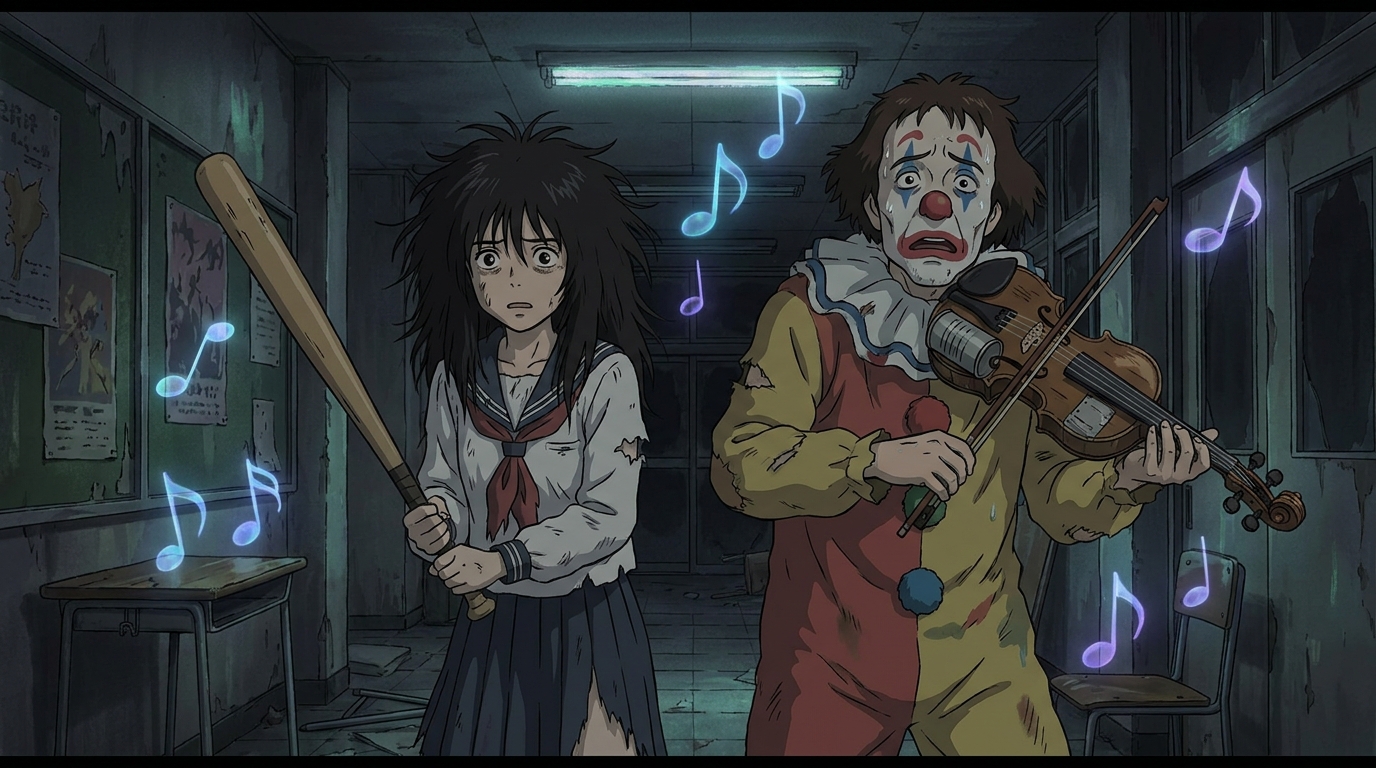
Sumire grabbed Yume and pulled open the back, but the view was a sprawl of walkers, all eyes lit with blue fire. The violin shrilled a warning, and the floor caved under them. They fell through rotten beams to darkness, shrouded from the song—for now.
Last scene ends on Yume’s wide, wet eyes as a distant, too-bright child shape calls, “Help me…” and darkness answers before screen cuts to black, music humming with hunger.