
Synopsis
Kaede Suzuki grabs her phone. The blaring vent above the kitchen sings louder. It’s 2:09 a.m. Screams echo from the walls. But tonight, it’s not the pipes. It’s something much closer.
She runs her fingers on the cheap wood flooring. Superstitious guests leave tiny salt heaps at each doorway, but her parents hate mess. Her brother, Shoma, tells her it’s normal. They’ve rented this creaking house for six months. Every night feels off. Have you ever lived somewhere that seemed to flinch in your shadow?
Shoma shows Kaede a threadbare old journal he’s found behind the stove. Dark smudges cross the cover. Inside: page after page says “Let us in under.” Half the pages scrape like they were clawed out. “It means nothing,” Shoma laughs. Kaede doesn’t laugh. Not tonight.
As she sweeps outside, neighbors watch. An older man, Mr. Amari, talks keen about how all houses here were built wrong. “They didn’t leave blessings beneath. Now something else gets in first. You wake up and it’s beside you.” He won’t say more.
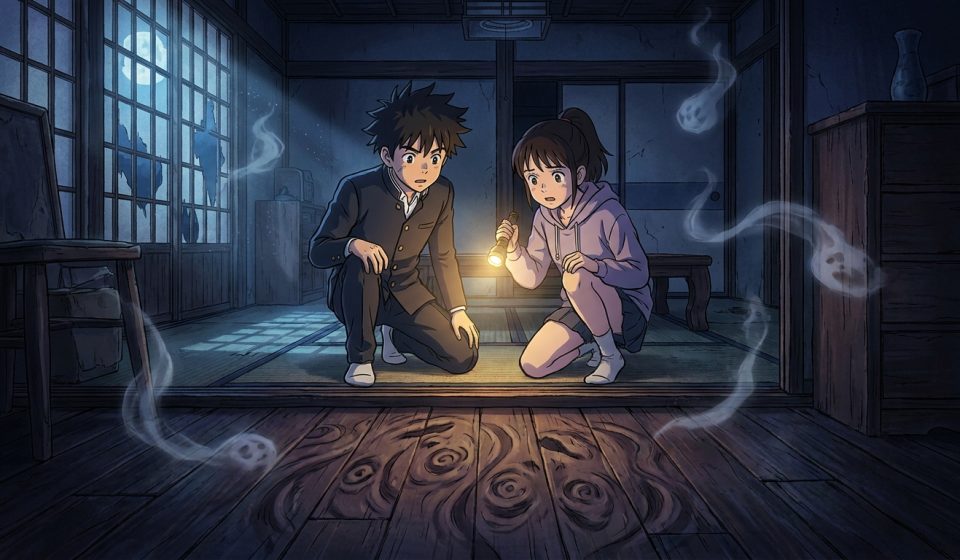
Night presses in. The house shifts around her, planks like old skin. Doors barely stay closed. She texts her friend Haru: “Come over. This place feels bad.” Haru, with her six cat keychains and rusty pocket knife, sneaks in at midnight. They count steps—twelve between bathroom and Kaede’s narrow bed. At the twelfth step, the air cools. Haru mutters about giving the place a name.
Yumiko, Kaede’s mother, catches Haru laying coins on each sill. “We don’t have ghosts here, girls.” But her hands shake with the keys. Haru spreads out the journal. “Why would anyone write that?” she asks. Kaede presses her ear to the floor. It’s like someone whispers gentle, hateful things down there.
Mr. Amari’s warning means less after the long, strange years he’s lived alone. But Kaede can’t rest. She hears the voices humming in nails and knots. Weird stains slip along her window come morning.
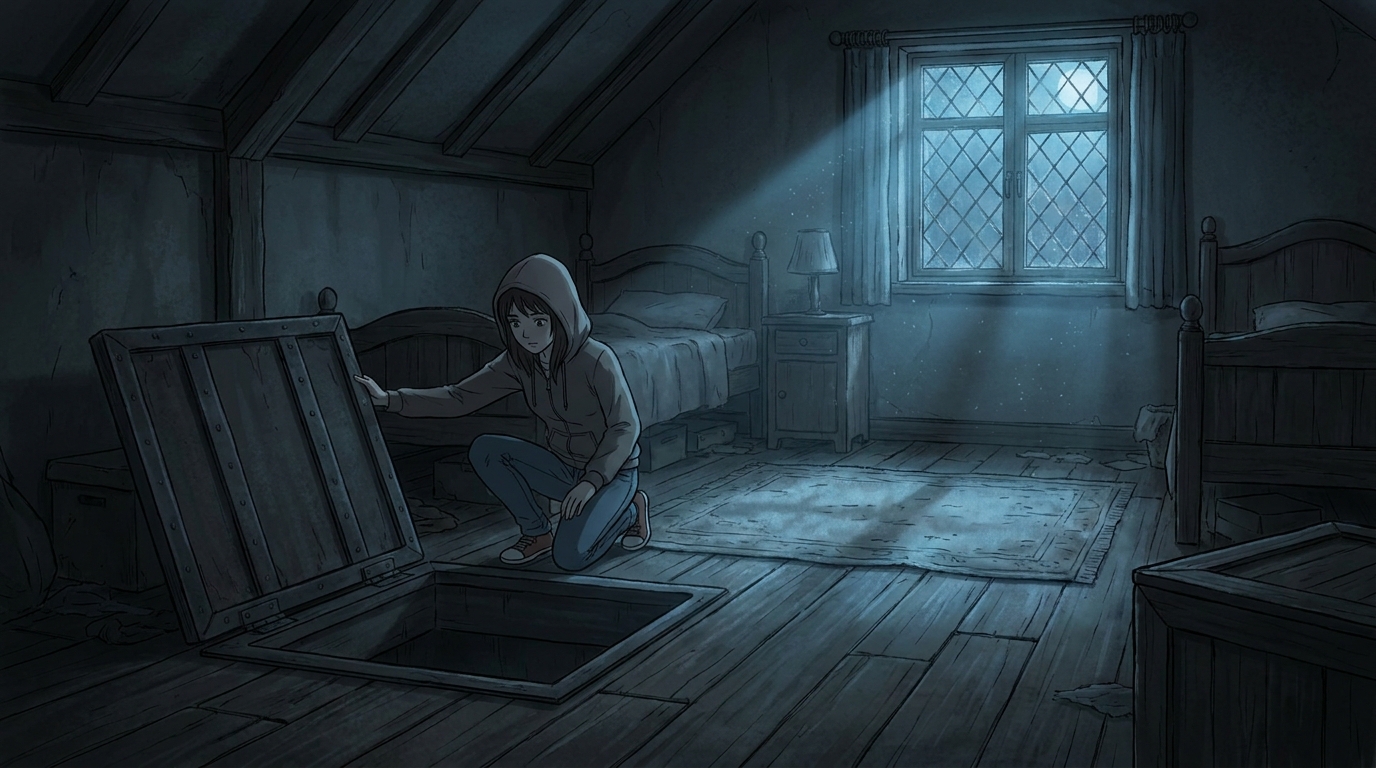
Yumiko wakes gasping, thick brown mud caked on her neck. Shoma jokes it away, but leaves for two days. Kaede and Haru search under everything. There’s a hatch beneath her bed. A single ring-pull glints there—a door none of them remember. The dog barks all night, something clawing at its chain.
Will they open the hatch? Did you ever want to know what’s under your floor at 3 a.m. and decide not to?
They wait for dawn. The mud returns again and again. The new lock on Kaede’s door cracks from inside. Journal pages now read names—hers, her mother’s, Shoma’s—over and over, faded to pale grey wax. Kaede wipes away bugs each dusk. More come crawling out of secret lines pressed in wood.
They open the hatch with a screwdriver and prayer. It gapes, musty with fog and hair. Their gasping light lands on dust, sharp fragments. Then rough, damp voices greet them in the dark, promising wishes for the right kind of trade.
The house’s old electricity fevers; black stains rise on every wall. They watch as Yumiko stumbles sleepwalking, her eyes bleeding thin tears of mud. Kaede calls Shoma, frantic.
“If something wants to come through, don’t help it,” Mr. Amari calls out the next day. Haru leaves a bronze charm behind, swearing it keeps evil out. No one sleeps after that.
That night they lock every window. But around three, Kaede wakes to breathing where her pillow is. Something has stolen into her dreams and asks her calmly to let it inside for just a moment. What would you say?
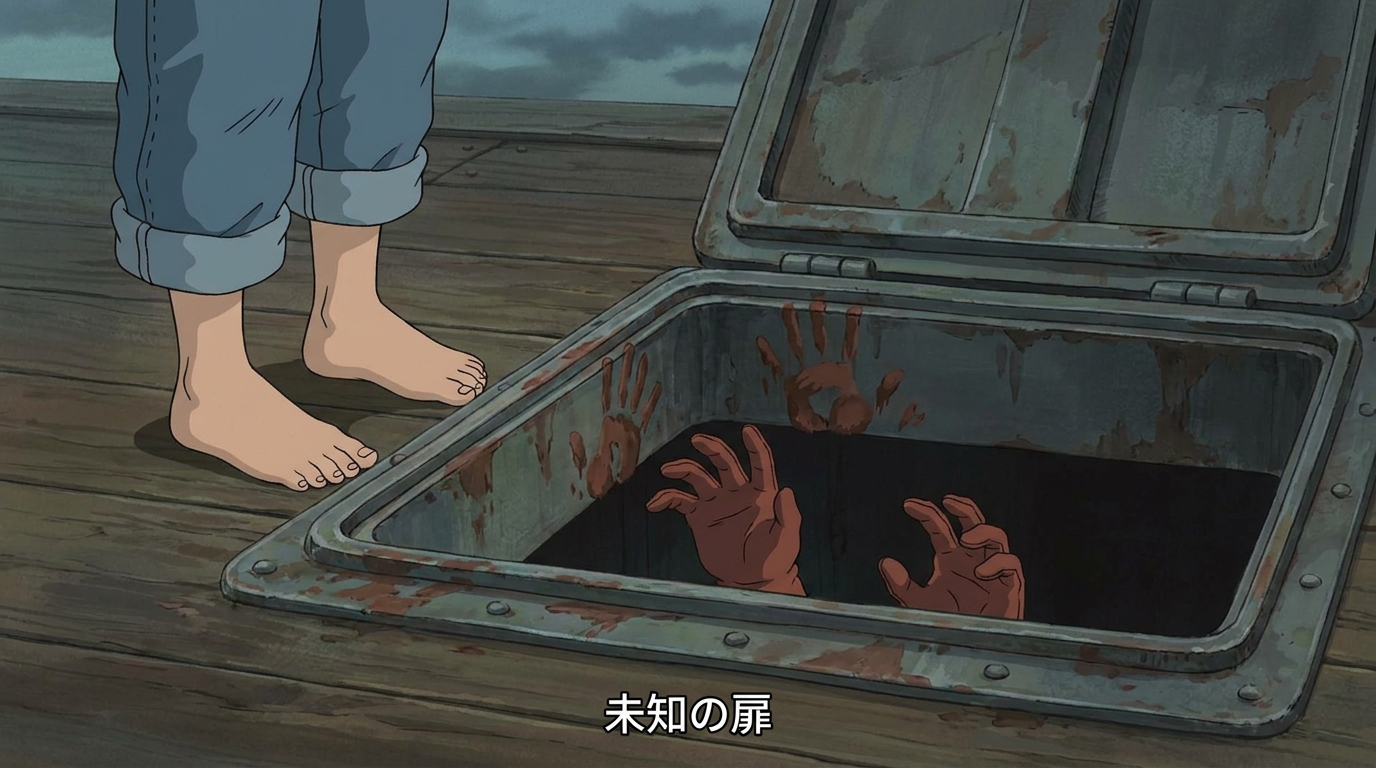
The house stays silent for hours after. The hatch is open again. Kaede stands above it. There are wet red handprints now, reaching to her toes.
Shoma texts: “Leaving town until things calm down. Don’t touch the hatch.” Kaede can’t stop trembling. Haru’s last message reads: “Salt and light. Never both at once.” Kaede picks up her phone. A voice on the end sounds almost like her mother’s: “We’re waiting under, darling. Let us up.”
Lights blink out. The vents go quiet at last. Silence uglier than any noise settles, thin and wide as water poured on skin. Cliffhanger falls with one question burning: Who—or what—climbs out first when the hatch opens wider?