
It’s dusk in Reviki, a damp, close city often caught in purple rain. Daichi Sano throws open rusty shutters, eyes pinned on a mirror warped by years. Most in his place don’t stay so late. Small wonder: local rumors claw at the mind, tales of folks coming apart, body and soul both. Have you ever feared your body might move on its own, twist in ways you can’t stop?
Daichi, just turned nineteen, manages the rough work at Mori Plastics with his friends Sayu (sharp, witty, tiniest limp from old glass), and Kaz (more brawn, less voice, fingers always tensing). Daichi only wants enough money to care for his mom, stuck in one of those high rises out where the city melts into overgrown wilds. It’s Sayu’s dare that rips Daichi’s steady world away.
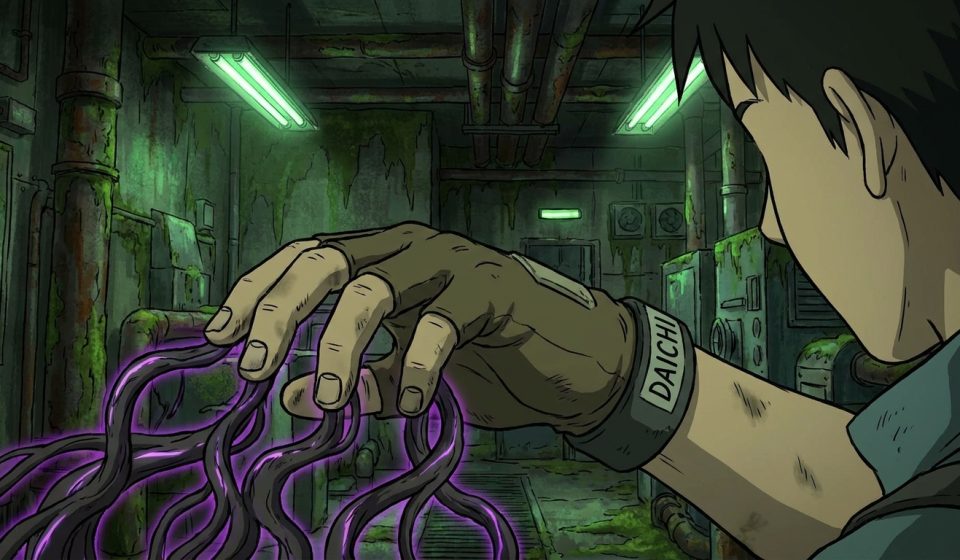
“Check the south wing, or I show your baby photos tomorrow!” she jokes, half loving but it still stings. Deep in night, lit by static green bulbs, Daichi slips under spiraling pipes and finds the mess the night crew missed. Something sticky rides down one pipe and moves slow. Daichi leans close, heart flicking. His glove gets stuck. He yanks but it doesn’t cleanly force off. In that jeden yank, a bite—a set of thorny black threads diving into his palm, sharp and hot.
“You alright?” A voice snaps him away. Kaz is just behind him, brow set. Daichi tries to wave him off but they both see what his hand is doing, nearly cramping. A thin, dark branch now dips under each fingernail. “Little rough for an accident,” Kaz gulps. Is it real? Put yourself there — how fast would you figure out what’s real when your skin writhes wrong?
But Daichi hides it. At home, a headache builds from his core upward. In three hours, his nail beds peel, breaking away clean to show shiny green tangle instead of cuticles. Panic stiffens his chest. Can fear keep a limb alive or make it wither? 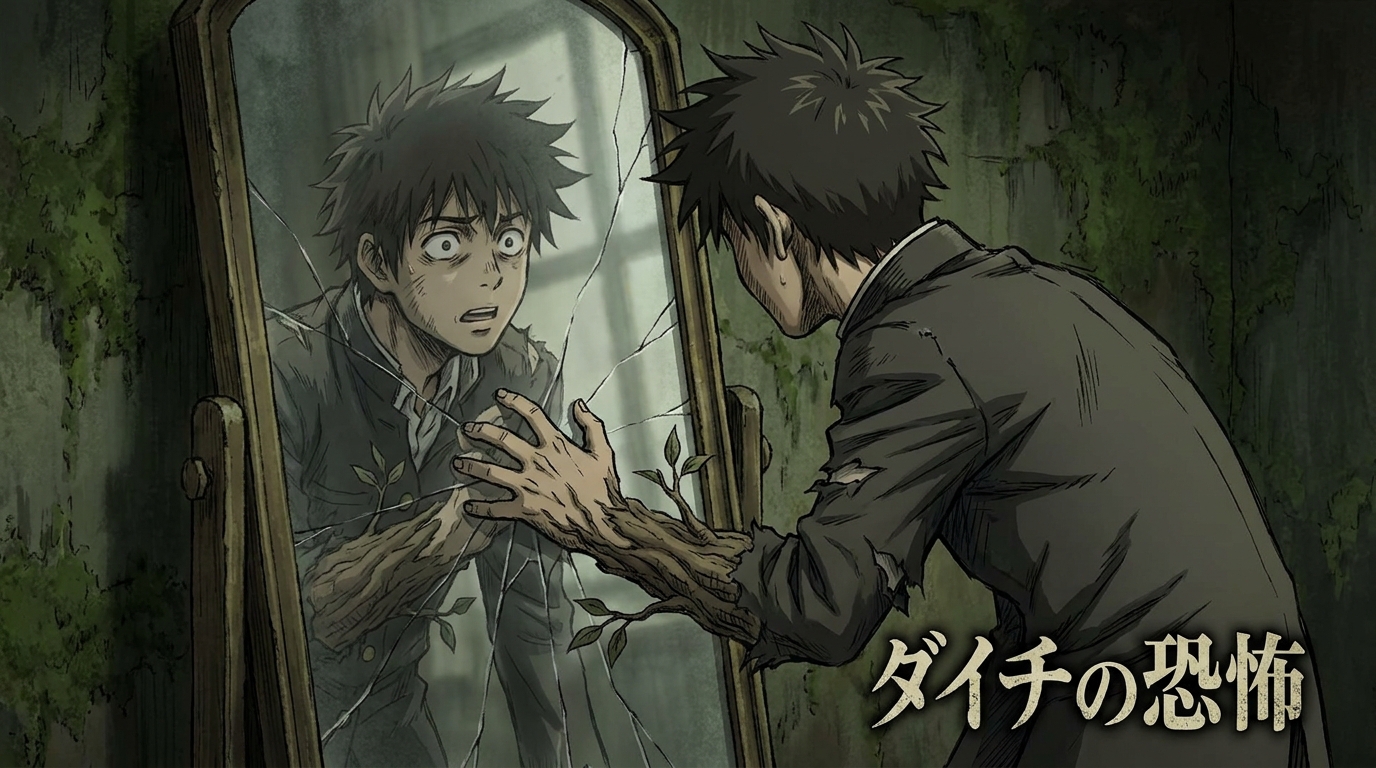
Morning, muscles pull at bone. Daichi can’t stop scratching along his arm as it feels busy under the skin. Sayu catches the weird look in class, reads the growing web climbing up his elbow. Later behind the gym shed, she hisses, “Did you sleep at the factory? It looks infected.” She won’t drop it, even as Daichi shivers and avoids her eyes. They know something’s bad because students have spat soft rumors for weeks — Hajime’s swollen cheek, Reika’s shape flickered in moonlight, kids limping then lost to quiet transfer forms. It never makes the news.”
Days tick on. Daichi slips out when school spares him. At night, arms uncoil thin skins, like leaf sheaths. New patterns flow up his chest. Vision blurs to static then returns clear. Every nerve is hot then cold, never one for long. The world feels bright, painfully tight, his fingertips flip behind elbows. Walks grow strange.
Sayu and Kaz stake their lives to him — even when it’s scary. Sayu runs searches in lab archives. Kaz fishes up whispers: local bio-lab always at max lockdown. Senior janitor mutters how he saw lab coats burn black sap in bins last week in this same district. College kids speak of moldy rainfall, kids losing chunks of their memory. Sayu files, late into midnight, until one phrase pops up every time: Fleshroot Syndrome. 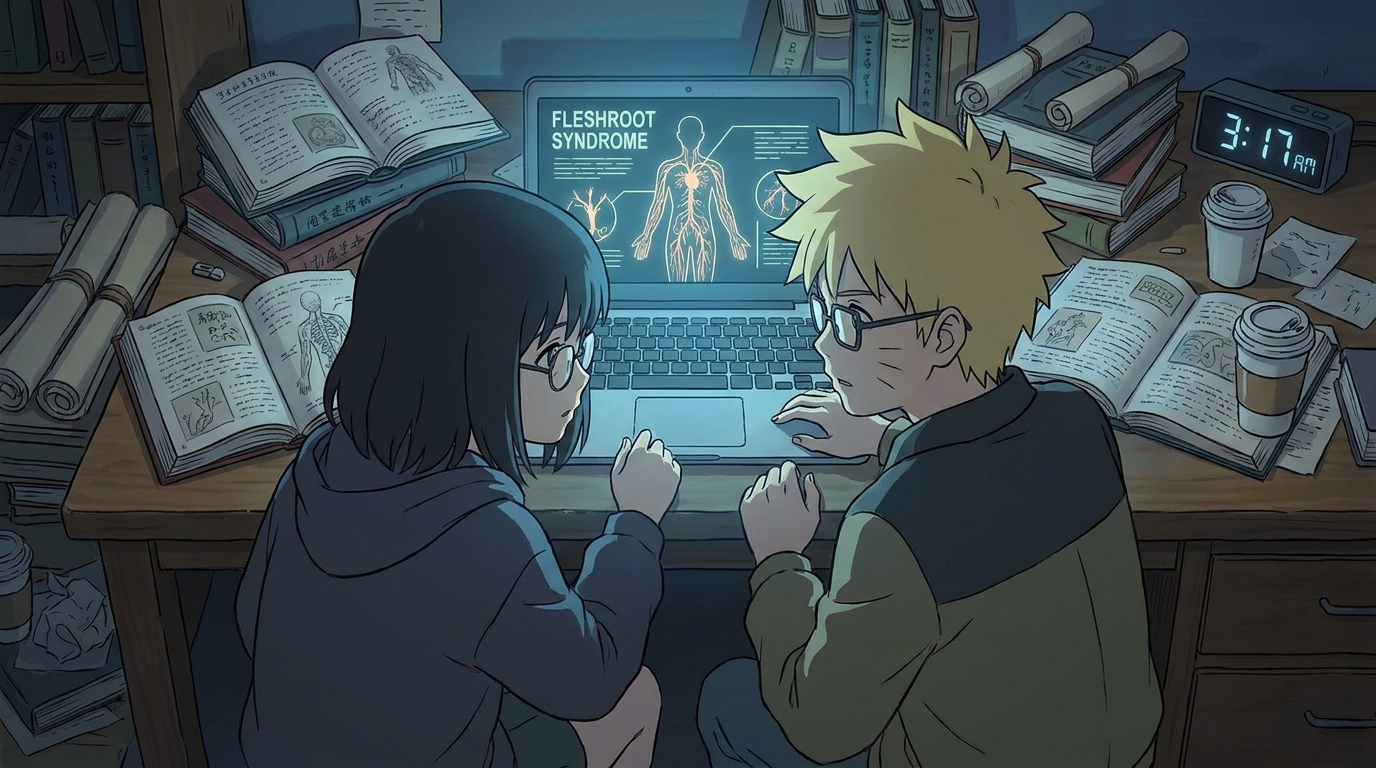
“What’s that, like plant people??” Kaz wonders aloud. Sayu does not smile. In ATSI Medical 2011-36: ‘neural-crawling infestation, invasive vascular growth—causes behavioral drift, major body regressions, full-cell realignment. Environmental exposure main risk factor—abnormal rain, workplace leaks, river flood run-off.’
Something like timber blocks in Daichi’s arms now. He won’t admit how, under bright lamps, new buds jut out. In private, his rib splits open as bark peels down his side. Each day growing slower. What would you tell your friend if you saw this—would you call for help or cover for them?
When the city sprays pesticide clouds, chemical haze lays over schools, drifts thick into apartments. All across Reviki, folks cough black flecks into tissue paper. But people ‘get over it’, so long as they don’t pull open sleeves at dinner or step in with glassy smiles. The hospital parking lots fill with ambulances. Surgeons lock behind steel doors where police pile in after rounds, choked by vinegar stink.
Kaz snaps under guilt; stomps out to city office, demanding info that no one wants to give. Sayu rings an ex-teacher now turned coder in a distant port city. She asks: “Has this happened before?” The coder sighs heavy, pauses. “It only gets worse if they stay, tell them go. Roots aren’t easy to kill once they pierce the blood.”
That same night, Daichi sways over his unconscious little brother’s crib, lurching body almost unable to stay upright. Gray veined tendrils traverse his jaw; lower eyelid splits fine as silk string, glossy sap slicks the curve. In bleak dawn, both friends and a silent, green-tipped Daichi drag themselves north from the city, toward lake country. Steam rises off black rotted fields. Kaz and Sayu keep washing Daichi’s arms, wrappers tossed behind. Each new splash turns sticky then hardens, sheets sliding off in platelets of shed bark. 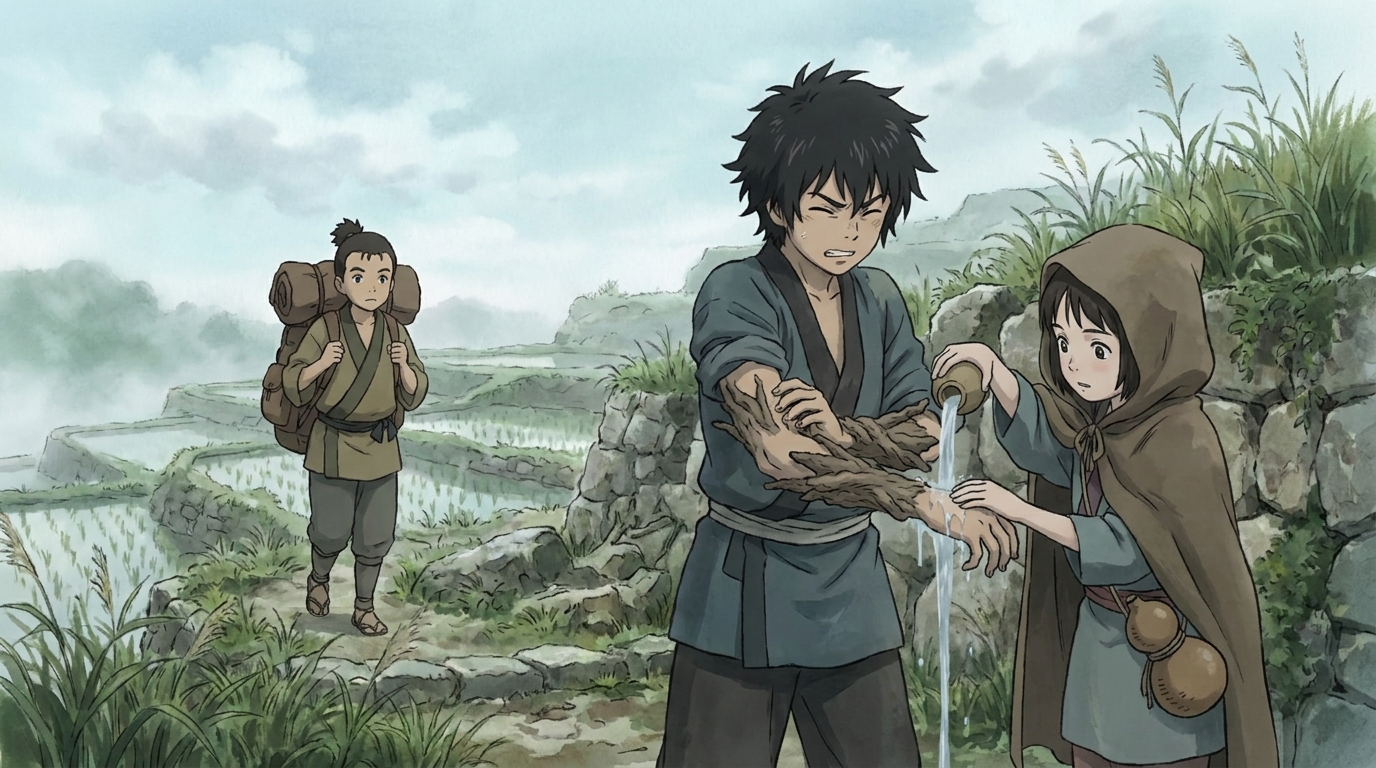
But the “roots” grow faster when wet. Pulsing curls jab down Daichi’s spine. At one fireside stop, Daichi shuffles up, mouth stuffed tight by green shoot. “You raced this with me,” he mumbles, “don’t look at me from back there.” Sayu cups his changing hand, voice trembling as she reads hard notes on her bent phone: ‘the vessel cracks to spread new life — sometimes it webs and reseals.’ It could turn: growth may kill, or the old body splits and a ‘flowered double’ forms in its ruin.
Science might solve it later. It doesn’t help tonight at the water’s edge where Daichi settles and speaks soft, one red eye nearly gone. “The city never gave us space to sit in what we really are.” Sayu crouches with him, fighting tears, a fierce stare to the water. “I won’t let you sink without me. And if sprouts appear—I dare this body…to still fight.”
A news ticker pings along glass. Kaz looks up, alarmed. Reviki sets the biggest quarantine ever, pushing blockades east. Soldiers in suits walk up main roads, all covered in bone-white gas masks. Air swarms black broadleaf seed—wind-borne. Sayu pulls at Daichi: “If you can still run, now. We don’t have until dusk.” 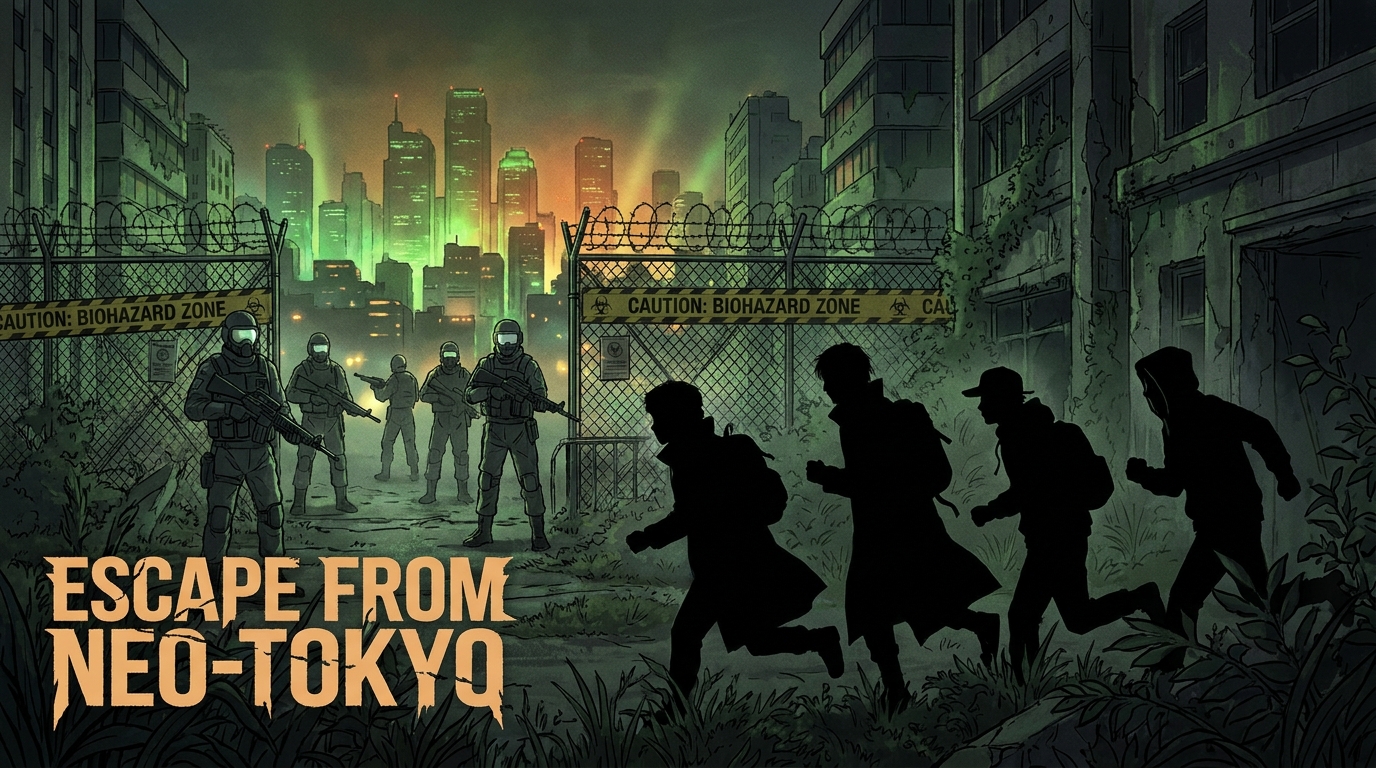
The episode orbits an end but cuts away as Daichi’s spine finally splits, slow jade roots cracking his skull as two ghostly silhouettes rise against the infected pink sky. Question lingers: Can friendship hold together when flesh itself falls into bloom? Could you even look at the person you love as they grow into something beyond human?