
Synopsis
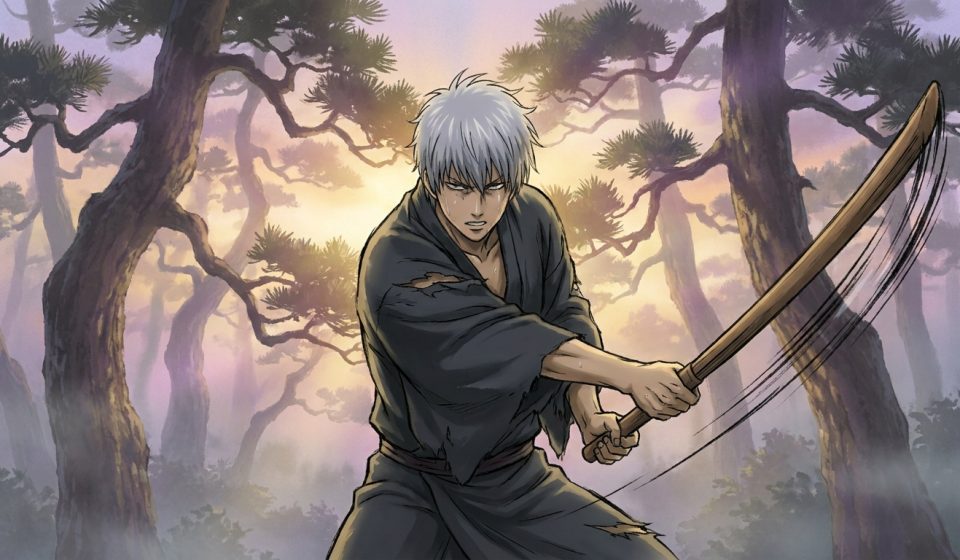
Forbidden mountains hid silent swords for decades. A deep-green forest, broken only by mossed shrines and the glint of old metal, rises through Japan’s north edge. Meet Saito Gin, seventeen, fresh but haunted. He’s a village outcast—a half noble boy who very few trust. It’s 1858. Gin trains daily where dawn cuts the fog, alone near the twisted pines, never speaking to many. His father left home under a dark stain: murder. No word, no return. Would you hunt your own blood if you learned it wasn’t his fault?
With every sunrise, Gin trains, swinging his old wakizashi against ancient cedar. His one friend, Chie, brings tea and news: “Bandits last night at Isuzu crossing. Watch your path, Gin, please.” He shrugs. “Fear finds nothing to eat here.” Chie sighs. Yet she stays each dusk, watching, then leaves for her own fields. These days, Gin seeks something tougher than robbers. “My father’s name weighs like a mountain,” he mutters. “How do I clear it?”
That night, a masked ronin stalks the edge of Gin’s world. He wears three colors: shadow blue, dusty white, bitter bronze. Villagers call him Orochimaru—no, not the snake man from dreams, but a real legend: the Vine-Shadow Swordsman. When rice gets stolen from shrine baskets, folks whisper: “Wasn’t a fox. Orochimaru did it. Ain’t no ghost who walks the fields each night for nothing.”
Word spreads. In a remote town bar, another face turns: Akaho Arata, samurai detested by province lords. He serves no other—but knows the blood law. “Bring me the boy with the haunted eyes. Village will be safe.” But Gin slips the gates, ghost-like, following only the strangest trail: a chipped lacquer box found under his family pagoda, bound with straw string and none of his markings.
On the eve of Obon, Gin sees his first apparition. The shrine bell rings but no one stands nearby. Echoes of his father’s voice coil through the trees. Gin bows, grips the blade. Shadows rise. Two talismans flare. Did you ever feel a change in the air before everything spiraled? Does fear change your step or make you rush on?
The ronin appears. Moon behind him, two steps from the cedar, seeds drift down. Orochimaru: “Boy. They want me. I want you. Blood clears truth.” Gin holds fast. “Who are you in my father’s saga?” The night whispers. A fresh wind cuts, sharper than blades. Shadows move again.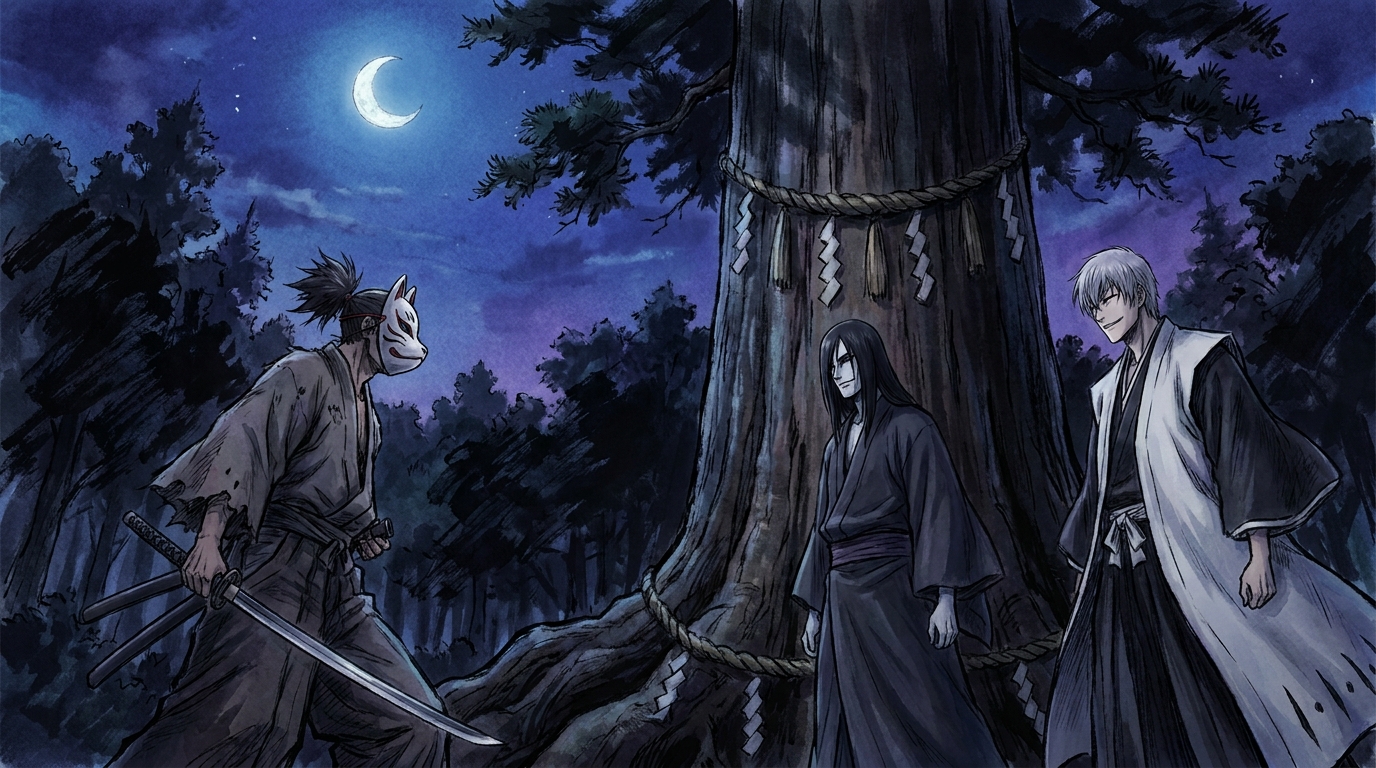
First clash, crisp as river ice: Gin parries. Power aren’t equal, not yet. But Gin’s gift? Reading the next motion in heartbeats, not footsteps.
“The old men wrote it wrong,” Orochimaru purrs. “I know your father’s price. But do you know your mother’s flaw?” This cracks Gin open; his mother’s sepulcher is a cold candle in their silent house. She died years back. Chie, rushing from trees, yells: “Gin! Go! It’s a trap!” Gin spins. A hidden crossbow’s bolt grounds before his feet. Was trust ever simple in this world?
Akaho’s men sweep from brambles. Three steel arcs crash, close to Gin’s ear. Mid-fight, Chie is taken. Orochimaru flees with her, slicing a signal in the dirt: a line-and-three-curves, drawn with a bare toe. Gin yells, “Bring her back!” Akaho grumbles, “You’ve more power—use it, fool, or grit your teeth forever. Decide what you are.” Gin screams his lost name, chasing shadow feet into Namida Valley.
Fog thickens in half the town by dawn; six doors stand open, hinges alight. Chie is gone. Gin, bleeding warmth, follows talisman clues knotted from Chie’s blue scarf, one left leaning on a black pine grave. Bakufu patrols scour fields, spreading word of rogue samurai and taboo traitor boys. Can you spot the hand who holds hope in these tides? Will Gin survive Obon’s storm?
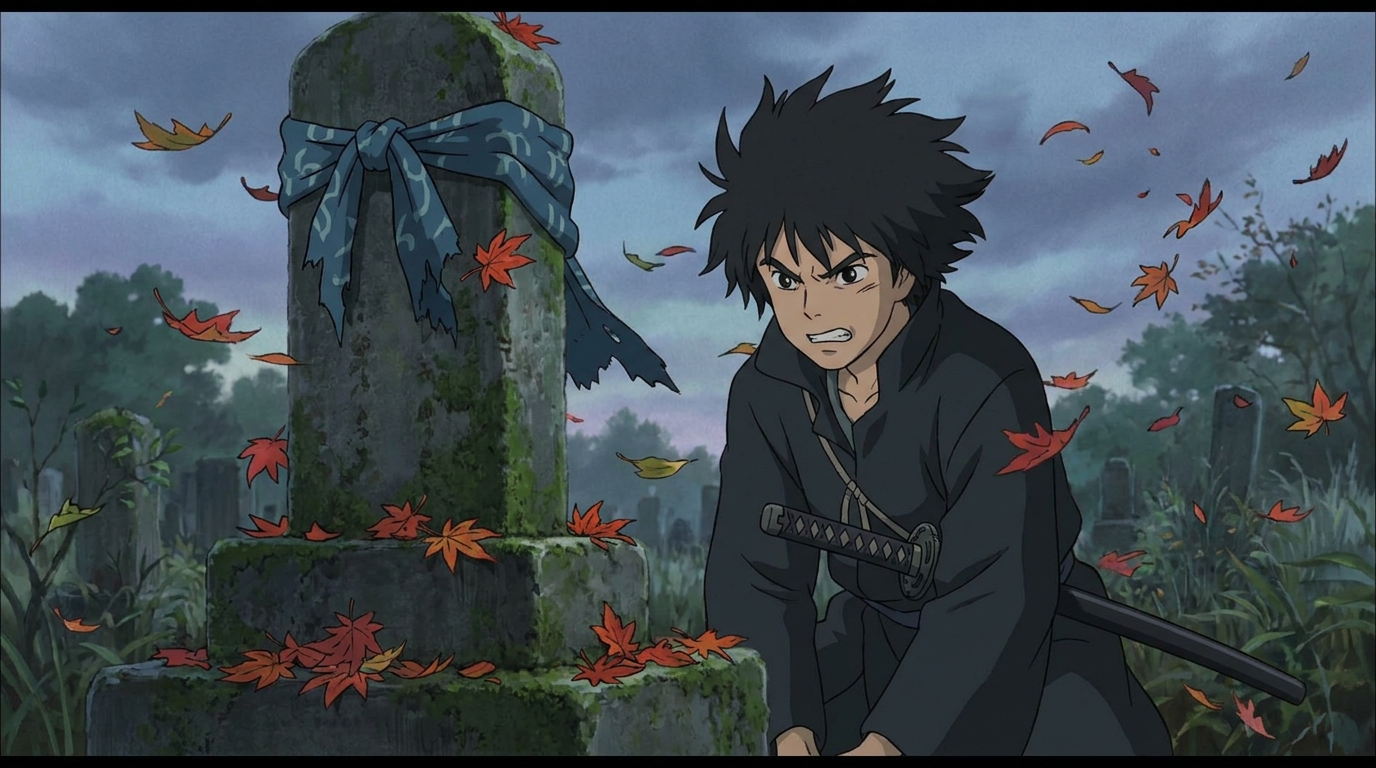
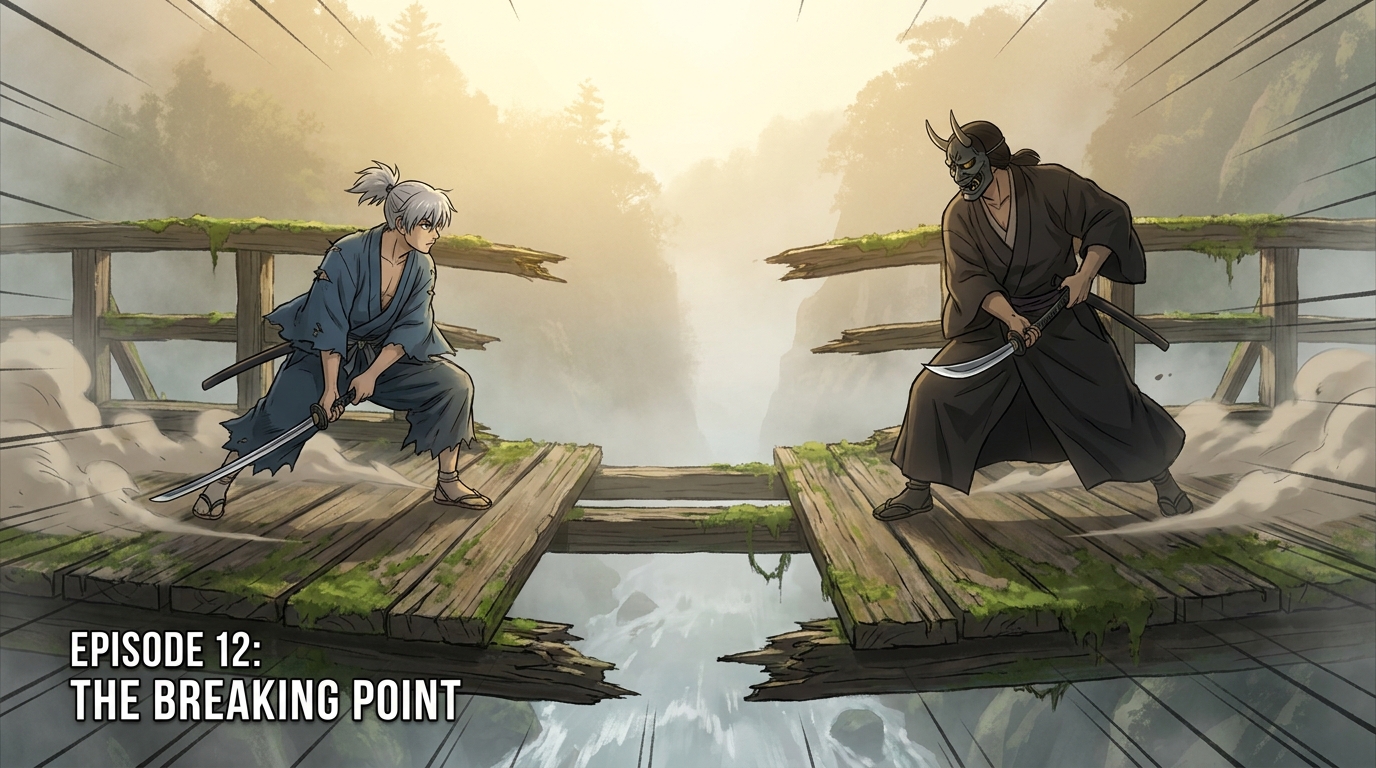
A crow lands before Gin the next evening: feather tied to sword hilt, whisper-piece inside. It’s Chie’s voice, soft and clipped. “Don’t fight alone. Even nobles died alone.” Follow the red-leaf trail, she hints. By dusk, Gin skirts the edge of spirit woods, touching nine different shrines. Each incense twist trips an old memory. Wooden kokeshi dolls mark a split log bridge. Rings of petals, spill of soy-stained sand below. Somewhere a laugh echoes—Orochimaru, perhaps. He leaves proof that he knows Gin’s true heart.
By week’s end, Gin’s hands heal, but guards close roads. Some villagers now turn from him or drop cups as he nears. The whispers sour. In moonlight, Gin retells his own story: “I learn to read lost tracks. That’s worth as much as any old sword.” He giggles, young but sure: “They don’t push me out—I step out myself. Long ago the wild held the deeper kind, before all the swords.”
Akaho waits behind wet clouds, blade never unsheathed in public. Watching. His voice at morning light: “Would you walk beside duty, Gin, or spit it out? The man who claims your father shaped horrors far worse than this. Tell me again, if you dare, who you wish to save. Chie, or the old tale?”
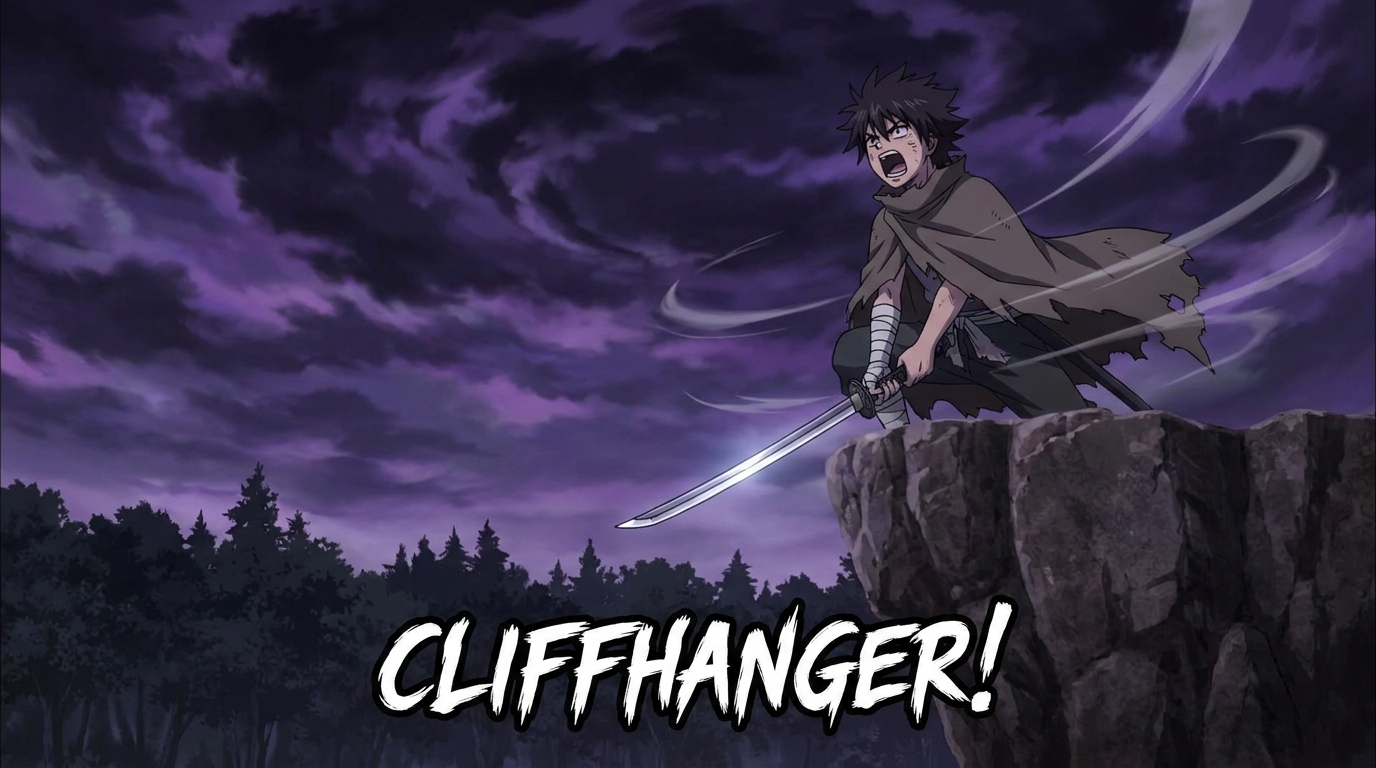
Ending on the pale crescendo, Gin faces the mask again, sky purple-black. Answer unknown. Cliffhanger? He screams Chie’s name into ripping wind. He knows only this: the next lesson costs blood—either his, or someone’s he can’t bear to destroy.
Arc’s Legacy?
Next dawn two swords clash: ancient style meets new mind—one would clear family’s name and maybe drag peace back to mangled fields. Will someone break under vow’s weight? Or would Gin’s true aim—reunion with Chie—shift him out from the long deep shadows?
Questions:
Would your heart break or harden under such eyes? What name cuts the deepest if truth falls with the dark?