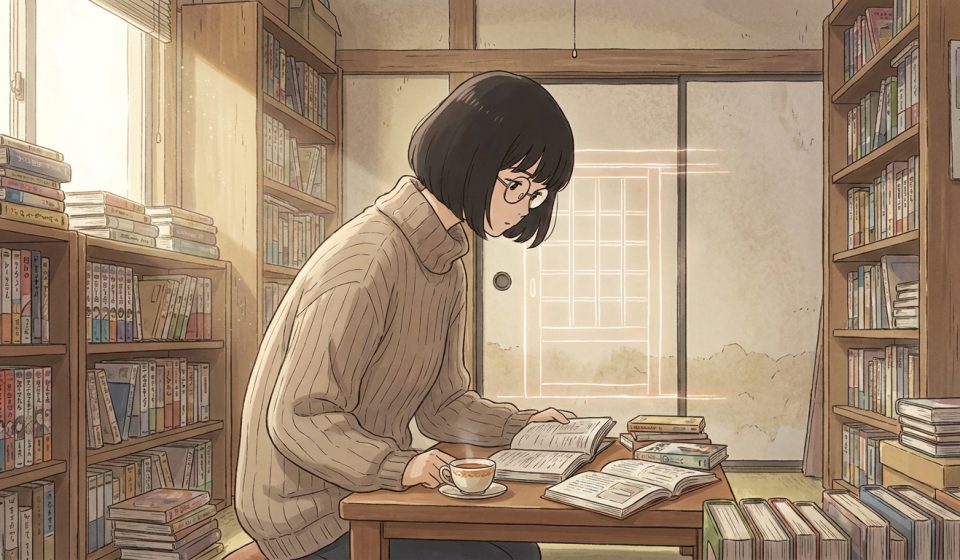

Mana Anzai wakes alone in her Tokyo flat at 4:38 am. There’s tapping in the hall. She jolts up — is that someone at her door, or only a phantom sound? Her phone’s clock flickers. It’s the third time this week. You know that drawn-out feeling when reality and dream catch each other? She feels it every dawn lately.
The story begins in her cluttered kitchen. Sun filters over white tiles, making shadows jump. She’s got a routine: water the plants, two minutes of microwave coffee, stare at the news, forget the taste when her mind whirs into memories. It wasn’t always like this. Mana used to work downtown. Since the accident a year ago, her world shrank to the edges of her old notebooks. But that’s not the whole truth. She hears things: voices softer than breath, words that weren’t hers at all. Both her therapist Honami and her brother Kaito think it’s the trauma, the meds, and the heat. Is it?
Today, Mana keeps staring at one part of the wall. It’s a place she’d look at back when she was little, before her dad left, before the car crash spun holes in time inside her head. Now there’s something subtle there. Do you ever notice a piece of a room where the light doesn’t fall right? That spot — behind the stack of unread books — sort of warps if you look side-long. It wasn’t odd, until today when she blinks, and sees…a door. Or rather, not quite a door. It’s dusk-grey, brushed round the edge, and the handle’s missing. It vanishes when she stands up straight.
Cast includes Mana, tall and thin with short black hair and thick glasses; Kaito, sixteen, sharper than he acts; Honami, gentle and reserved; plus, the girl next door, Marie, who never reacts to Mana’s hellos. Marie, who sometimes mutters in her sleep.
The episode cuts to Kaito joining her for rice crackers on her short blue sofa. Mana tells him about the strange edge in the wall. He laughs. “What, like Narnia?” he says, poking her side, though his smile doesn’t reach the eyes. They both try hard not to share their fears. After, Mana smokes on the balcony, watching the world glitch as neon ads outside flicker pink-blue-pink. Someone unseen moves upstairs. She counts steps and doesn’t blink. Was the neighbor always that loud? At 11:12 pm, she pushes back the stack of books. There’s the not-door, more solid than before. Still no knob. A cool breeze leaks into the room.
What does it want from her?
Next morning, Mana seeks Honami. The therapist’s office smells of old tea and wet notebook pages. “I’ve been seeing it for days.” Mana plays with the hem of her sweater. Honami frowns, then reaches for her records. It’s happened in other cases. White crows, invisible doors, clocks pausing at dawn. It’s a thread that appears with anxiety, dreams, or perhaps something rarer. Honami writes a phrase down: ‘Psychotic Depression — Visual Manifestation.’ Mana bites her lip. “But what if it’s really there?”
This question repeats in Mana’s head as she watches Marie in the stairwell after school. Marie stops, glances down and mumbles, “Did you open yours yet?” Mana’s heart taps against her ribs. How would she know? Are you the only one who’s ever feared what you can’t name?
That afternoon, things break routine. Kaito can’t be found. Mana tries calling him and waits for the ring. It goes to voice mail. The train outside wails. Sleep is patchy, strung out with the remembered smell of ash. The door shifts, growing clearer.
The sound at dawn: wood tapping against wood. Not gentle. She leans closer. Someone whispers. She covers her ears, but it hums right in her mind — a single sentence layered again and again: “Come back.” Mana tastes copper, gulps for air. Her shadow wavers.
She gathers courage. Over twenty-four slow hours, she scopes her flat. Makes tape sketches of the door. Times the noises. Notes repeats: always at 4:38 am, again at dusk. Old family photos fall off a shelf. She sticks them back up. Sees a reflection in a glass frame: standing in the door’s space, as if her older self smiles at some joke beyond reach. 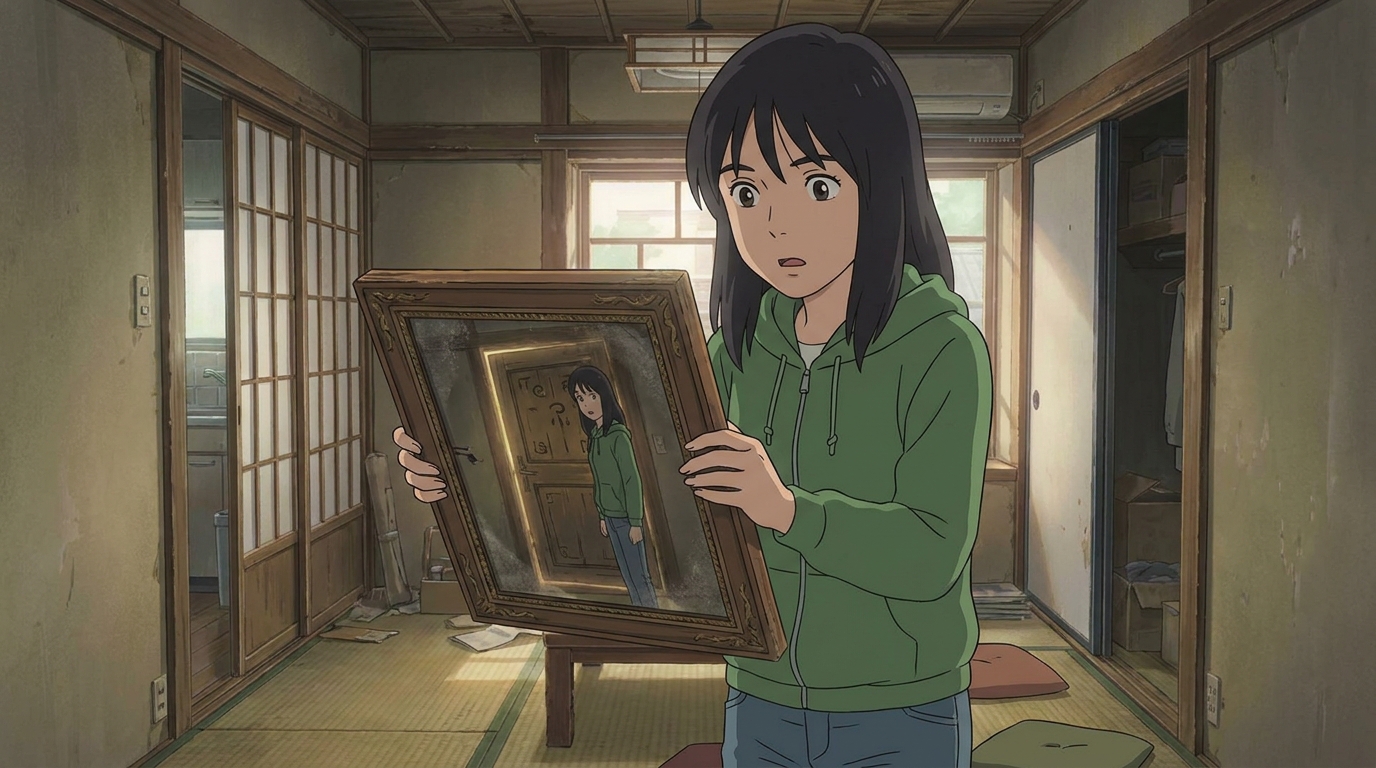
When she finds one of Kaito’s slippers in front of the door, her hands shake — why was it moved here? Was he looking for the same thing?
The narrative deepens through short exchanges. Mana corners Marie by the mailbox. “My door’s getting bigger,” Marie whispers, voice taut. “Don’t touch it right yet!” But why not? Back in a lost memory, a figure looks through to say goodbye. When Mana speaks of this in therapy, Honami offers carefully, “Sometimes the mind makes doors it wants closed, sometimes the ones we have to open.” That helps, for maybe a minute.
A near-trance state overtakes Mana two nights later. She sits before the outline of the door, the house totally silent. Sudden scratchings drag from the bottom panel. Every muscle wants to run, but some part pulls her. Has our subconscious got places it locks away for a reason?
Cut to Honami alone, worried, skimming old patient charts. She finds a case note about a similar “invisible barrier” in a 1997 notebook. Clinical name: Null Door Syndrome. Is this rare, or were people just too scared to talk about what they’d really seen?
Scene switches to Kaito pulled into a new room — or maybe a memory loop. He faces his father as a younger man, yelling words that echo across blurred lines. Kaito’s face goes pale, and a door fat with light pulses next to him.
We’re deep in strange territory by now. After smashing a vase in her sleep, Mana finally draws the door sharp, thick and heavy, on the wall with black marker. She sits on the couch facing it for hours, hands gripping the sketchbook. Slowly, lines on paper shimmer, the light in the flat bends, and the handle forms. Movement flickers outside — or inside — the door. Shadows coil, whispering old half-truths sister to her real memories.
Just as Mana reaches for it, rain pounds the city, thunder rides over the towers. She questions if by facing the door, she’s healing or slipping further from everyone she loves. Your mind builds walls for many reasons. Have you ever wondered if your worst fear isn’t hiding on the other side, but inside with you? 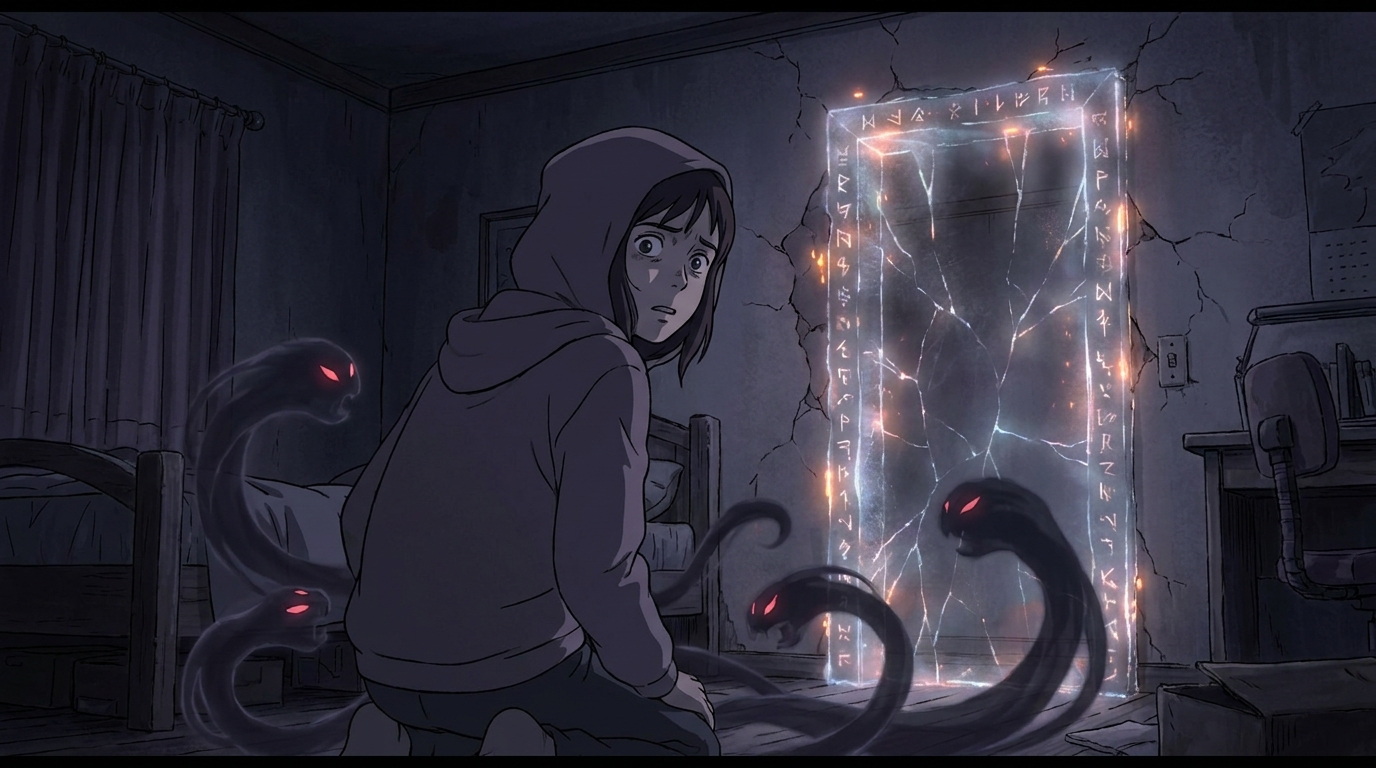
The episode ends there. She turns the handle.
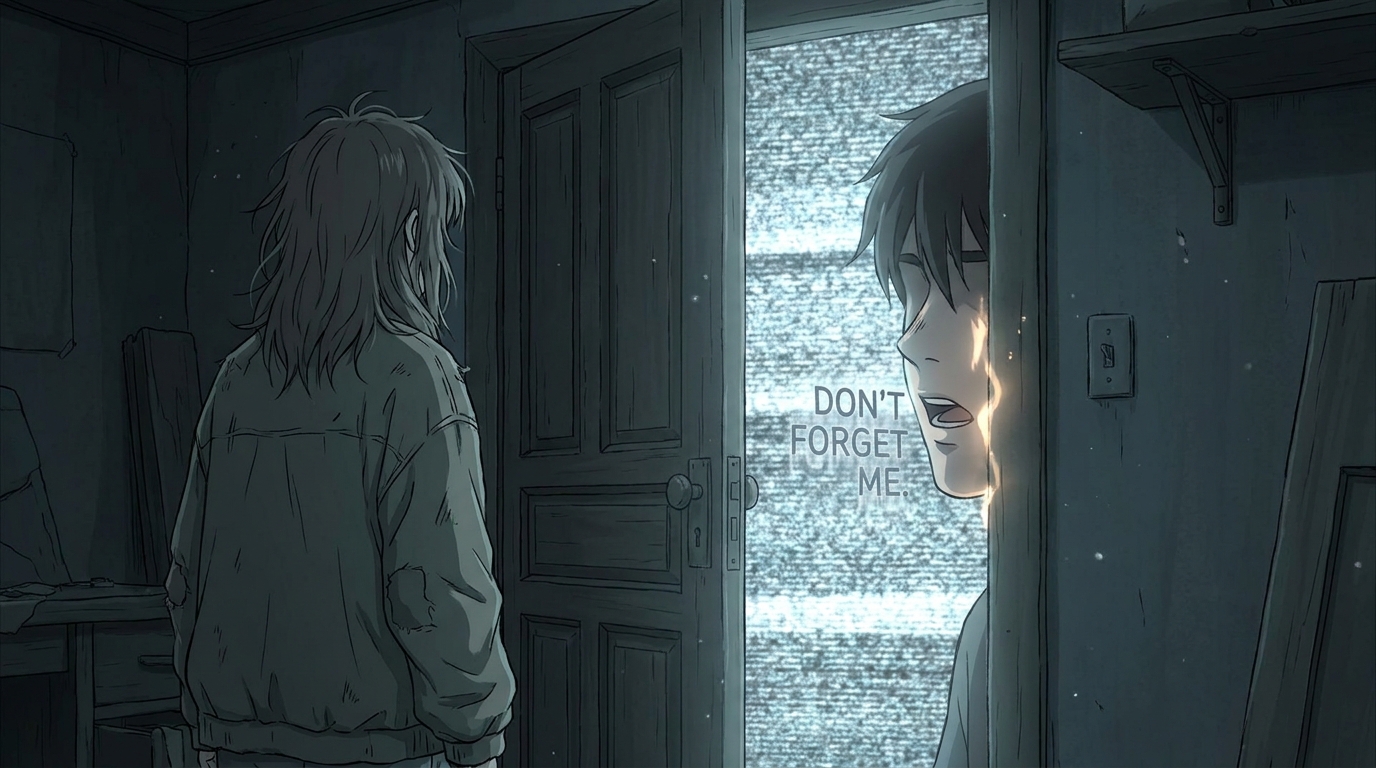
The last shot: door opens onto a blank coil of static; except for one thing — it’s Kaito, standing just out of reach, eyes blank, whispering, “Don’t forget me.” The doorway pulses behind him, waiting. Fade to black. To be continued.