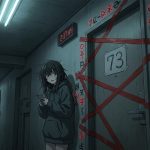

Standing before the cracked mirror in his narrow room, Shun Hazuki tightens his tie. School passes around him like white noise—teachers drone, classmates laugh, but nothing hits home. Something’s changed. Has it always felt this empty? Do you ever feel that your days slide past with someone else at the controls?
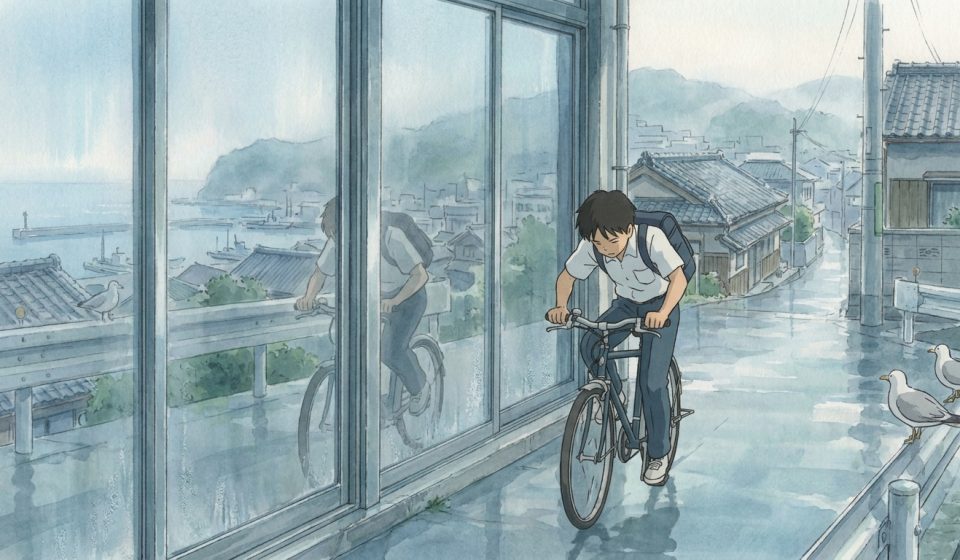
This episode begins in the wet haze of a coastal city in spring. Shun rides his bike each morning, hands loose on the bars, gaze fixed on slicked glass shop doors: counting how many seem to smear, rather than reflect him. Schoolmate Kaho, quiet but undeterred, always says hi to Shun though he can’t seem to recall when they met. Their teacher, Yuuto-sensei, scans the class with a knowing, stay-away look. Lately, three students are absent. No one mentions why. Where do lost pieces of us go?
Unfolding in tight glances and fragile speech, the day rewinds on itself at lunch. Shun finds the same spot—third bench by the painted tree on the playground. No wind. Bags where they shouldn’t be. Letters in his notebook he has no memory of writing: each starts ‘Dear Myself’ and signs ‘S.’ Must be his, but the handwriting is faint and looping, like it’s learned someone else’s habits. Kaho sits next to him but faces away.
“Do you dream often, Hazuki?” Kaho whispers. He frowns. “Sometimes. Doesn’t everyone?” She smiles weakly. “What if you only had one dream and couldn’t wake up?”
Her voice fades into the thud of a ball against the field fence. A shadow skids past. Shun sees his own reflection in the steel gym doors nearby—a blurry echo two seconds late, blinking slow. 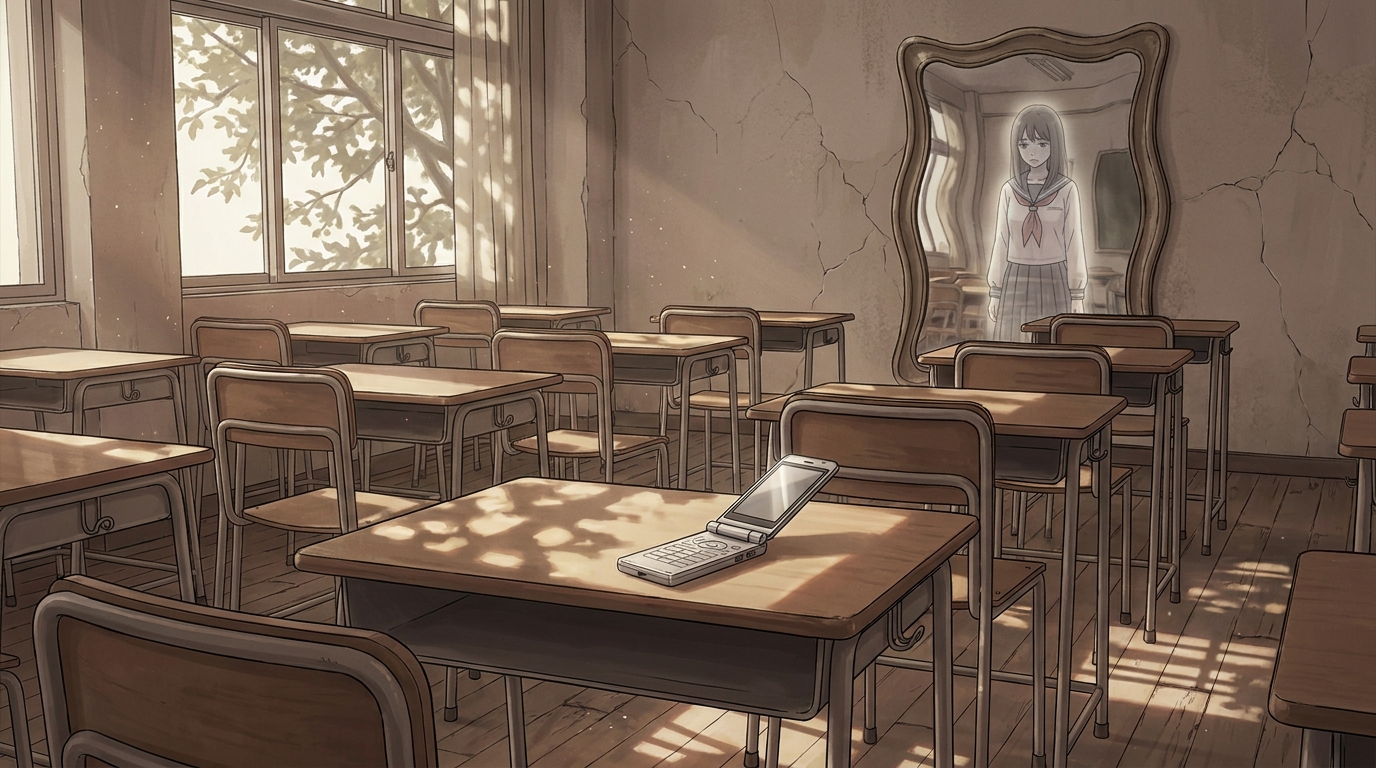
By dusk, he finds an old silver flip phone at his desk. It rings. An unknown number, but the caller ID says “SHUN H.” He nearly drops it. Reluctant, he answers. “Don’t trust her. Find the Mirror Ward.” The device clicks dead. He sees its reflection on his desk—there, the time reads midnight, even though it’s only 5 PM.
The rest of the arc traces fresh grooves in the ordinary: windows crack and shimmer, voices loop. He tries to text Kaho, but his hand cramps, unable to type. During the next period, Yuuto-sensei ticks off Shun’s name in roll call twice, squints, then rubs out one entry with nervous chalk dust. Kaho stops meeting his gaze. Messages slide under Shun’s desk each day: notebook pages filled with looping questions and part-mad riddles, all signed ‘S.’
One dares him. “If Kaho speaks backwards at sunset, nod. If Sensei stares right through you, run.” He presses his forehead to the cold nearest window—sweat mixing with rain outside—and aches for a safe clue. Have you ever cracked reality in half with a wrong answer?
Clues knot tighter the longer Shun stares at windows—unseen faces mull in pools of pitch glass. Names are all reused. The school’s yearbook shows two ‘Hazuki Shun’ entries, last year and now. Twin photos, but shading bleeds the face apart near one eye.
Confronted, Kaho tries to warn him. ‘You’re not alone, you do know? There’s the one in glass…the one in dreams.’ Shun grabs his head, finding a scar near his temple he’s certain shouldn’t be there. That night, Shun lies awake, replaying each word. Unable to sleep, he’s guided by cryptic notes towards the school basement.
Inside, emptiness tall as a cathedral waits. Someone else stands next to an old medical mirror with faded kanji. As Shun steps closer, the shape in the glass reaches out—but from the wrong side.
‘Glad you made it down here, Hazuki.’ Their reflected lips move before his own.
Who do you trust if your mind keeps leaving you clues? The episode ends on the image of the two Shuns raising hands to the dividing line, one smiling, one confused. The air is full of missing school bells and the echo of feet running somewhere out of sight.
Continued next week as notes spiral into threats, and nobody’s memory can be sure it’s real.