
The Rift in the Pines: Survivors’ Labyrinth
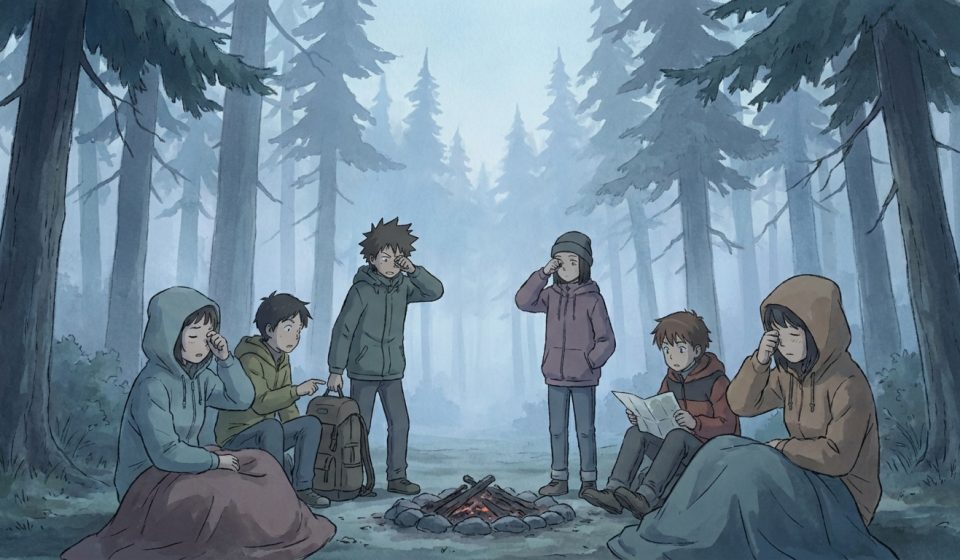
Shin Kagawa wakes to biting cold, silent mist, and a circle of huge pines he doesn’t recall. Drowsy and sore, he sits up by a smoldering fire. Fir needles, wet from late dusk, stick to his hands. The scent is smoke and earth. It isn’t like his room at home in Kagawa. Where is this?
Roll over and you’ll see five others who stare at Shin. Each looks lost in their own way. There’s Mei, quiet but steady-eyed, clenching a torn blue knit. Yasuo, all nerves and smart jokes that don’t quite land. Mariko, her backpack stuffed with things but she keeps glancing at her phone—zero signal. Toshi and his sister, small, anxious Ayako, are paired close like twins. Shin’s first words barely come. “Did any of you just… wake up?”
Mei nods once. “No faces. Can’t remember how we got here.” Yasuo cracks, “Hey! Human popsicle expo, right?” Bizarre, but their fear knits them tight. To your ear, would you trust that group?
The setting isn’t modern. Every signal reader, phone, and gadget’s blank. They’re deep in a forest with no signs of marked life. Shin leads; they agree to start moving in daylight. Shade nests in the trees, wind shakes needles overhead, and far off something cracks—the sort that stills small birds, then everything. In your shoes, how far could you trust people you just met?
The group finds no clear path out. Hunger grows sharp. Toshi tries to remember training from a park field trip three years ago, starts on fire-making and green tea from pine needles. Mei helps him. Days pass, and weird things worsen: old campsites half-swallowed, moss growing where it shouldn’t, faint whispers under the dusk wind, like echoes of laughter. Food slips from packs while folk dream. Water grows brackish. Faces get rounder with worry. Worth asking, what kills resolve faster—hunger or fear?
Finding a faded wooden shrine, Mariko lights up. “Ancient markers mean a way out… or?” Ayako shakes. Concrete tracks snaking into dirt appear and vanish as mist rolls over clearings. Yasuo jokes, “Maybe if you believe in pretend, it becomes real?” Each night fires flicker, and some in the group begin to twitch in sleep, gaps in memory swelling each morning. What would you do if you woke up missing fragments of time?
Rumors start—someone claims to see pale shapes slide between trunks at dusk. Shin pushes the crew; he’s desperate to reach his sick grandmother by Friday. Ayako loses a small silver pendant and sobs, sure the place ‘takes things to keep us.’ Egged on by this, small arguments sprout between everyone, silence stretching until Yasuo coughs. Mei’s voice is cool: “We go east at sunrise—broken branch trail. No splits.”
The true mystery? Every day, someone wakes to something changed: torn clothes fixed, food packs heavier, a rare optimism after bleak dreams. Once, Toshi’s foot is healed—he’s sure it had split open on sharp rocks the night before. Fresh muddy marks lead away from the fire. On day seven, Yasuo vanishes at dawn, but his laughter loops through the mist. Decisions come hard. Shin listens to Mariko: “Do we even remember what home means now? Or do you just have this idea of getting there?”
The group follows these puzzling signs (gift, or trap?) into a split-clearing where bright sunlight explodes between the ancient pines. Relief hits. Then all of them feel the earth shake—a hidden door opens. Pale stairs, slick and mossy, twist down. Out or deeper?
Eyes wide, Shin is torn but finally steps into the dark with the others behind him, determined to solve this maze—and save Yasuo, if he’s even alive anymore. The forest sighs closed behind them. 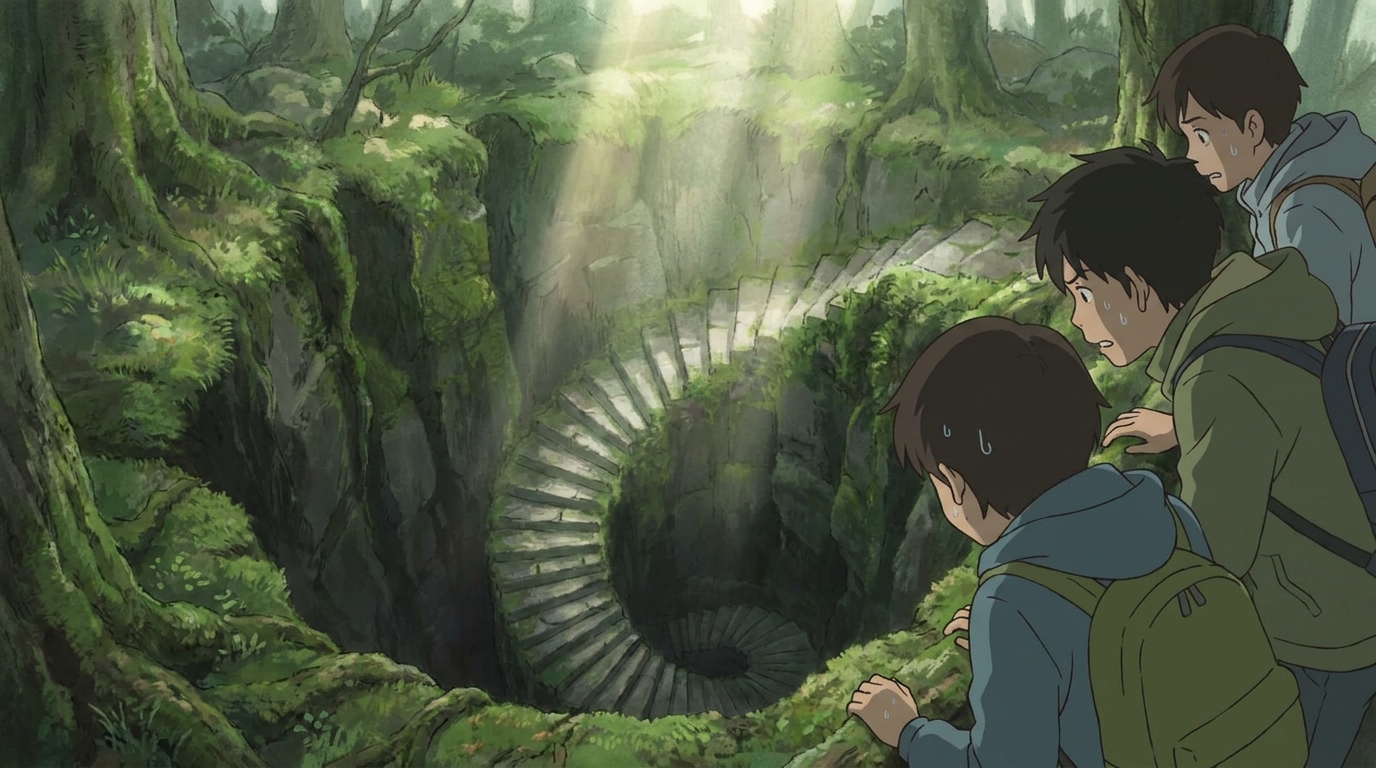
Cliffhanger: they step below, lights flashing, and in the deep stones, a girls’ voice, one none recall but all recognize, murmurs: “Welcome back, survivors. Now remember what you’ve lost.”