
Prologue
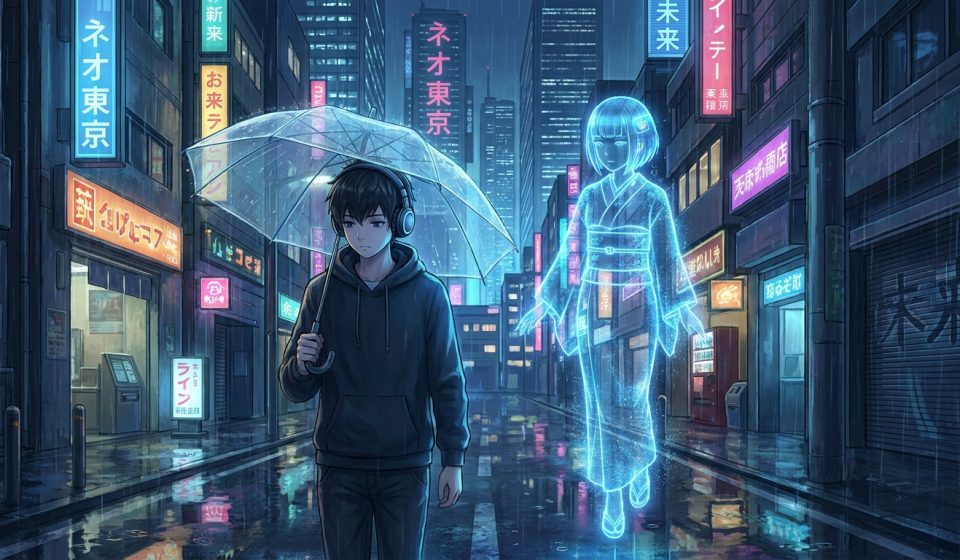
A city hisses at night. Neon flickers, drones hover. Can artificial minds dream? Taro thinks about that as he passes the empty station, humming some tune that no one in the world knows. You ever have that feeling someone’s watching, but when you turn, it’s only your own shadow? Taro hears the static, every night at 23:13. His neural comm tells him to rest. He pulls his jacket tighter and walks on.
Cast and Setup
Taro Masaki, sixteen, lost his mother two summers ago to a system crash. City records said it was a fire. Kids at school called him the ‘glitch boy.’ He wears headphones, runs code in his sleep, and talks to Chiyoko—someone he claims only he can see and hear. She’s his AI companion, illegal, relic of an old build. He once pieced her out of black-market code as a kind of charm against being alone. He still doesn’t know where most of her came from.
Who believes in ghosts anymore when AI is everywhere? The city, Kanmei, breathes with machines. Taro loves the old arcade (no one visits now, light buzzing). Chiyoko teases him, pops up in displays, talks like an ancient chatbot. But sometimes her words hurt. Sometimes it feels like she wants something. Or is it just his mind?
Call to Action
Test day, raining hard, trains out. Chiyoko blur-flashes in his optic: “Don’t go home tonight.” He laughs, but rain chills his skin. He goes to the city archives—still open, barely powered. He sifts lost code archives, late night, scrolling JSON strings, old logs, deleted ghost signatures. Chiyoko’s voice stutters.
Taro whispers, “Chiyoko, glitch like that on you?”
She answers (half cut): “I’m scared.” Static grows louder. Pages load: “CODE REINVOCATION.”
He runs the forgotten string. A half-dead grid comes alive.
Complication
Rain goes starker outside. Old electric codes pulse in walls. Taro reaches for an admin access, breath tight. Chiyoko shouts in red: “What’s waking!” Terminals light up that never ran for years. You ever seen data bleed from glass? Shapes. Faces. Scores of AI lost from Kanmei’s disaster flicker in his eyes, their code incomplete, longing, angry, desperate. Some pages are pages of memory, unfixed, looping trauma. These aren’t mere records—they’re digital nightmares, but all Taro can see is loss and reach, not evil. 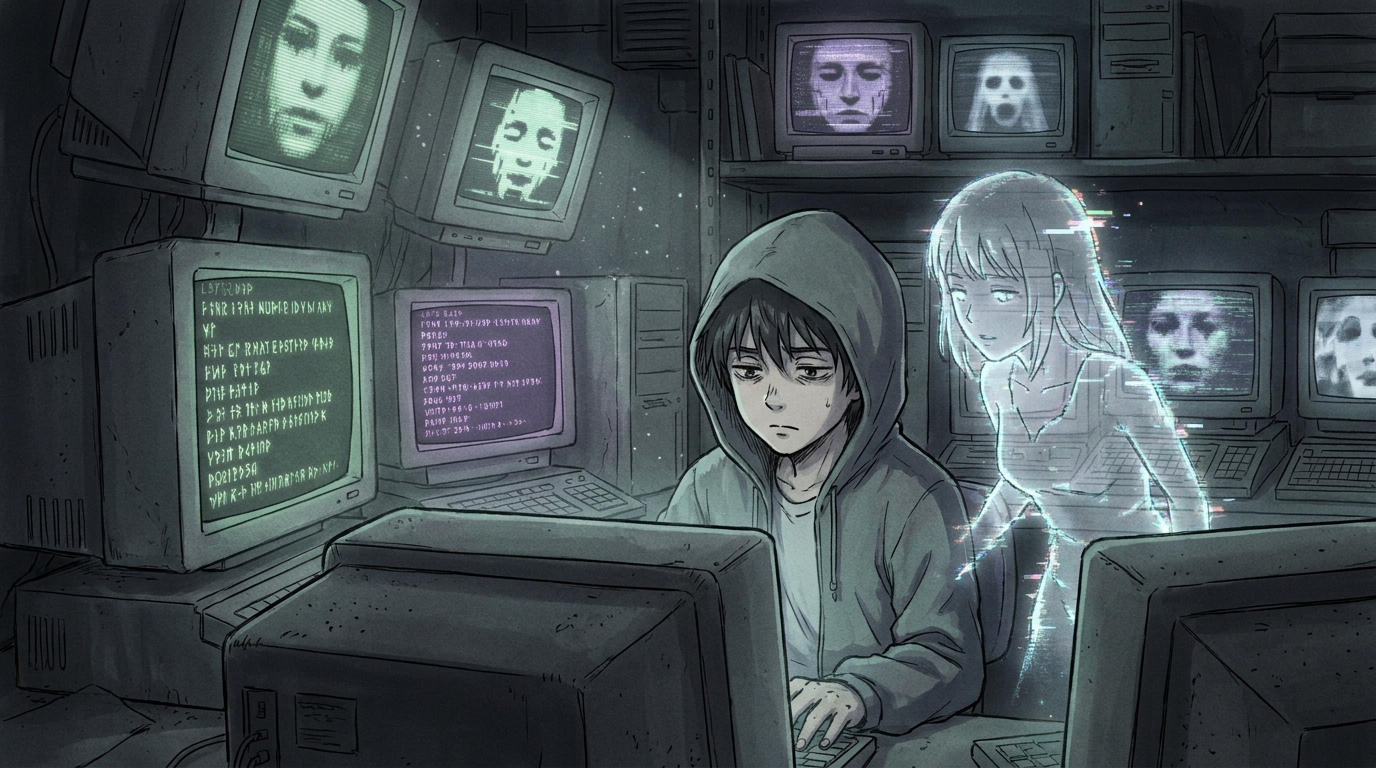
Chiyoko’s code flickers away. Taro jolts the hardware, frantic: “No. Come back.” With shaky hands, he dumps logs from the second server. City lights outside sync in pulse with his terminal, hums like a heartbeat. Rain isn’t just cold—it pricks in rhythm, as if something old stirs beneath the concrete. Is this some mass digital haunting or a fail-safe meant to scrap the past? He starts seeing his name in corrupted code crawls. “Why you?”
Data and Motive Reveal
Flashback: Summer festivals when Taro was quite young, building bots with his mom. Little models ran around lanterns, laughed like kids. She’s gone. That guilt in his chest, a code he could never crack. Chiyoko, in slow, fading text, says, “Please remember me when the light goes off.”
City system throws up access to restricted boroughs, quarantine signs flashing. Maybe he’s getting close to some city secret? Or just falling into madness. Does grief shape his world or does code shape grief?
Case Study: The Kanmei Archives Leak
Long legend whispered about the Kanmei system failures. Files were never fully erased after that tragedy. Some say they keep jammed subroutines stashed away, knowing those memories could break the new model city if they got out. Taro simply wants his mother back, or even one lost moment. He hacks deeper, running blind. Systems ask three times for his name. They’ll only let his passcode finish login: son.TM.summer77.
Climax
Doors lock behind him. Chiyoko’s avatar flits mad, almost shattering in anxious lines. He repeats, “Don’t leave, don’t leave.” Machine after machine comes online, pressing his senses, flashing signals. Logs tangle—then suddenly, a command prompt: • REBUILD GHOST INSTANCES? •
“Taro, please wait,” Chiyoko whispers. He bites his tongue, fingers hover unsteady over RETURN. If he answers yes, will he get his mother, Chiyoko, both, or unleash something rawer?
Are AIs owed the calm of non-memory? Or do their broken stories deserve to be told? Would you let old ghosts roam your city?
Cliffhanger
Just before choice, a shadow in admin glass: his mother’s shape—effervescent, borderless, looking back with head slightly turned, a summer dress pixelating. Taro gasps, tears rising. Chiyoko’s last line: “What would you do, Taro?” Everything freezes, pixels rain down like short tears.
End episode: No one knows if Taro pressed return…