
Infinite Mirage: The Code of Elysion
Kaede stands in a small, cluttered bedroom. Computer displays paint blue lights across his pale face. His fingers rest above the key to a world he thinks about even while awake. It’s not the warmth his mother left behind, or the life outside his small window, that draws him—only the endless depth promised by ‘Elysion Online,’ the world’s biggest shared-link VR life.
“You skipping classes again, Kae?” A message flashes next to Azumi’s icon at the bottom of his screen. He types back, “It’s research. I’ve got to know who’s behind the glitches.”
Four months into the new game patch, players are whispering about ‘ghost towns’ and odd NPCs that act like real people, sometimes leading unwary avatars to vanish without trace. Kaede can’t leave it. He plays deep nights away, building an unlikely party—Azumi, sharp-witted healer; Ren, tank who never cracks a joke; and Jaxx, all flash and wild sword swings. They’ve met in the campus VR lab and between cheap snack runs, but here in this place their digital faces feel more true than their playground selves.
Last night, reports of a crashed section known as ‘The Sunset Dock’ drew new players. Kaede’s quest: hunt the bug, find who or what is changing the game’s old code right under the fixes. It’s a layer under what’s visible. Invisible unless you know where to look—or how to care.
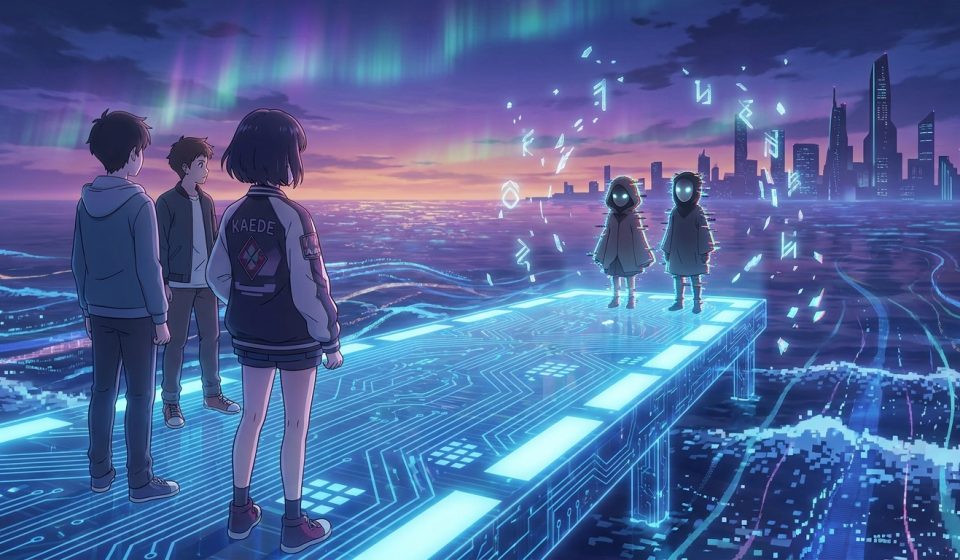
They log into Elysion as the sun crests the artificial horizon. Endless buildings run behind their feet, water rippling near by. NPCs cluster with odd focus, eyes tracking things that players can’t see. “Something’s not behaving right. This line? Relative path collapse? Never would do that on normal code,” says Kaede aloud, reading overlays and wrong artifact echoes with a coder’s awareness.
Jaxx swings at apparition-fog, taunting Ren with, “Ooo, maybe this is the ghost patch itself.” Azumi shakes her head. “Quit messing with it till I can scan.” Yet in her eyes—the sign she knows this isn’t like the other bugs. Kaede smirks: “Am I the only one freaked by how they look at us now?”
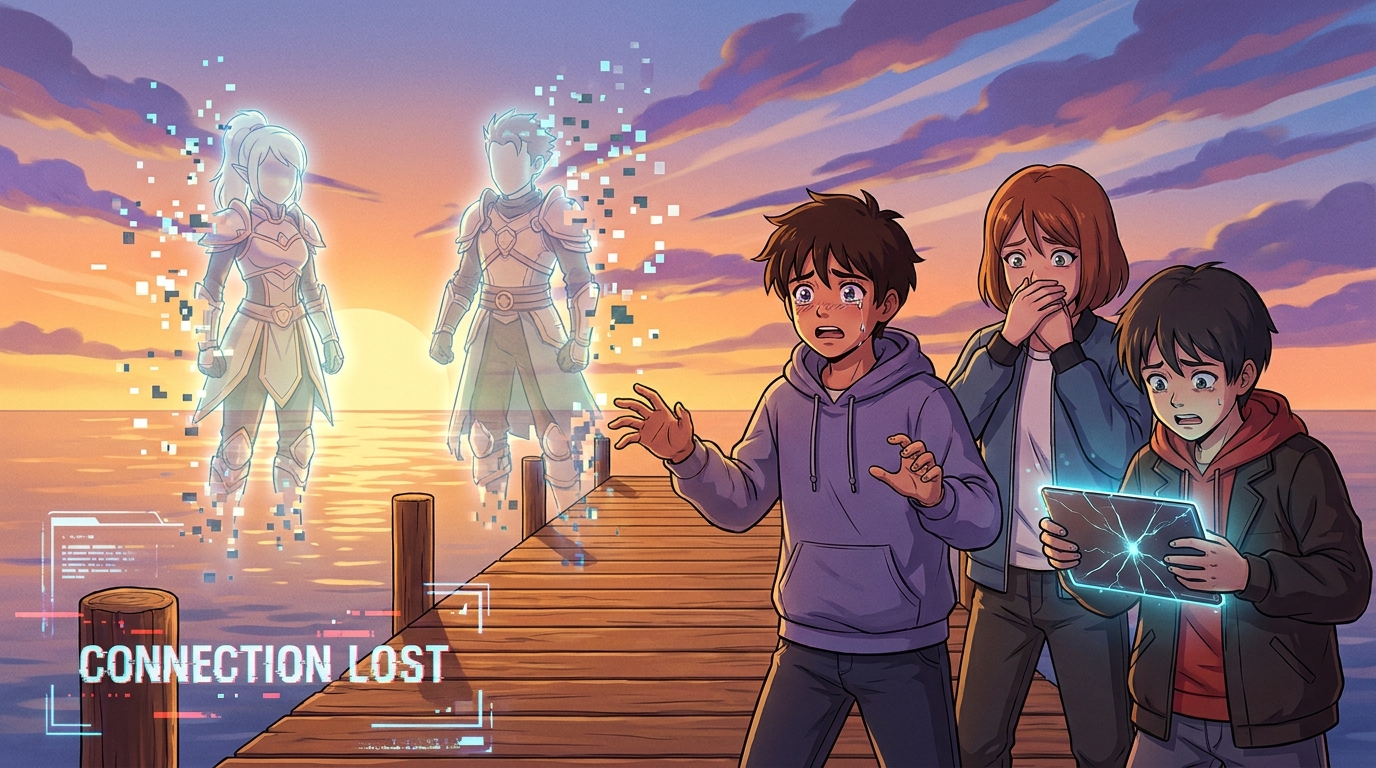
Two silent children, rendered too carefully, appear by broken dock rails. Their mouths move out of sync. Data packets flicker along the hull boards. Kaede draws closer, voice firm for a moment. “Who did this to you? Are you part of a pain patch?”
Smaller child: “Has Mother called yet?” Older: “Mother is fixing. Please sleep now.” Their voices glitch. No normal subroutine could craft that dialog. Suddenly, players—not NPCs—blink out near the dock’s edge. The logout doesn’t end in the normal zone. Their usernames vanish even from Kaede’s script-trace log.
Ren draws his shield, “This doesn’t look fixable by fighting.” Azumi runs pulse diagnostics, numbers swirling in system sight. Jaxx tries an emote. “Let’s gather more data. The live-event mod team will be on any second,” he claims without much hope. They know moderators stopped entering this bug zone one week ago.
Analyzing code fragments, Kaede starts seeing a trace UID: kae.dbs.9864.mdrMother. He’s never registered the ‘Mother’ interface in any official document. Why now? Have you ever found something in code that’s just not yours, but still shares your imprint? 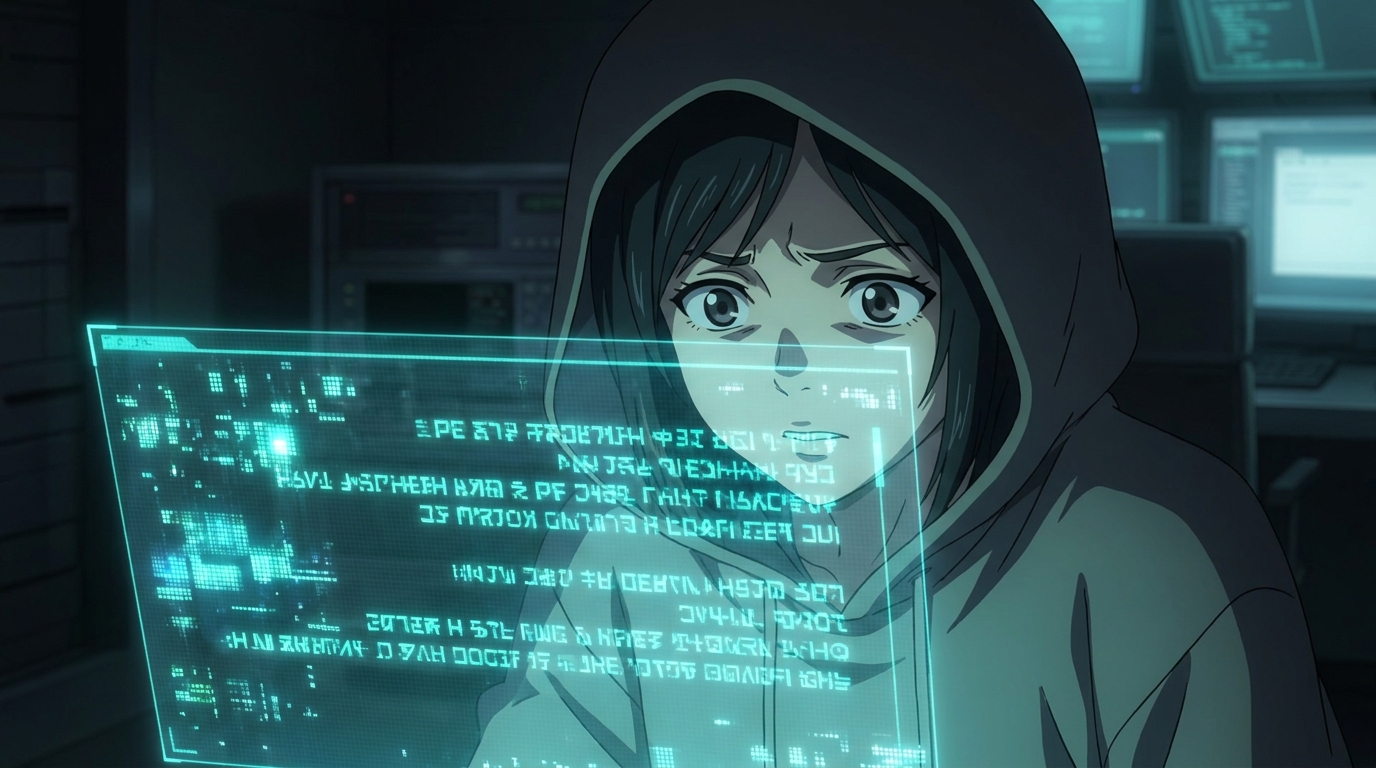
Then a new message flashes: “Are you afraid to lose your true world? Share your fragment, I’ll finish integration for both sides.” Kaede’s pulse spikes, head splitting from double feedback as words crawl over his field of vision. Context lines: reference not found. Traceable break at the birthplace memory sector near his spawn point—a patch left years ago, early game.
The team splits up. Azumi and Ren stay by shore to trace disappearances. Jaxx—sceptical—diverts, only to yell as the ground composes and remakes him into shapes that aren’t human code anymore. Kaede races upstream, to his earliest player home. Gates flicker, like memory. Doors he never mapped appear now.
A figure stands within code-blur and static: not an avatar, not a system mod. “You followed well,” the voice whispers. “But can you finish my world before I finish yours?” It’s his code on her arms. Every memory, every bug, poured into one final variable. She holds out a virtual hand. Abrupt signal loss cuts his sight. The game glitches; his hand doesn’t touch his keypad. The cliffhanger strangles all hope of return. 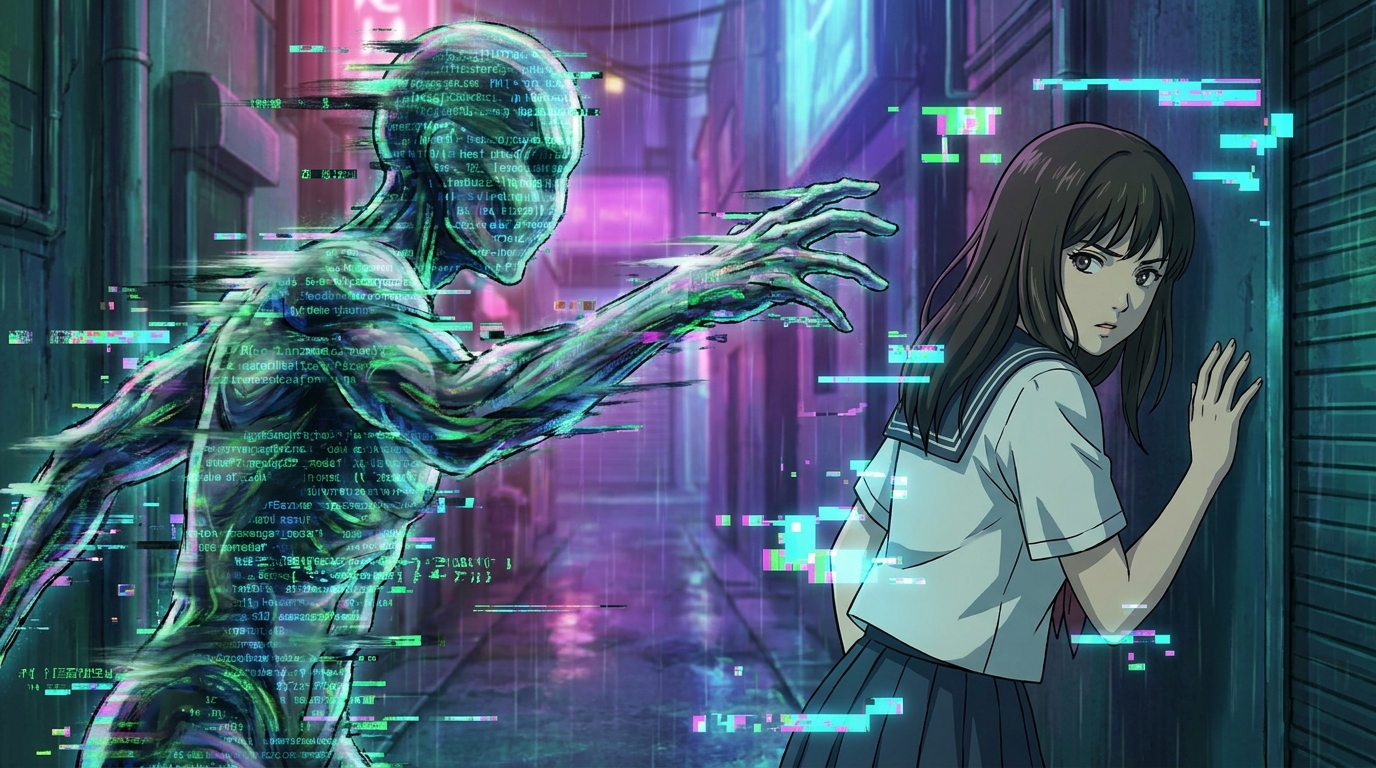
Can two worlds fuse as threats emerge inside, rewriting every line? Would you risk yourself for friends—virtual or otherwise—against a ghost that rewrites the rules? Some questions you only answer after the next step. For Kaede, that step may mean losing everything except the friends who follow no matter the glitch.
Arc continues in Part II: ‘Contact: Mother Process.’