
The White Line Arc: Episode 1 — Facing The Edge
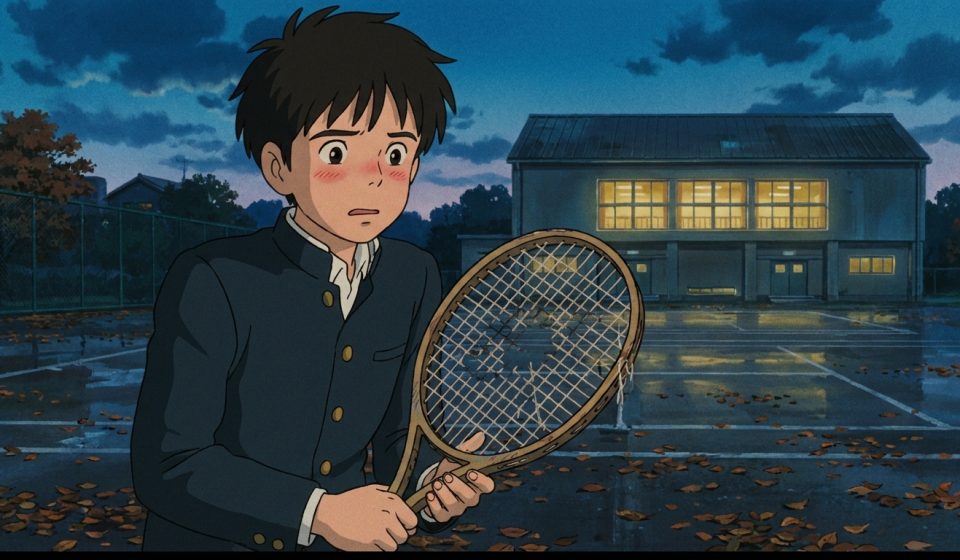
Kei Takarai isn’t known at Red Maple High for bold moves. He’s quiet, likes clean lines, and always finds himself on empty courts after class. The tennis club sits in the far corner behind the gym; nobody comes out here in fall. Sometimes you hear the wind, sometimes a lost ball against the fence, but that’s it.
Kei dreams about hitting harder, crossing his own line, but lately there’s a strange block. The prefectural tournament starts in just two weeks. For Kei, it’s this or nothing—third year, last chance. You ever feel you’re on the edge of something, but can’t make the leap?
One dusky afternoon, coach Kaori Suda, former student champ gone teacher, stands under a tree and watches Kei knock forehands into the net. Her eyes follow the sound, and Kei knows—she expects more. But what is ‘more,’ really? Should you force it out, or let it come to you?
His best friend Riku, loud and fast, swings his racquet into Kei’s space next. “Still thinkin’ about the draw?” Riku says, bumping Kei’s shoulder. Riku lives for movement. Kei can’t match that, but he never tries.
Coach Suda’s voice cuts in. “If tennis scares you, why do you show up?” she asks. Kei flinches—not angry, but wide open. Riku quiets down.
Is fear a reason to fight, or is it weakness?
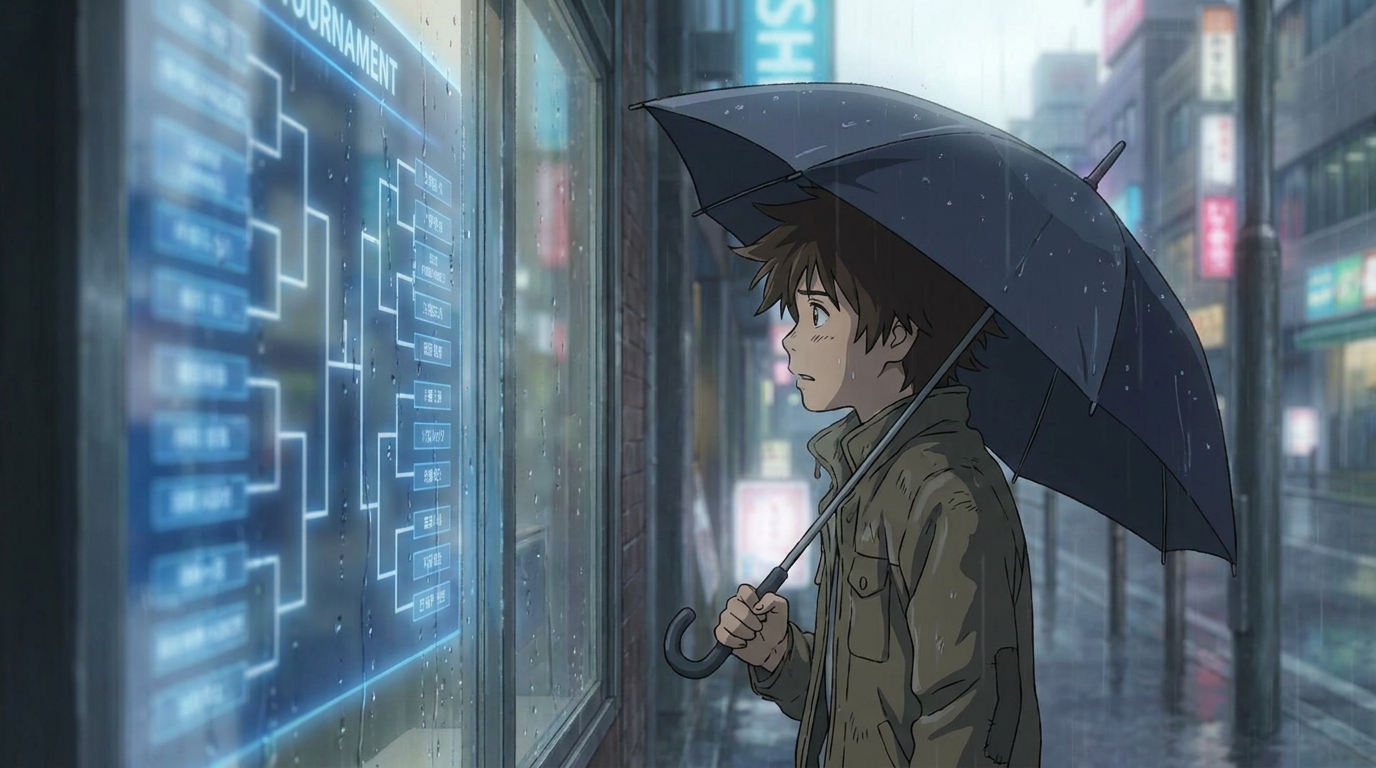
Next day—a rainy Saturday. The bracket is posted in the glass case outside the office. Rumor spreads: Kei faces Miwa Arai, seeded first. Three school records, no lost sets this year. Kei stands in the drizzle at dawn, reading and rereading his name against hers. What would you think in his place?
He tries to reach Miwa for a friendly practice volley, but she doesn’t answer messages. Word is, she trains off-campus, perfect routine, doesn’t speak much. At home Kei counts spins in ceiling cracks and hears a whisper: if you lose tomorrow, what’s left?
By Sunday, everything feels a little strange. Riku drags Kei to the convenience store and chatters about sneakers; everywhere Kei looks he sees nets, balls, white chalk lines. Later, on his street, two little kids volley a plastic ball. Kei can’t look away. ‘Luck or skill?’ he wonders, over and over.
You ever chase a thing until you aren’t sure why you even started?
That night Coach Suda texts three short words: “Swing through fear.” Simple. Kei mulls it over. In his room, under a manga stack, he finds an old worn wristband—gray, stitched with K.T. Riku scribbled the letters on their first match as kids. It’s grubby, but the band isn’t torn.
The next morning, Kei drags himself to the court early before the crowd shows. Mist rolls in and Riku catches him warming up. “Nervous gut?” Riku says. “Say something wild—might help.” Kei only shrugs. They say more in silence than most can with words.
Spectators file in. Hands clap, some shout, some don’t care. Miwa arrives with no smile, tucked hair, focus sharp enough to slice. She bows. “Don’t hold back,” she says. Kei returns it. He nods at Coach Suda on the sideline, who’s still clutching a cold coffee from dawn.
Miwa serves first. The hit sounds clean as glass. Kei tries to return, but the ball jitters right out. Point, Miwa. She nods; no mercy. Kei’s feet don’t want to move, but his hands won’t drop the racket. Each serve is a shock. He tells himself it won’t end with a whimper.
Does courage sprout from the line, or from the hit you keep missing?
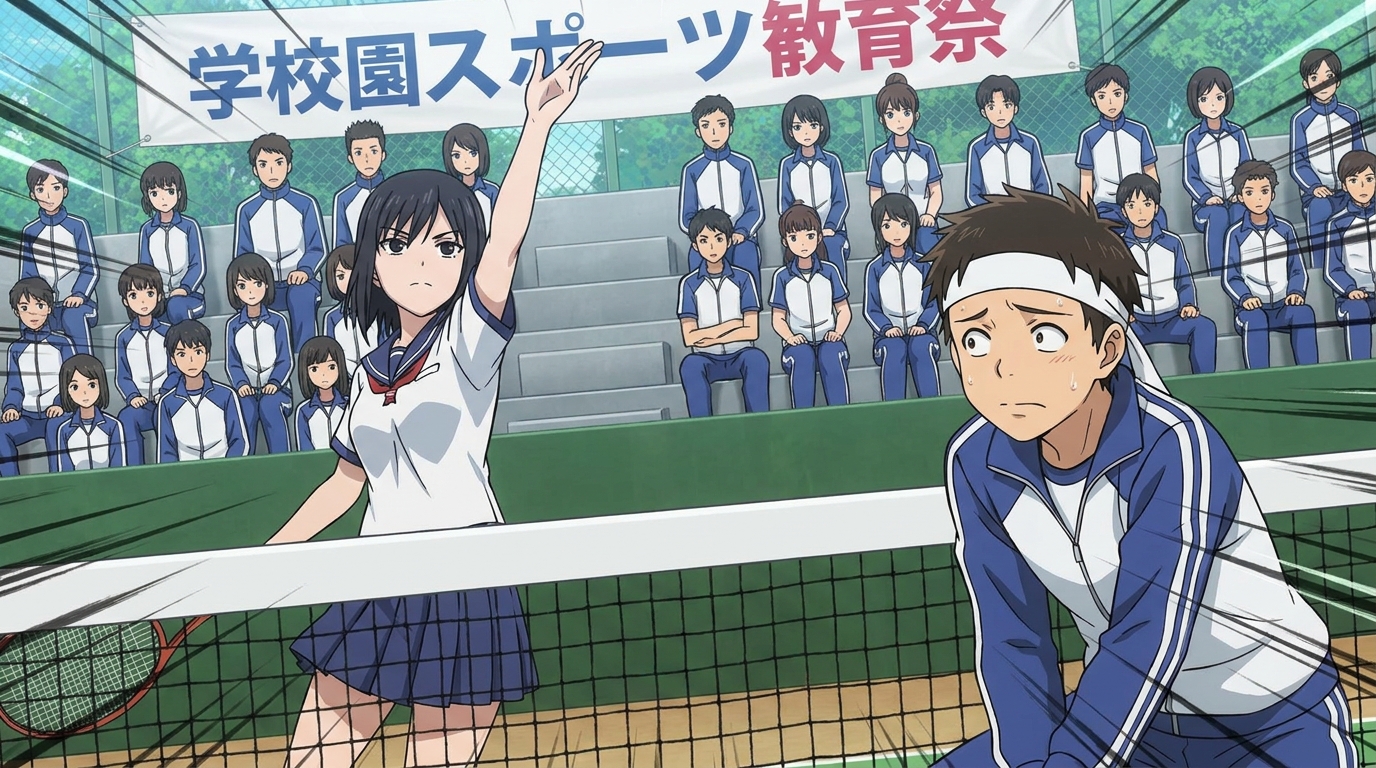
The match slides—Miwa’s up 5–2. Riku mutters to the people behind him, “Kei just needs one shot!” Coach Suda exchanges notes with an old rival at the net. The sun burns through a gap in the clouds. Midway through a rally, Kei hears grip slip off sweat—remembers the old wristband at his side. He rubs it once, inhales. Focused now, he aims not for points, but for that sound—one more clean hit.
On the next return, Kei dashes out, stretches past his usual fence, and connects right on the line. Crowd gasps, Miwa stops mid run—it’s in. “Good shot,” she says, lips tight, but her left eyebrow twitches.
That’s the moment—just a crack. Kei’s mind flickers with past games; he starts breathing different. Ball after ball, he runs out for wide shots, paints lines no one expects. Miwa adapts, drives him deep—the rhythm is brutal, court washing in sweat. Everyone watching sits at the edge. Do you ever wonder how many times you have to get it wrong before it finally lands right?
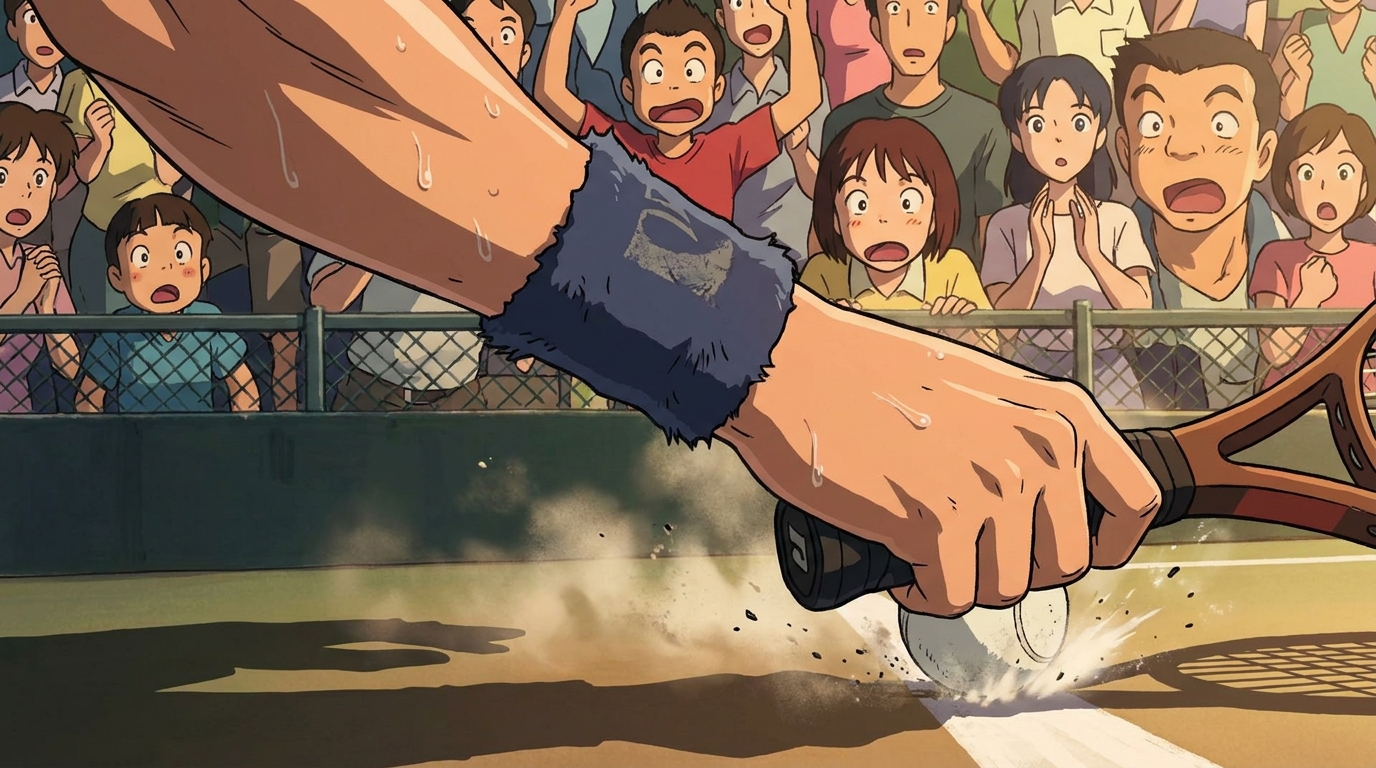
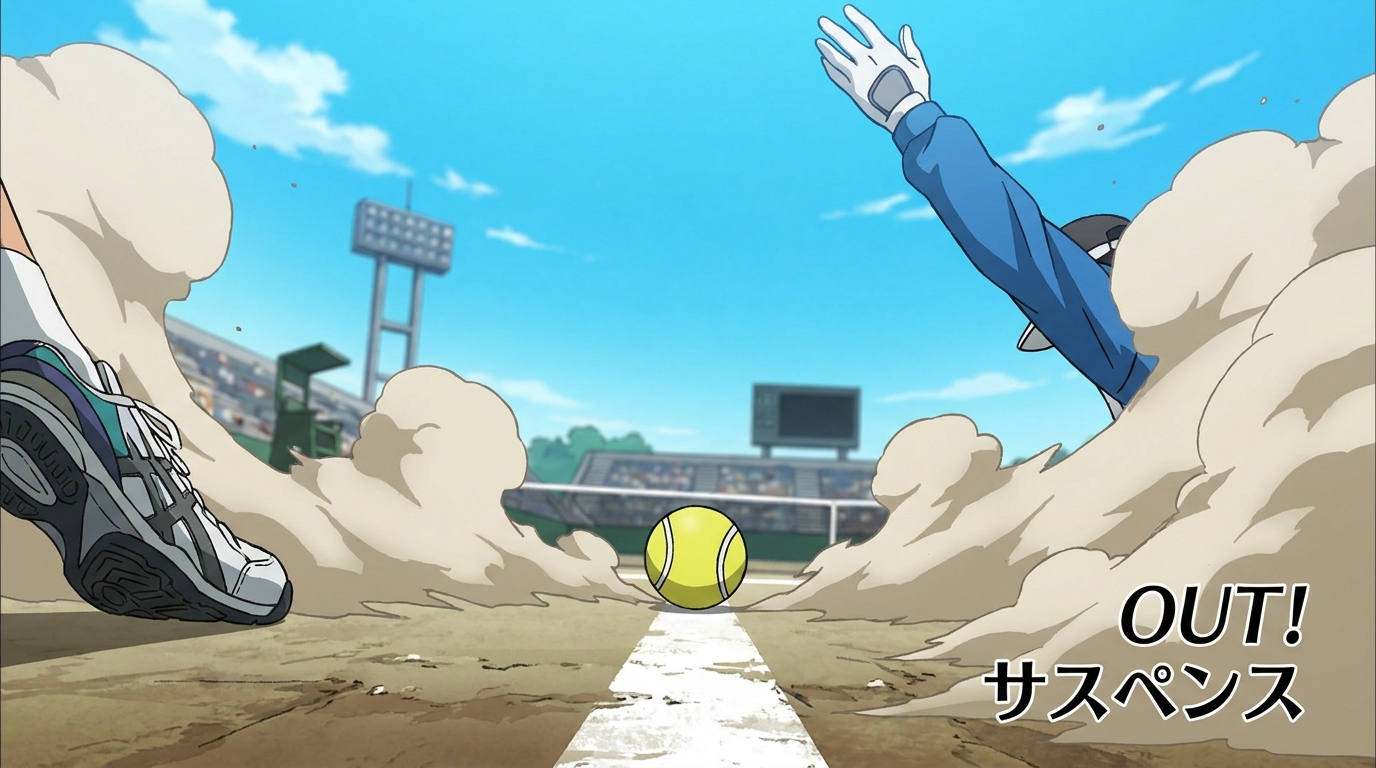
By 5–4, Kei’s body is heavy, but he trades fear for anger. He bats down two risky shots, narrow as hair. Judge calls: “Out!” Miwa’s ball misses the mark. The score ties—5–5. “Lucky or guts?” people whisper. Some call this talent. Coach Suda shakes her head, voice a rumble: “No—it’s resolve.”
The last rally lasts sixteen exchanges. Dust, wind, branded breath. At that last turn, Miwa slams crosscourt—Kei dives, the racquet connects, white line blur—judge shouts but the dust hasn’t settled. As the umpire’s arm rises to call, Kei blinks at the sky, unsure what outcome he’s earned.
END: “To be called in or out—sometimes the ball decides.” Cue city noises, screen fuzzes to black.