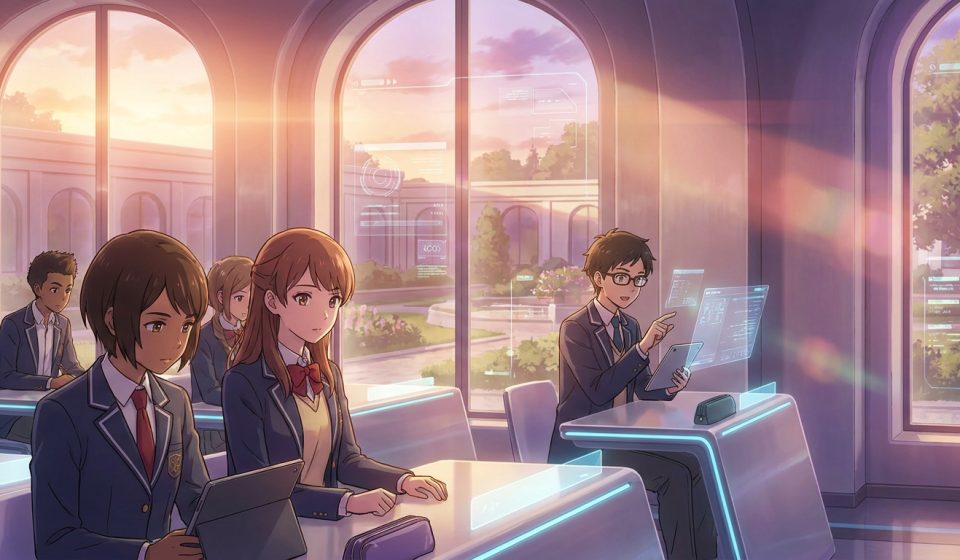

A Mind Like No Other: The Marukawa Academic Siege
Yukio Harada just wants to make small things better. He likes clean solutions to big problems, and there’s no puzzle he’ll ignore. People at Marukawa Academy say he’s their one true prodigy. Fact is, Yukio’s driven by a simple itch—the need to understand. Can you relate, the urge to pick at facts until everything fits?
Yukio’s sixteen. His favorite spot: fourth row, window seat, always with a perfect view of the quad. Aya calls it his ‘observation deck’ and she’s not wrong. Aya Iwashita helps him break out of his head when he gets stuck. She knows when he’s not really listening. Kazuo, the council rep, is his go-between for everyone else—a kid with reach but who always wants things fair. Together they don’t solve world hunger, but when the new nationwide Academic Decathlon locks Marukawa’s top minds in a three-day live contest with their rivals from Mizuoka across town, things get tense.
This year there’s a curveball. Every point and every clue counts, since their opponent school is funded by a company with real power. Lose, and Marukawa loses state support; their robotics program, scholarships—gone. Yukio steps back, stares at the logic tree on the board, and, for one small moment, doubts his plan. “Should we go with the clean play, or something better?” he asks Aya, who bites her lip, glancing at their underdog team waiting for hope.
The three-day Decathlon starts with a midnight test blitz: cryptic problems, live chess with hidden rules, and a group essay on AI ethics. Yukio bucks the norm, moving the team to one table against protocol. In that glare-filled room, Mizuoka’s ace Kento calls him out—but Ayumu, the dark horse coder from Marukawa, pulls hard to break the opponent’s algorithm during the live code-skirmish. Get the idea that some see school battles as more than sport?
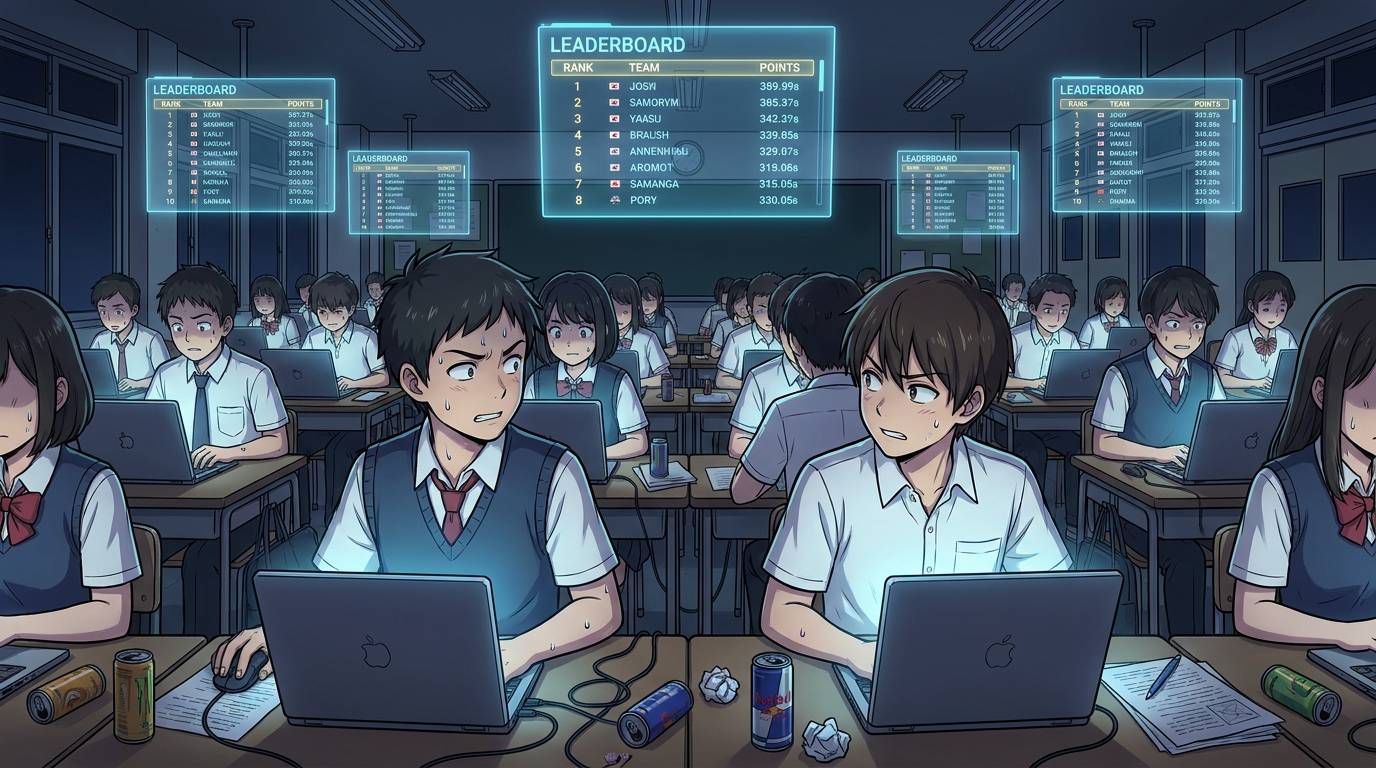
When points run close, Yukio bets: he drops his own scores to shield Aya from a subtractive hazard hidden in the rules, reasoning that the team needs her sharp memory through round five: drone fault finding. Voice tight, Kento throws neat taunts Yukio’s way. “Your logic tree breaks under stress, Harada—a fact’s a fact,” he says. Yukio sighs, refines his plan, answers with a strange calm. “Not every branch is meant to hold weight,” he replies, half-warning.
The third night, Marukawa’s team learns Mizuoka’s source code for the drones has been salted with trash data—all legit, but nasty, like watching a chess game where knights move twice. Aya narrows her eyes, Kazuo clips excuses. “We break it or lose everything.” Yukio flashes both worry and thrill: “Which hazard do you see—the poisoned game, or odds no one dares bet on?”
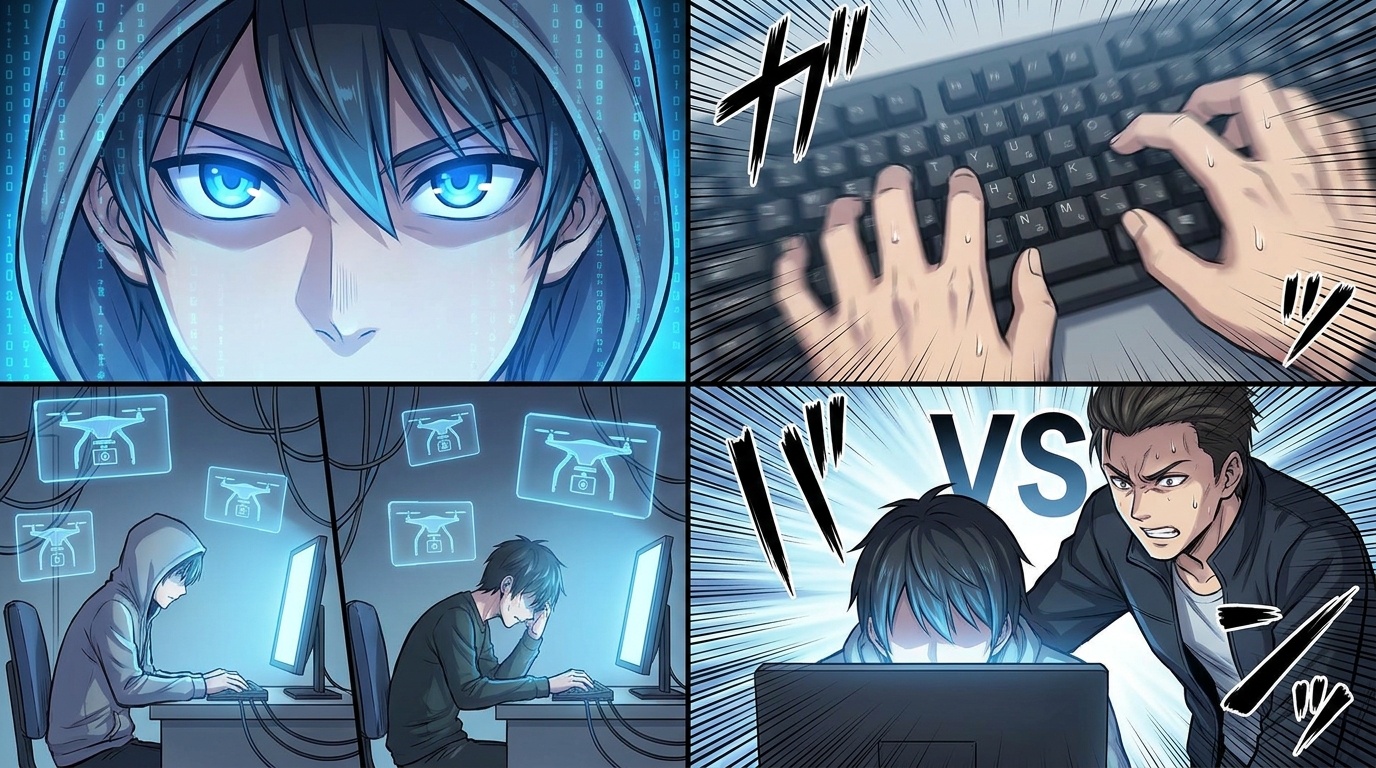
Panic’s right outside the classroom. Live stats roll on huge panels: Marukawa is down by 7 points. They need a comeback. Yukio turns off his laptop and listens. Really listens. Long enough that Kazuo pipes up, “If you tell us what you hear, I’ll trust you.” Yukio whispers about pattern clusters hidden in drone error logs. Soft, careful strategy cuts through the static. The room holds its breath. Ever won or lost by pure attention?
The climax builds with every timed code push. Sleep gone, morale thin, hopes like wire pulled taut. But then, Yukio’s blitz-bug fix sends drones into smooth sync. Their bot lifts from the runway, flawless, even as rivals drop in real time. Even Aya kisses the table in relief as adult judges murmur. Tension’s thick, but for five crisp minutes, genius looks like small grit and broken sleep winning over slick and easy.
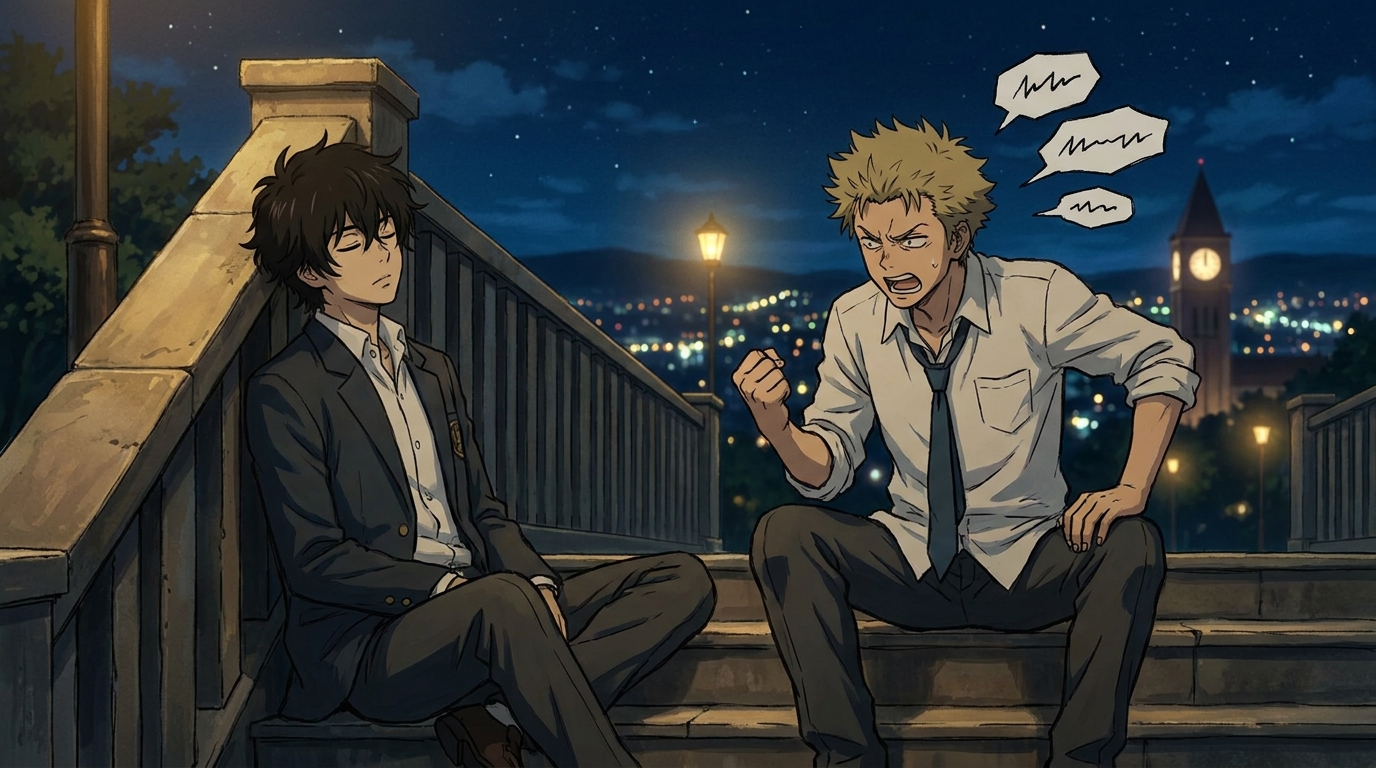
On the final scoreboard, Marukawa surges but stays one point behind. The panel chair coughs and declares a review—someone hacked the judge AI’s outputs. Blame points to both teams. Mizuoka’s principal gets ruffled. Yukio meets Kento at the stairs, each stiff from the stress. “Tie isn’t a crime,” Yukio says. “For now, maybe,” Kento replies. They shake hands, both wary of what’s lost or waiting in the night.
Error logs, dispute panels, sleep-drunk students—all pile up by dawn. Marukawa hasn’t won, but hasn’t lost either. There’s a catch. Yukio spots an anomaly in the Decathlon protocol. Aya looks up from her tea: “Is this over?” He just shrugs, a weary smirk bleeding from the side of his mouth.
The arc closes not with a win but a dilemma—Mizuoka challenges the ruling and all teams will face public review. Next time, the game will shift from code and quiz to the bigger fight: who claims merit when systems fail? Will friendship or rivalry matter more? If you could change the rules, would you dare?
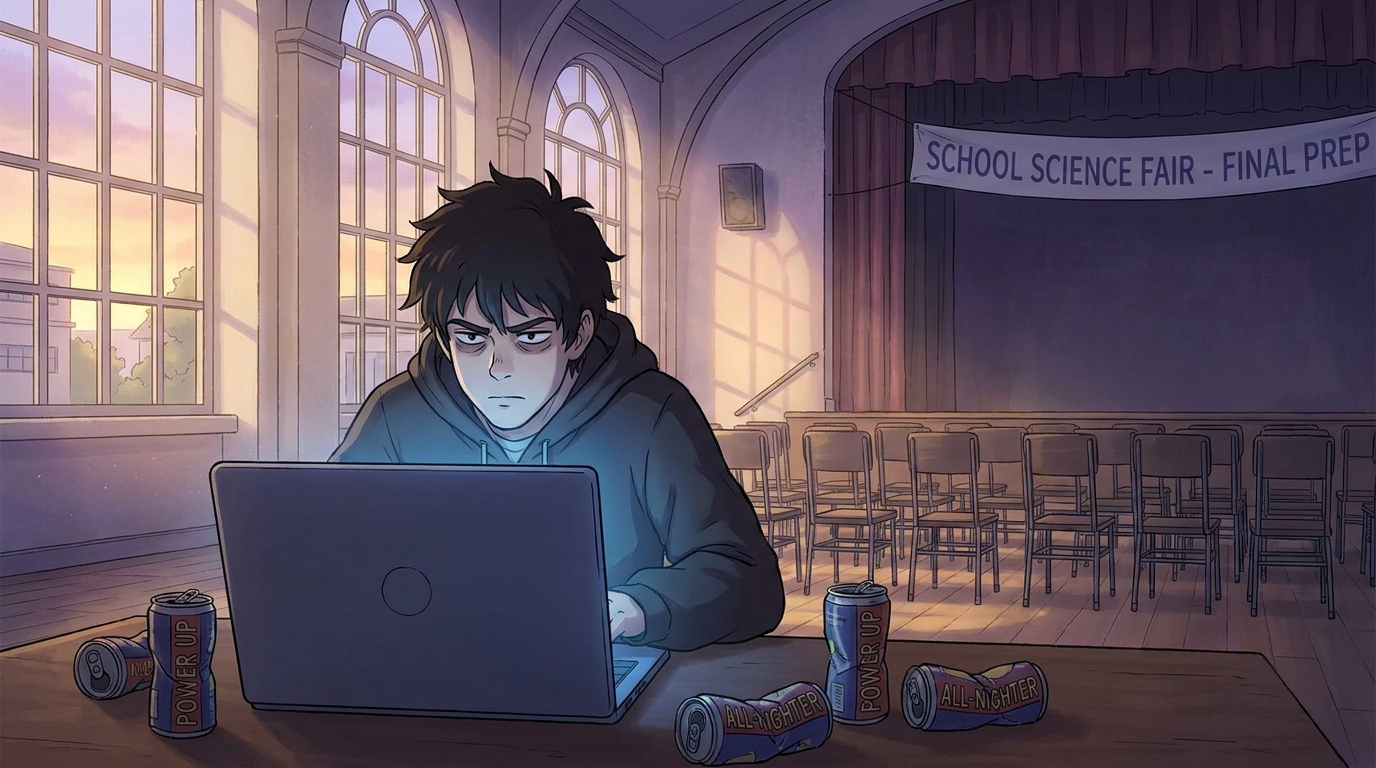
And so, Marukawa’s prodigies stare at screens, waiting. How would you outsmart the game if your pride—and your friends’ futures—hung in the balance?