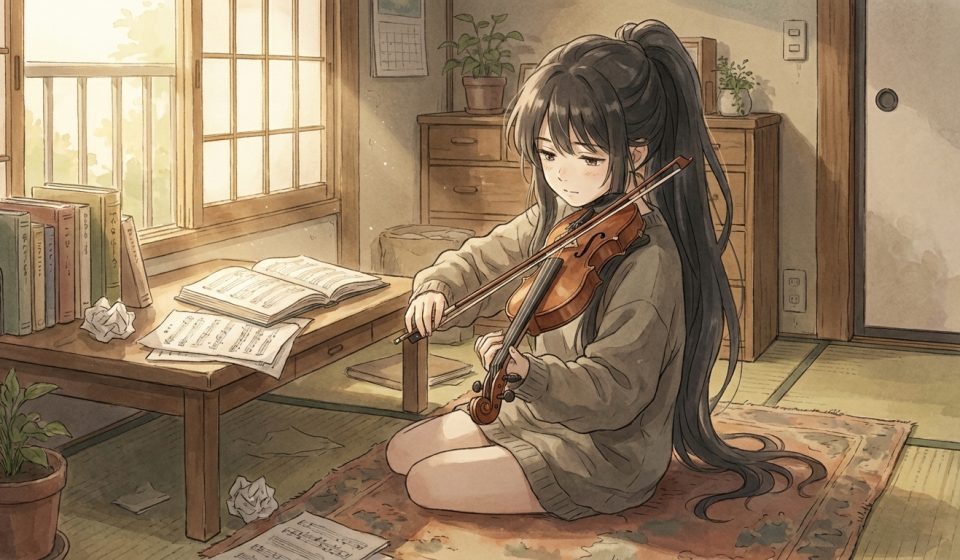

Miyako Yaguchi just wants her class to view her as someone more than the quiet girl in the last row. She rarely speaks up, yet her mind hums with music the world can’t hear. For the past seven years, she’s practiced an old violin by herself. Did you ever wish you could reveal a side of yourself that no one knows?
Her childhood friend, Sota Fujima, is her polar opposite: noisy, always in a soccer jersey, and always getting attention. Sota has his own secrets but laughs them off. This new story arc opens as their school unveils an annual ‘Hidden Talents Day.’ Everyone groans about forced talent shows, but for Miyako, it’s a sign. ‘Maybe,’ she thinks, ‘if I show my real self, they’ll get to know me.’
The main teacher, Ms. Kitano, seems as disinterested as the students, but begins hinting at varsity scout visits. In homeroom, she throws out: ‘Some visitors may choose standout acts for bigger shows. Don’t be bland!’
Miyako debates signing up, each night practicing complex pieces. Her sister, Hina, jokes about Miyako’s secret concerts: ‘Can you play without your room’s four walls?’ The line lingers. Real-world stakes drive her to question if everyone here hides something. What if revealing a talent makes you… different?
As practice day nears, Sota bumps into Miyako under the old camphor tree—literal and not-so-literal roots, Interspersed with snippets: ‘Yaguchi, sing something crude for once!’ She tries. Misses a note. Both laugh.
Now comes the twist—students start leaking random records online. Failures, odd tricks, ugly snapshots of other acts, and whisper circles grow. Someone’s using secret footage to crush rivals, and the school splits: help, hide, or risk. Miyako half-wants to quit. Sota urges her to stay in: ‘No one’s watching for your music. That makes the stage yours. Matched, you in?’ He offers his own shock: he once won a junior magic contest but bombed at a public try-out. He’s never shown anyone since. Who isn’t hiding?

Four days out, the phone rings at dawn with word: half the rumored favorites have dropped. Ms. Kitano threatens to cut the day if these attacks win. Miyako talks with Hina that night, asking: ‘If no one cared at all, would playing matter?’ Her sister throws a pillow: ‘Since when did people not matter to you?’ Easy jokes, but honest stakes seep in.
At rehearsal, Miyako sees a bullied classmate, Aki, sneak out of the gym closet after getting splashed by cleanup foam. She tracks down the prankster in a quiet aside. It’s not even about Aki. The student mutters, ‘People only clap for noise. Do you want to be picked apart?’ That stings, and those words float wherever Miyako goes.
But setbacks aren’t everyone else’s ending. Miyako tries busking at dusk behind the art rooms. Crows, wind, one stray cat—the crowd is light. Sota finds her again: ‘You’ll always sound best off-stage,’ he jokes. Yet he watches as she dares three straight tricky bars, stumbles, laughs, and keeps on.
The day of Hidden Talents arrives, audience seats full of parents, clubs, and three regional judges. Peers look tense, and whispered lists shift every time a phone buzzes. Miyako stands at stage right, her violin case cold in her hands. Pants dry and shoes tapped twice for luck, she walks out.

Spotlights warm her face so she can’t see past row three. The first strains slip, not clean. She grips the wood tighter. The only sound is the building laugh from some phone in the back. But she can’t look up. Three notes later, her own hum fades—the room’s hum is louder. She has a choice: freeze, or lean into the moment.
Then, she closes her eyes. The broken bar follows, then five flawless ones. The girl next to her hums in low harmony, surprising Miyako mid-piece—another kid joining in, out of nowhere on daring instinct.
Applause. Some, at first, then most. The room is thick with new emotion—words left for breaks afterward. Sota is backstage tossing applause in the air, trying to start a cheer, dumbly beaming, ‘Now that was risky.’
The judge in the purple scarf proclaims, ‘This next act changed the room. For that risk, we want to see even more next time.’
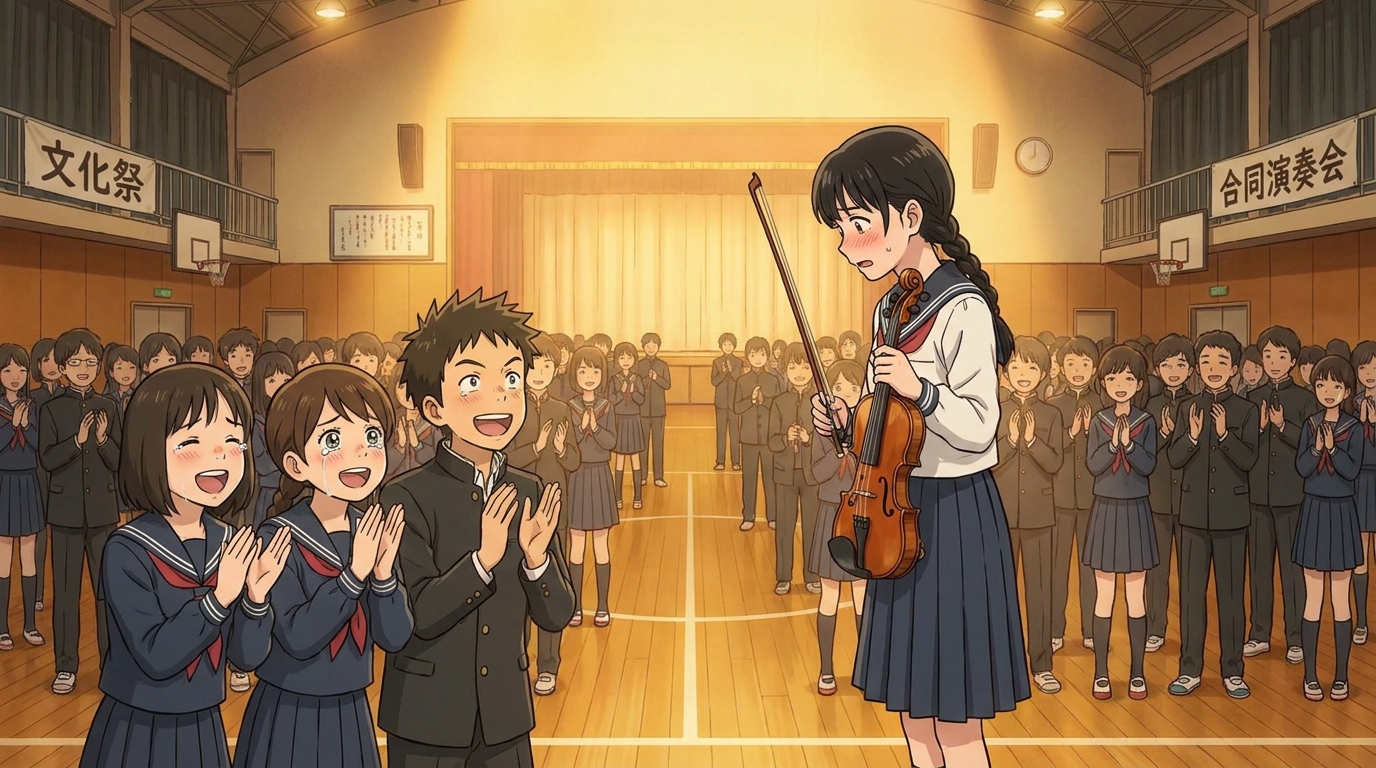
Before she can put the violin away, another student pushes through—a recorder player, then Sota, with a magic-trick reveal. It’s no longer about division. For tonight, everyone wants to show some strange new angle. Ms. Kitano remarks, half to herself, ‘If this is tomorrow’s Japan, maybe we’re okay.’
The cliffhanger: that night, Miyako gets a cold message to her school account. It reads, ‘You think they’re cheering for you, but wait. You just set the next trap.’
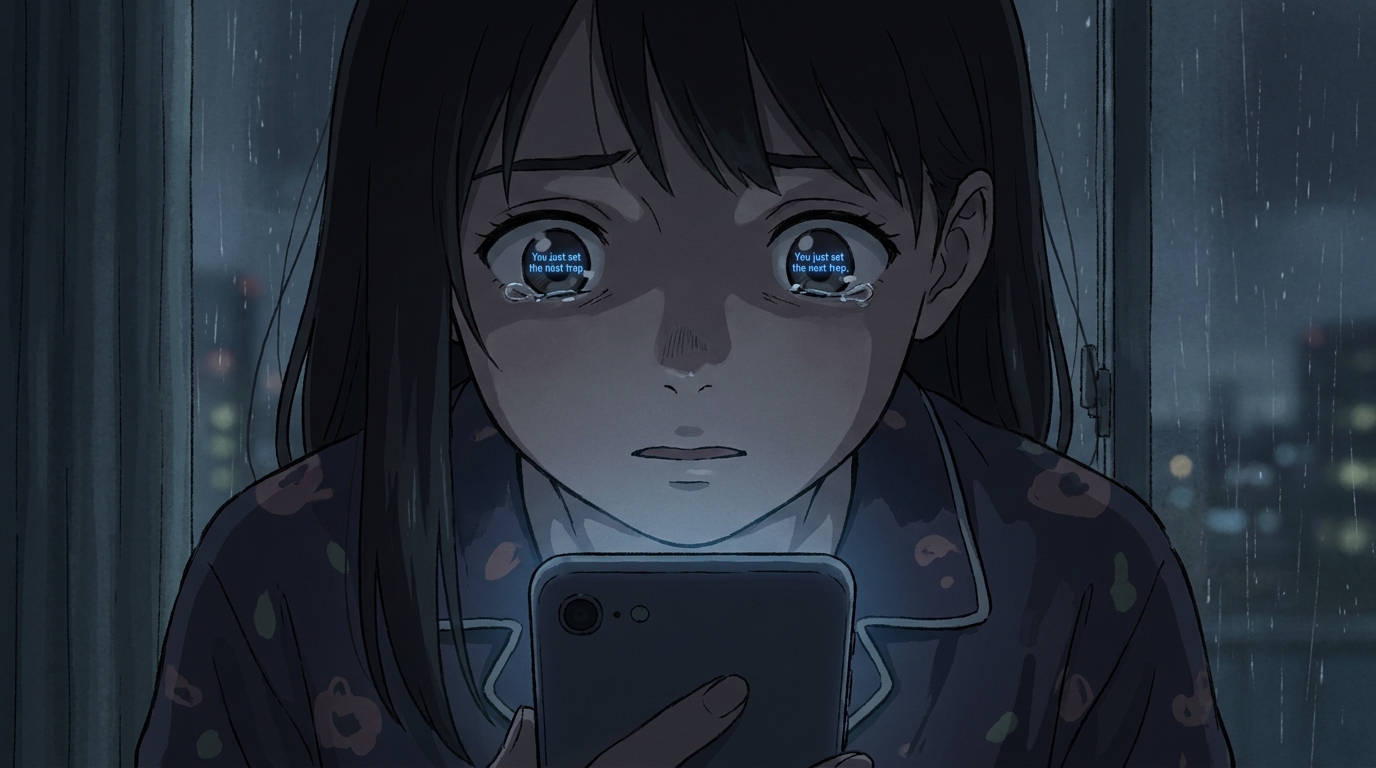
Suddenly, the next arc’s stage is set: what happens when your secret is no longer just yours? Can sharing draw enemies as well as friends?