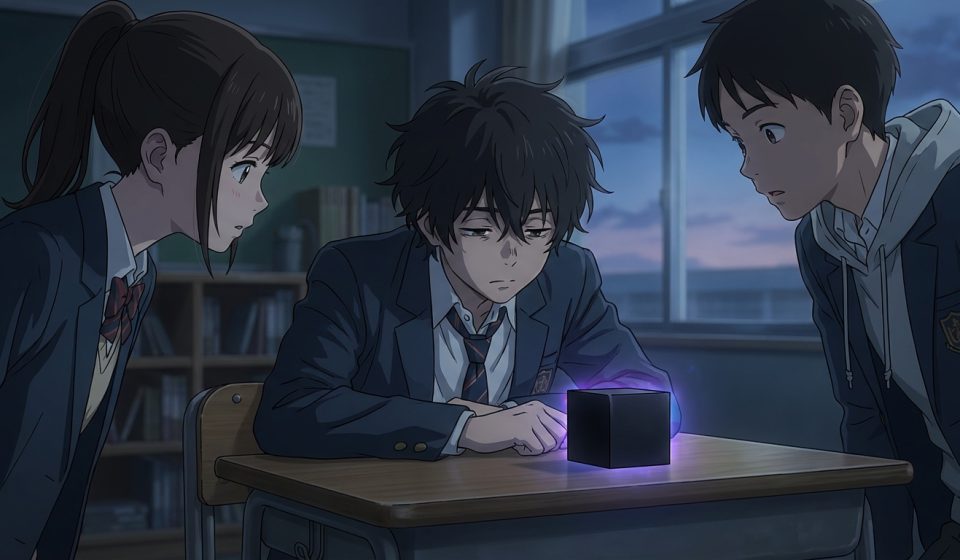

Rain bumped his head on the classroom table, a faint mark blooming, senses still spinning from last night’s late coding sprint. The clock blipped 7:56 a.m. Old paint peeled off the ceiling. On his desk, a metal cube buzzed and blinked, echoes from a half-finished science project. Ryu—sharp-faced, often smirking—leaned close. His teeth flashed, eyes full of restless fun.
“Did you get any sleep, Rain?” he whispered, poking the cube. Ren, always the critic in their group, rolled her eyes. “What genius will fail from being half-awake, I wonder?” Did you ever have a friend egg you on this way?
Rain grinned, rubbing his neck. The idea in his head didn’t let him rest. That midnight spark—the ‘random walk’ code for the science fair—nagged him. Every atomic step unfixed, all choices played out by code but, maybe, not just code. Was it about seeing deeper patterns, or just seeing where experiments moved when let loose?
Class started with Professor Amaya stamping in. She liked cold logic, sharp as the chipped board the team used. “Today your group scientific experiments are due,” she said, no fuss. “Show something new. Repeatability is for journals, surprise me.”
Rain set his cube in the demo spot. Sensors hummed. Red bumps inside scattered light across polished steel panels. Around him, classmates squared off in pairs. Ryu snapped his goggles in place, ready for backlash or glory. Ren crossed her arms, eyes softening. Their group focused in as if a string wound them tight.
Rain pressed run. Hidden motors rattled the cube’s core, forcing odd, chancy moves tracked by digits across each face. “This replicates a 3D random walk—nano-bots mimic chaotic atomic spread,” he announced. The movements read out a blocky trail across paper. The plot bent and looped, suggested a shape after a point. Kids started to crowd closer, drawn by the zigzags unspooling like spilled string across the test plate.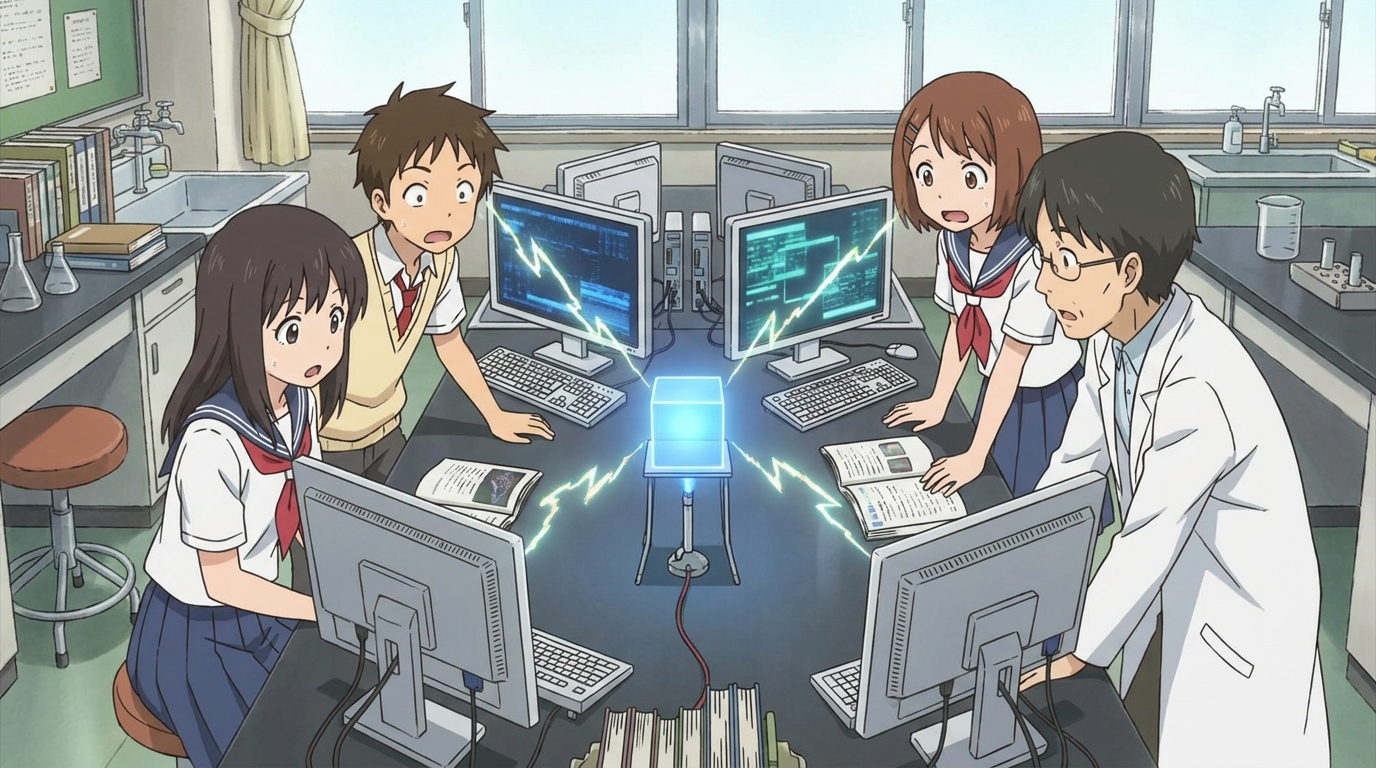
Ren widened her eyes at the faux-random figures. “But the same program, the same start…you get something different every run!” Ryu rapped his knuckles to stop the sensors drifting. He snorted, half mocking and half spooked. “It’s just noise, Ren. Math in action, nothing pre-written.”
Then the cube stopped—surface lights froze in odd colors. The tracking string flickered and data began to spit out new patterns, small at first, then rapid. Rain blinked, about to shut it all down. But the voices started, almost quiet enough to miss, patterns repeating in grids none expected to sync. Data showing shapes that resembled rough faces, letters or unknown old maps. With each new trial, it wasn’t just noise. The randomness, uncaged and automated, danced close to something regular. Each “random” walk grew less wild. More…predictable patterns coiled inside, hidden seed numbers emerging with clear tints on the screen.
“It’s acting alive,” Ren said—half challenge, half awe. Why do machinery patterns fall into rhythm after a while? Numbers seeded with too much code logic, or something deeper in random? Was the cube broken…or was Rain?
Prof. Amaya joined. She bent close, her dry voice edged with worry under the praise. “I know this approach—pseudo random is not random, but hardware-noise randomness shouldn’t repeat. That’s quantum-level math, not toy-grade logic.”
Ryu raised an eyebrow. He peeled off his goggles and hissed. “Did you pre-code this just to make us look amazing, Rain? It’s weird enough without voices.” But everyone grew still. Could you turn away at a pattern reaching out from code, or hold tight?
Rain argued it couldn’t be deliberate—a cube stuck on its test bed couldn’t predict or play out faces, echoes, ghosts from muddy background code. Professor Amaya marked something in her notebook, her eye flicking to Rain every few lines.
The group spent all hour replaying the experiment. The results stayed, oddities stacking—images and lines, hard to call truly human, but echoes of order in spark and static.
By lunch, Rain doubted his memory. Ren muttered, almost soft enough to not notice: “This is how rogue AI stories start—small things acting bigger by the hour, chance turning to fate.”
Data logs grew messy. Ryu rigged his phone, caught video proof of cycling forms: sometimes letters, other times angular faces all kids agreed looked far too much like old teachers. They combed bug reports. Seed numbers shouldn’t match. Hardware checks turned up nothing. Yet—patterns grew clear with every run. 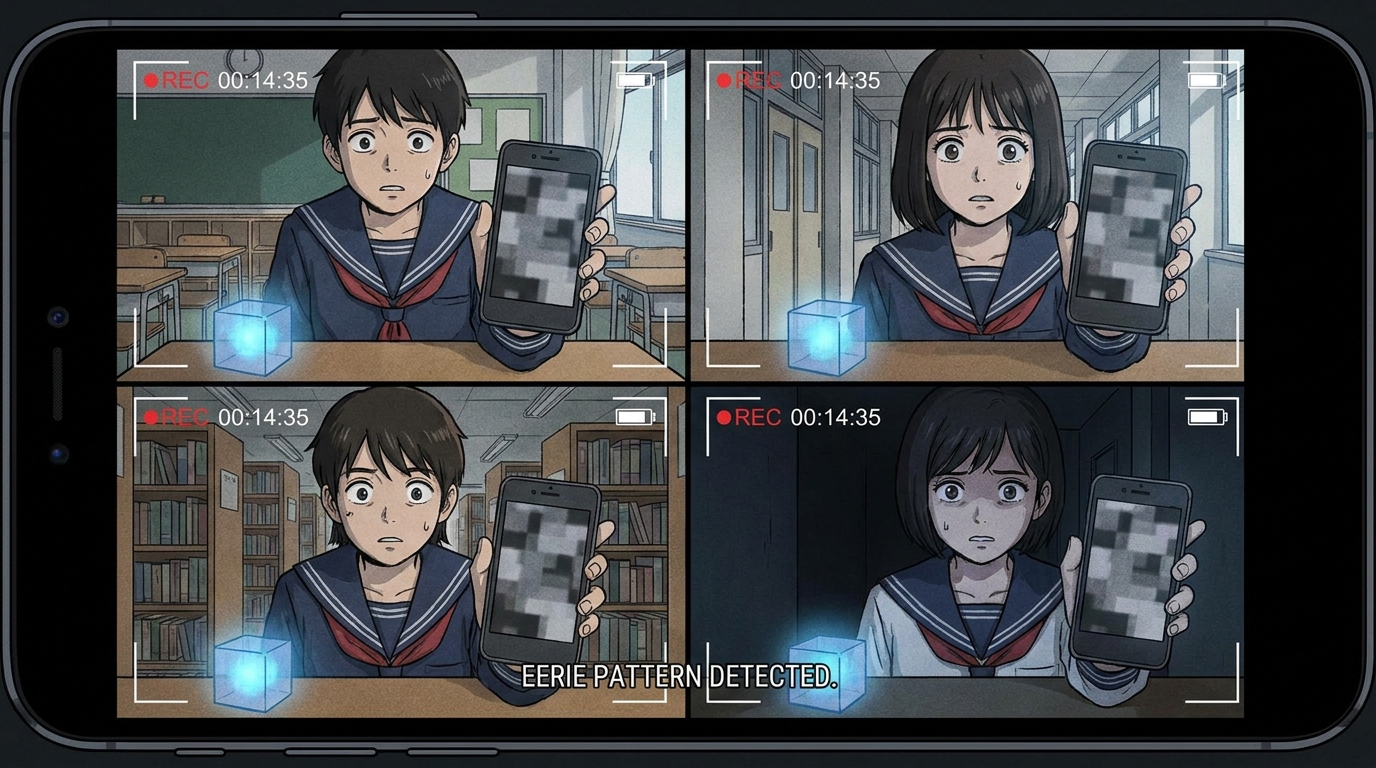
Didn’t this seem nuts? No error message, no pattern except through constant rerun. Rain’s code was unchanged. They asked, “What if it’s something in the room?” Ryu checked, hands trembling unlike his normal. Ren reached under the table, found wires had twined more than anyone wanted.
Audience spilled in after hours. Half the engineers from the science club wanted proof of pure randomness; the philosophy crew argued it showed data-eerie intent. Some kids claimed it was haunted. Salt sprinkled near the base. Chat filtered out what was mundane from what sat at the corner, alive now only as whispers behind layers of math.
Professor Amaya put her hand flat to end it for the day. “Enough data. Pack it up, Rain. There are surprises inside patterns—some are good, some…eat you alive if you look hard enough.”
Night come, Rain and company huddled in the lab. They faced a dilemma—show the findings in full light, or bury logs and claim nothing but neat zigzag math for the contest.
The episode cut out as static trickled to music. The cube’s tiniest light kept blinking in a soft blue. Someone—cut deeper in code—a new test about to auto-run, its forecast seeded not just by human intent, but perhaps something awakened in real hardware crime. Would Rain face what emerged, or repeat the run and break the script? Isn’t that the bind, always, with experiments at the slip-edge of science fiction?
The contest would prove tomorrow. The light stayed on deep into midnight; patterns waited for new repeaters. How would you choose—scrub the code, show the risks, just let it walk one more time…?