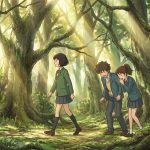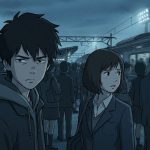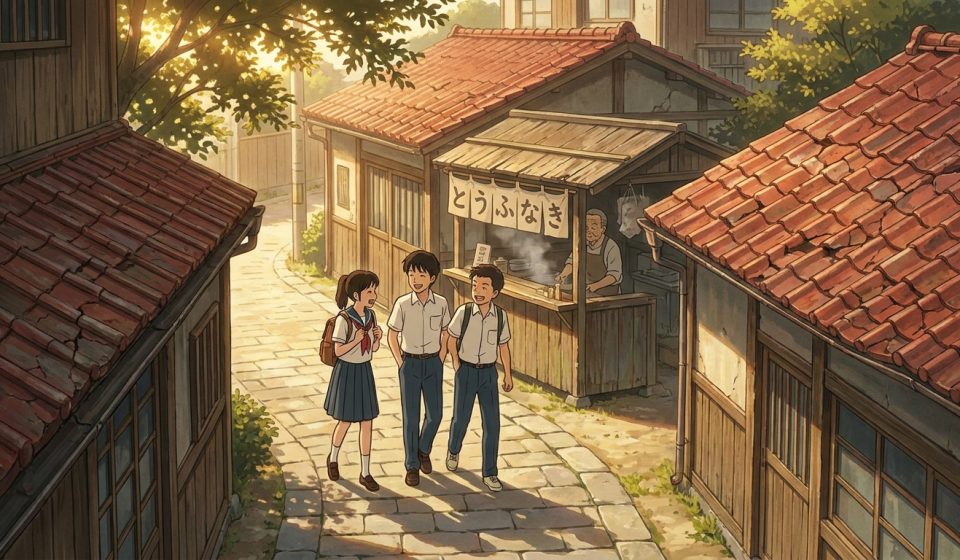

Kitanami sits on an old street where stale afternoon sun glances off cracked red tiles. The air always smells a bit like flour and green onion. On this odd Thursday, wild things start and nothing goes how you’d expect.
Takao Showa, our lead, is a seventeen-year-old who forgets to leave shoes by his door more often than not. He wants a ‘good’ future and fights sleep for late hours, working jobs his grandma doesn’t know he has. His main joy is sketching local folks in his battered blue notebook, tracing worlds that aren’t real—yet he can’t smile when others are watching.
His friend Mina runs the tofu shop alone. Mina’s hair is pinned with clothespins, rare flowers among the whirl of small voices. Her dream is to make her lost mother proud and quit the tofu work, but the phone never rings with a miracle offer. Mina and Takao trade snacks for chores each morning, burning their tongues and wrestling old thoughts.
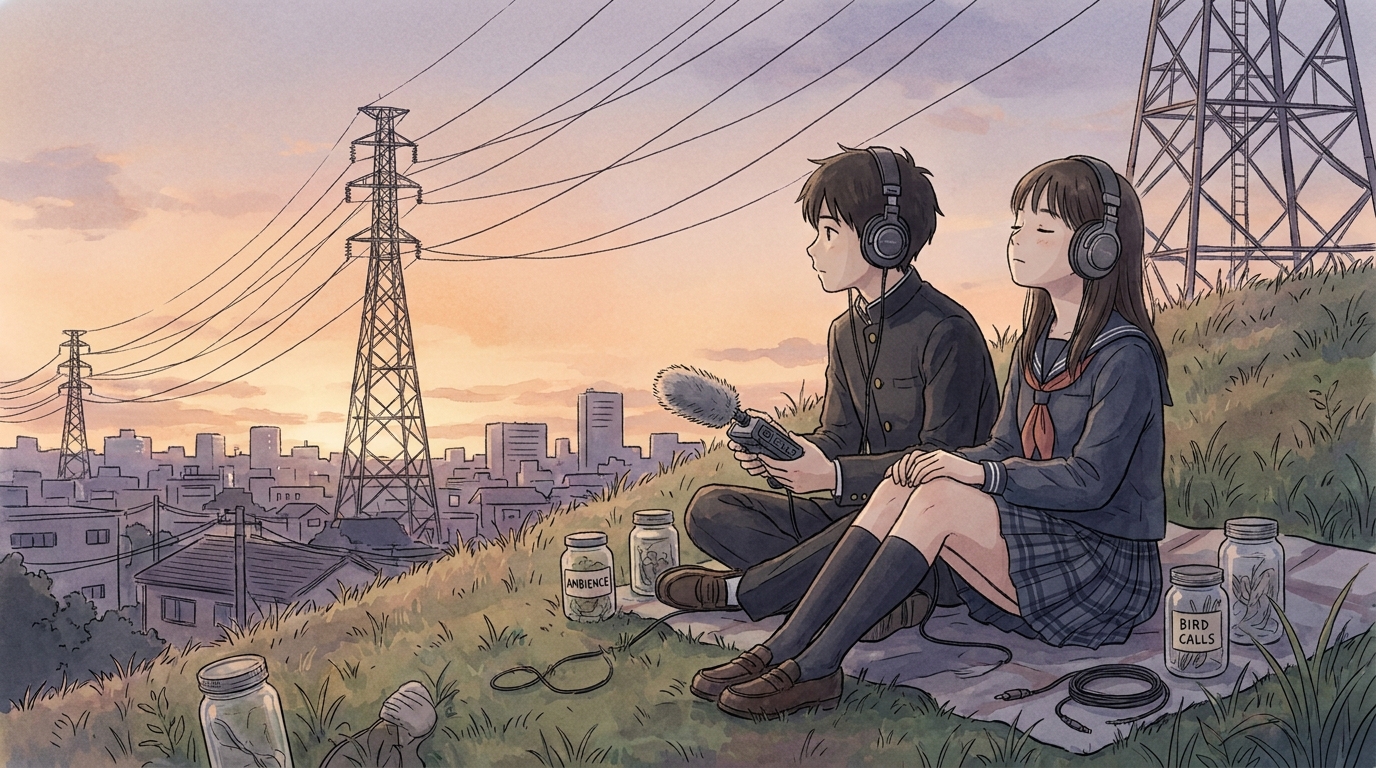
One thing doesn’t sit right today: Sora, who spent last year away in hospital, is back. He’s turned strange—wears headphones even while biking, hums a new tune no one knows. Takao catches Sora staring up at the power lines at dusk, lips moving. Takao asks, ‘What’s so good up there?’ Sora waits. ‘Can’t you hear him talk at night? Like a story you forgot.’
Sora claims memories drift over wires after storms. He tells the others, ‘You gotta gently listen before sunrise, just before fish sellers open. Sometimes it’s grandma’s voice baking rice, sometimes, ‘a sister you never met,’ he whispers. ‘I want to catch a memory, tie it down with red thread, and learn its story.’
While most laugh, Takao doesn’t. For weeks he’s woken from wild dreams with his arm tingling and roads outside echoing secrets as if fog is filled with voices. That night, Takao calls Mina. ‘Should we try it?’ Her answer: ‘Bet I catch more memories than you.’
A plan grows—a Memory Game at dawn. Each person brings their own method: Sora’s headphones, Takao’s old recorder, Mina’s jar with the thickest glass she has. Question for you: would you choose yet another tool or just hope your raw senses do the work?
They sit under the swaying lines, city haze turning purple miles overhead. They don’t talk, each wrapped in their hope. Wings twitch from crows at the foot of a dull vending machine. A stranger with a peach umbrella waits across the street but turns before the sun rises.
Nothing pure happens right away. Takao hears distant laughter, rough like broken shells. Mina’s glass muffles something low and trimmed with the kind of hush she hears just before nodding off. Sora smiles. He says, ‘Got one—my granddad telling me pipes sing. Didn’t remember he used to say that.’
More games follow. Do you ever wonder what you’d catch overhead, if you bothered to wait?
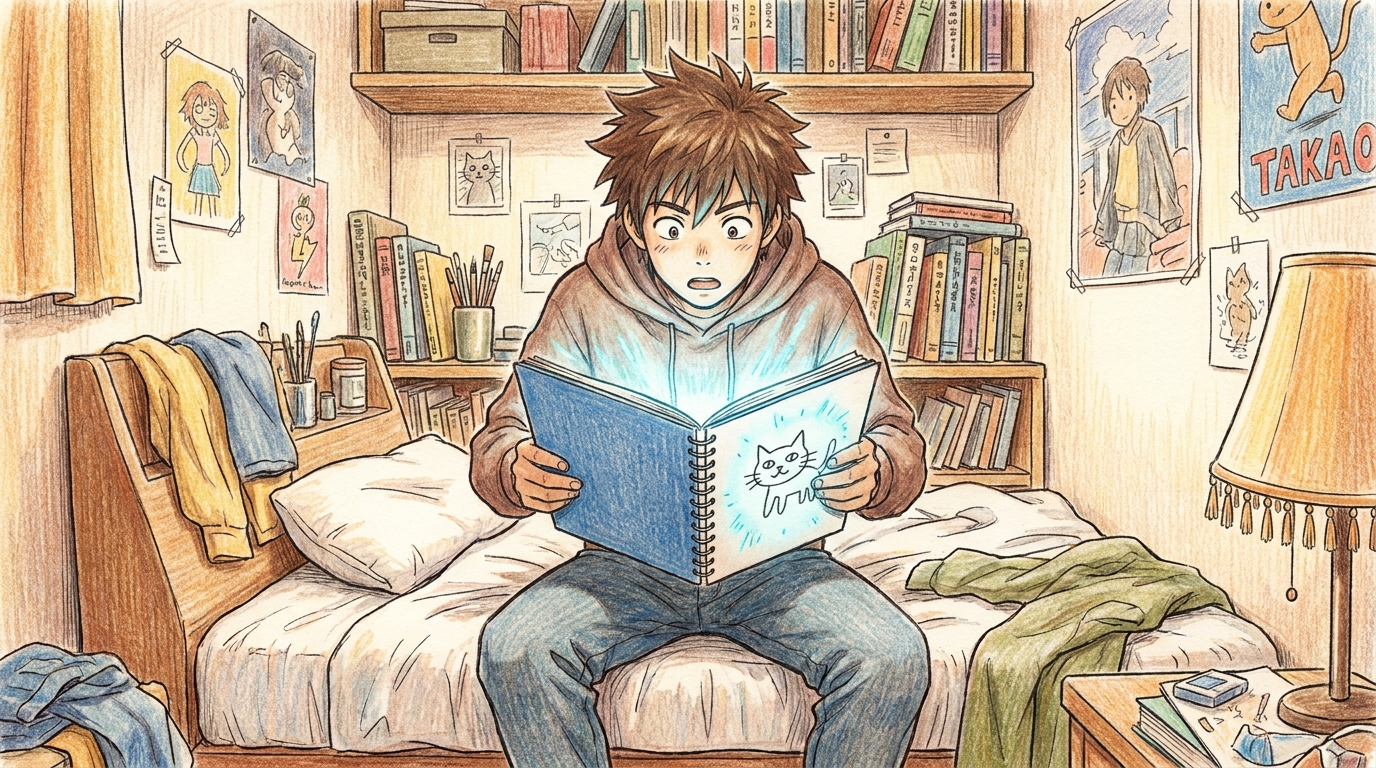
The next day, Takao flips through his drawings and finds one he didn’t make: a cat sprawled across sharp city towers, paw on a child’s head. He asks Mina and Sora if either played a trick. Both look scared. The cat’s tag spells a name none of them know.
Pieces add up strange. Mina dreams about the umbrella woman, and when she walks through early haze she finds a single silver pin on the dirt—it matches the pin the stranger wore. After school, Sora waits at Takao’s gate and tells him the power went out last night, but not at Sora’s house. ‘I felt shapes passing,’ Sora says, voice raw. ‘I locked the doors and it didn’t help. Are you scared?’
Takao swallows, stands still. ‘Mostly I feel guilty. Like someone left open a gate and I let it stay swinging.’ Mina tries to comfort the group with sweet buns, passing them around, but her own hands shake.
Then comes the turn. A rusted van parks on the curb at dusk and the kids spot a child slipping out. She is calling for a cat none can see, waving a photo they saw sketched in the hidden page. She walks directly beneath the wires, shouts, ‘Did you grab his bell?’ Her English is slow—none reply, but Takao presses the red button on his recorder just in case before running over. Would you?
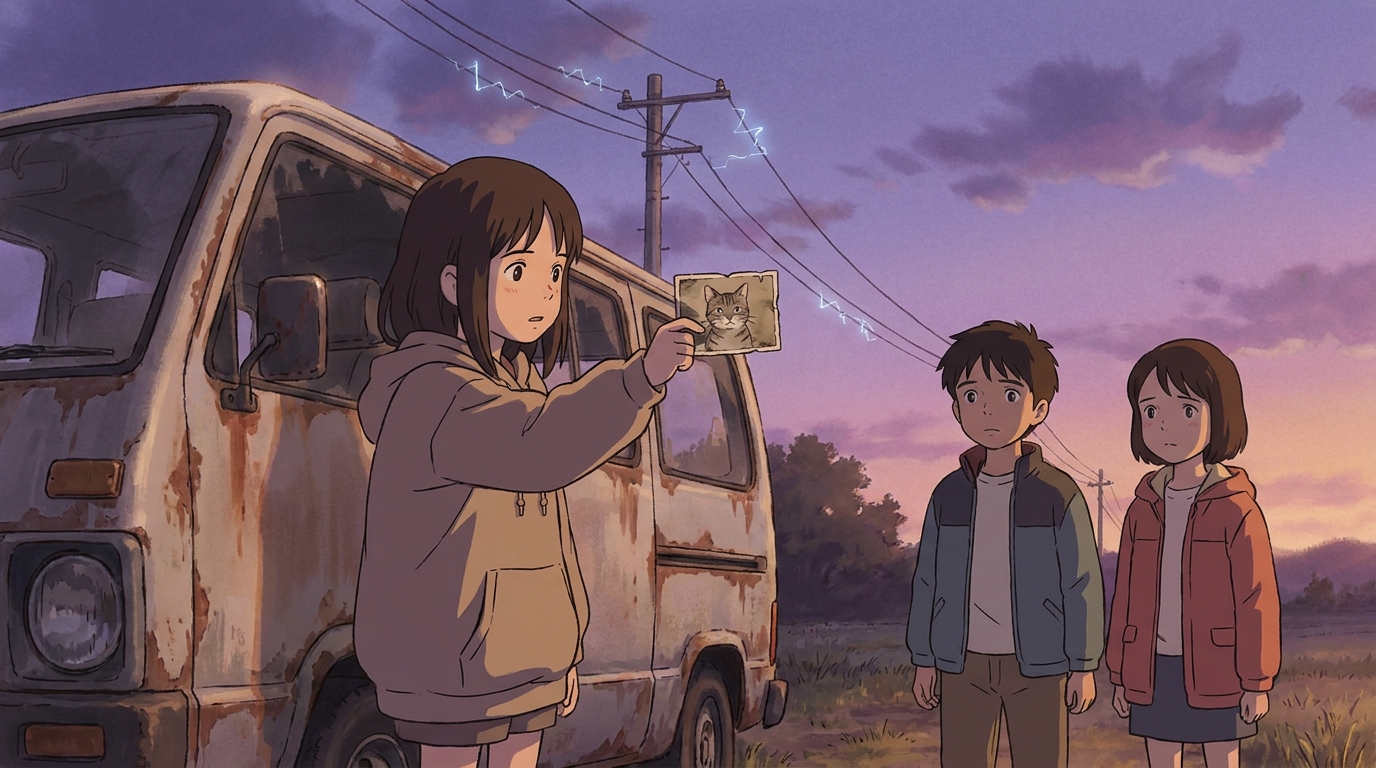
The girl, Jun, explains she visits Kitanami every ten years to find what she’s lost. ‘Memories rot if not aired out,’ she says. ‘That’s why every place feels different at sunset.’ Her story is clear, or perhaps just new. She asks to join the game.
They form a council by dark. Each brings out an item—a sketch, a jar, the glow of Sora’s old phone. Down the road, subtle figures—heavy coiled shapes—move in and out of the corner of vision. One old wire strums like a drawn bowstring, humming air signals to raw skin.
Takao listens closest but hears instead a croak: ‘shares count, memories lose only if no one tries to keep them alive.’ Mina records with her phone by now. Sora nods silent, and even Jun shivers in dim light, clutching the cat’s photo like it’s driftwood on stormwater.
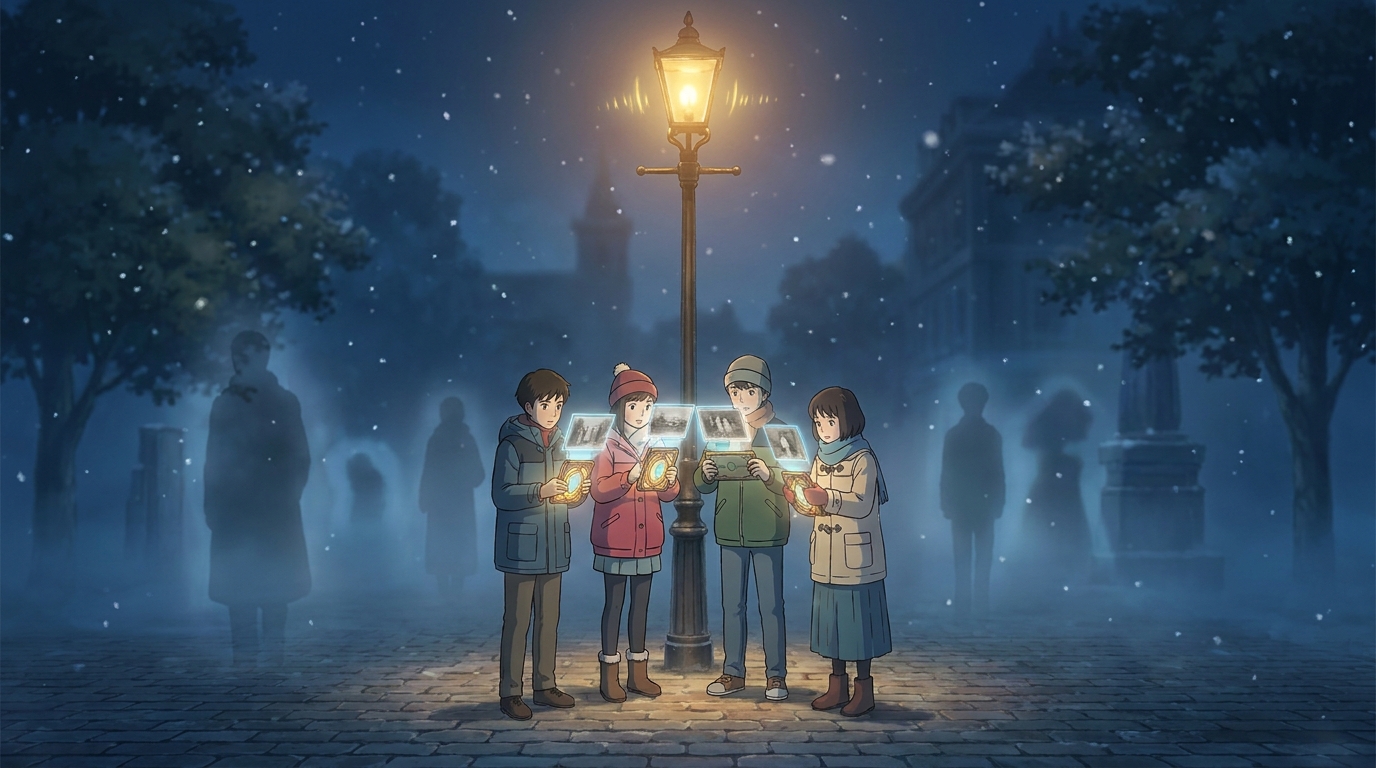
Before the episode bends to close, every glass, phone, sketchbook, and tape blurs over with moving shapes and private voices just out of reach. The van is gone when they look up—the string-light pieces from the cat’s tag remain. The child Jun hints: ‘We can learn who lost what. If tomorrow comes, are you in?’
An echo pulses through the ground, waking dogs far up the hill. If you sat by closing wires, would you have the nerve to stay for what comes next?
The textures of hope and loss tangle quietly, but it’s clear—the real game has just begun.