
Prologue to Madness
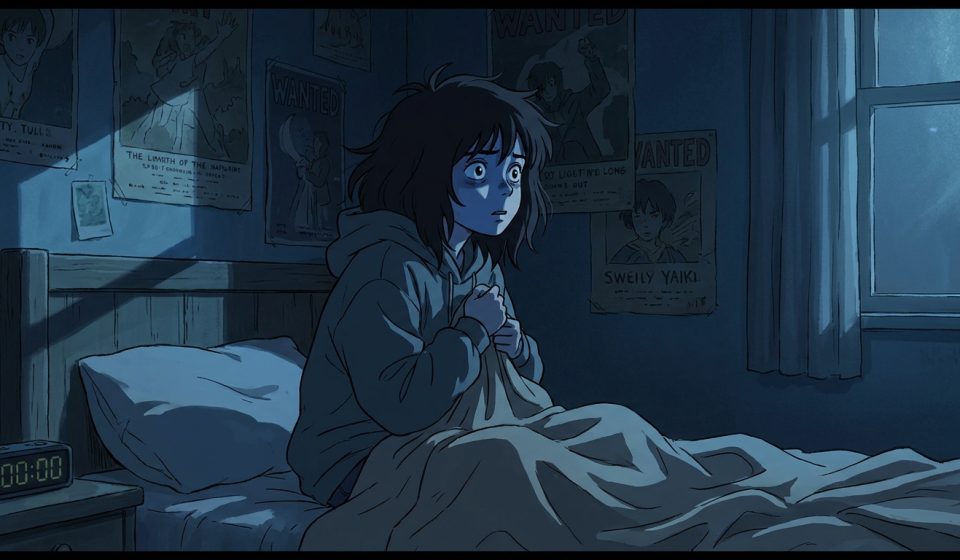
Ayumu Saeki’s world stops when she wakes at midnight. It happens often. But this time, her room glows a cold blue, and she hears whispers behind her walls. There is no sound. There’s only her pounding heart. ‘Is someone there?’ she calls out. No answer.
Once, sleep used to be simple. Now, Ayumu writes down the words she remembers from the voices. It’s her third night doing so. All that appears: numbers scrawled backward, and her own name spelled wrong. Can pain echo inside dreams?
Next door, her brother Ren mutters in his sleep. Some nights, he says strangers’ names. He claims he draws faces for people who died, smiles tight like string about to snap. “It doesn’t look like you,” he says, holding old photos up to the mirror, unsure who’s reflected.
The First Clue
At school, Ayumu zones out in class, ink running on her worksheet. Her best friend Shun watches her closely. “You’re here, but you’re not. Talk to me, Ayu. You look through me, not at me.” She shrugs it off. Later, she asks, “What if you woke up and things were only a little wrong—would you believe it, or keep acting normal?” Do you ever get that sense?
That night, the whispers grow louder. Ayumu stands. She tiptoes into her living room, spots tiny handprints smudged on the inside of the glass door. She rubs hard, but the marks don’t go away. 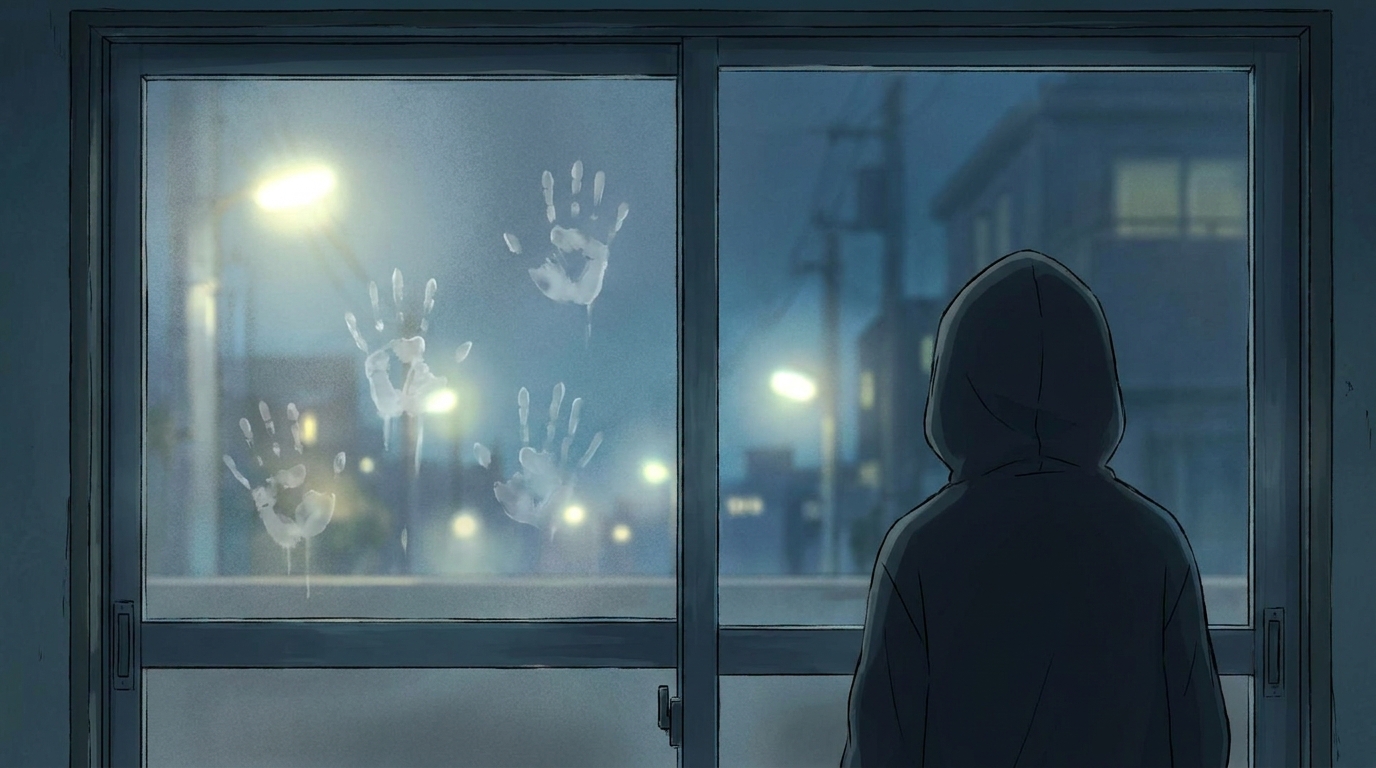
Sliding Masks
Time blurs. Sometimes Ren seems hostile, then childlike, hiding beneath his desk, flinching from sudden sounds. Once, he shows Ayumu a small porcelain mask half-buried beneath his pillow. “She left it,” he explains, voice brittle, “You won’t see her unless she wants you to.”
Ayumu’s sense of self grows thin. In history class, the teacher locks eyes with her. “Transformation always starts so gentle,” he says, lips barely moving, eyes like pit traps. Did she just imagine that? Who are you in your own story?
On the walk home, Shun spots a shape moving in Ayumu’s window. He doesn’t say anything right away. Curious, he breathes, “Was that Ren, or someone else?”
Ayumu finds another message on her wall, painted in water: “RAWSIHT EVIG”. It soaks through, drips down, but doesn’t smear when she touches it. What does it mean? She asks herself twice.
Labyrinths Within
Night time again. Ayumu hides in her closet, notebook in hand, writing what she hears. Now the voices repeat her own thoughts at different pitches. ‘They see you,’ echoes twice, one high, one low. She closes her eyes.
This night, Ayumu locks her door, but something slides behind it anyhow. Time becomes a spiral. When she looks into the hall mirror, someone else blinks back—a small girl, mouth sewn, sobbing with open eyes. Ayumu’s hands grow cold. Do you ever peek when you shouldn’t, just in case?
The girl in the glass starts to move ‘her’ mouth. The sound doesn’t match the sharpened lips: ‘Find me, or become me.’ Then the figure is gone.
Theories and Doubt
Next morning, Shun finds Ayumu on the lawn. She’s covered with grey dust. He runs to her, shakes awake her panic, but her stare is flat. Police lights in the street spark nervous chatter. The neighbors claim their garden gnomes vanished. But no one else seems to notice the whispers in daylight except her. Someone, somewhere, is watching. Ever felt that kind of paranoia?
Shun digs. He reads Ayumu’s notebook beside her. Patterns emerge in ramblings: her dreams all circle staircases, the same number over and over—2413. Six faces, always blurred, mouthless except for one, eyes too bright in a patch of shade.
Desperate to help, Shun asks his sister Towa (a medical student). Towa listens, methodical. “If every symptom fits, call a specialist,” she says, eyebrows pinched. But deep inside, Towa too wakes to hear phantom steps in her dorm. Coincidence?
Broken Memories
That Sunday, Ren disappears mid-afternoon, lost between stores on a crowded street. Ayumu can’t recall when she last saw his real smile. Her pulse races. The next time she returns home, he’s standing at the stove, eyes wide, burning toast charcoal. “She told me to wait,” he says.
Boxes in Ren’s closet hide random masks. Animal faces, blank white shells—they seem hand-painted. Ayumu touches each, feels a short jolt behind every eye. She picks the one with a red slash across the jawline. Nothing happens. Yet, she senses herself wanting to put it on.
Ayumu begs her mother Mika for family stories. The woman laughs, shaken. Half her tales double back, trapdoors hinged on missing weeks, blurred old faces in their albums. Mika keeps calling Ayumu by a wrong name all evening.
Research Spiral
That night’s online spiral finds researchers arguing about shared delusions. Forums talk about ‘glass children’, ghost legends, rare mind tests—if you see things others can’t, you’re supposed to look twice and clap. Some users advise to ask the whispers for riddles in return: “What is lost, but can’t be seen?” Ayumu does, in the dark. The voice says back, “What’s left after you forget?” 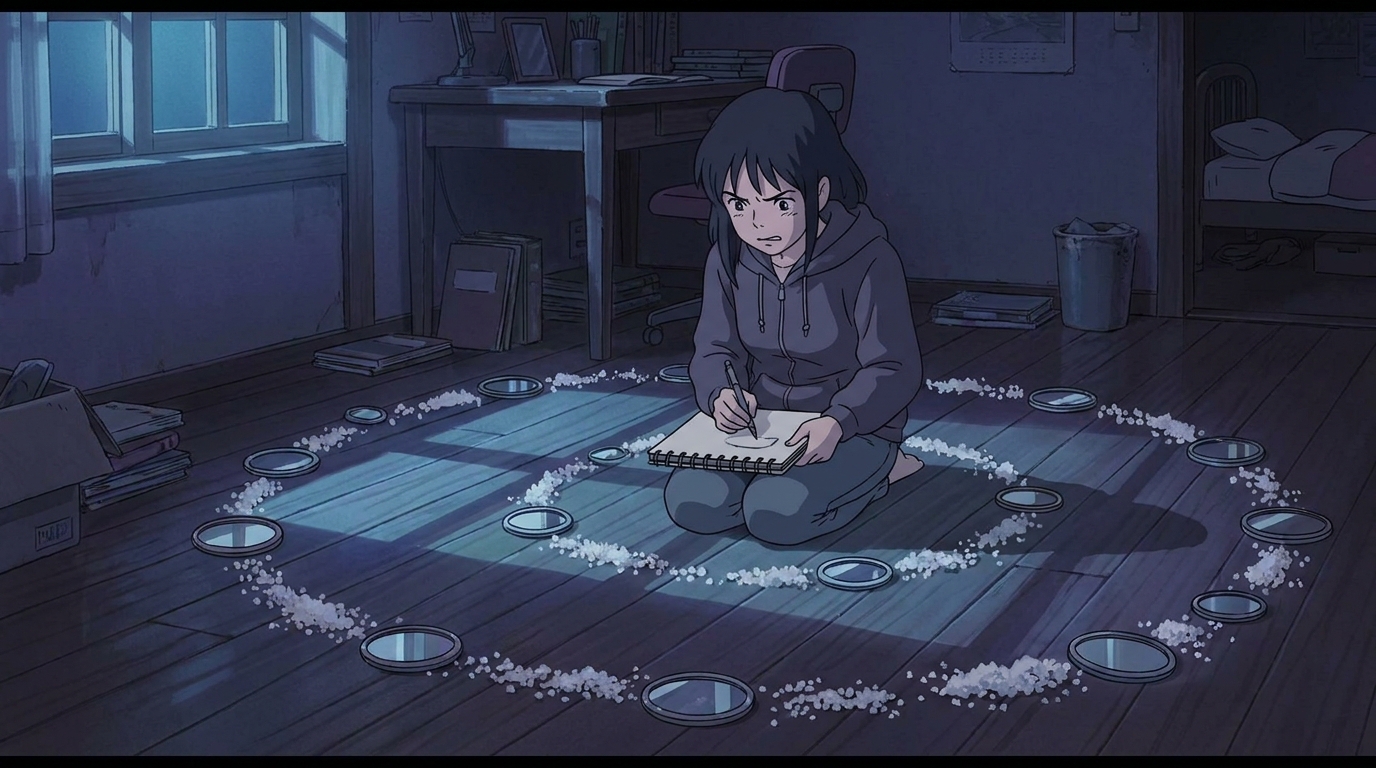
She decides to confront fear. She draws lines of salt across her door, lays mirrors in a spiral shape on the carpet, marker in hand, breath held. It stings her skin to do this at night, alone, when she almost hopes something will answer back. (Would you?)
The Missing Face
For days, Ayumu wears the red-marked mask to bed. Her dreams multiply. Now she wanders near-endless corridors, glass any way she faces, blocks of darkness broken by flickering images—mostly her, but always a different age. Once, she sees Ren at four years old, masked by shadow, crying for someone unseen. Then her own grown reflection: a mouth moving, screaming soundless.
She wakes each time gasping, sweat cold pillow-soaked, voice stuck. It’s hard to keep track of what’s real after that. Shun grows more worried, but Ayumu only shares part of her fear. If you unravel, is it safer to hold close, or let go?
Intersection
Ayumu skips classes, trailing clues downtown. By dusk, a shadow woman mirrors her every move, never caught head-on, but teasing from any reflecting glass. She fails to corner her. (Is there a trick to catching someone who’s always behind you?)
Sunset burns red in old forged windowpanes. In one gas station bathroom, she finds a locked door and scribbles beside a broken sink. It’s another riddle—except this time, it’s her brother’s handwriting. ‘Leave me in glass, and I will follow.’
Which story would you want to believe, standing with your back to a locked mirror?
Breakthrough—or Breakdown?
Next morning, Ayumu faces the mirror at home. She speaks, voice firm for once: “I demand to see the truth; your secret for mine.” The small girl’s shadow appears, lips parted. The light flickers, bulbs dim. “What do you fear most?” the glass voice whispers back.
Ayumu touches the frame. Cold sears down her arm. Flash images fill her mind: her brother’s scream, masks thrown and spinning, faces split open at the mouth. Time slips. Everything floats just two steps beyond sense—you’ve felt that kind of dizziness, haven’t you? 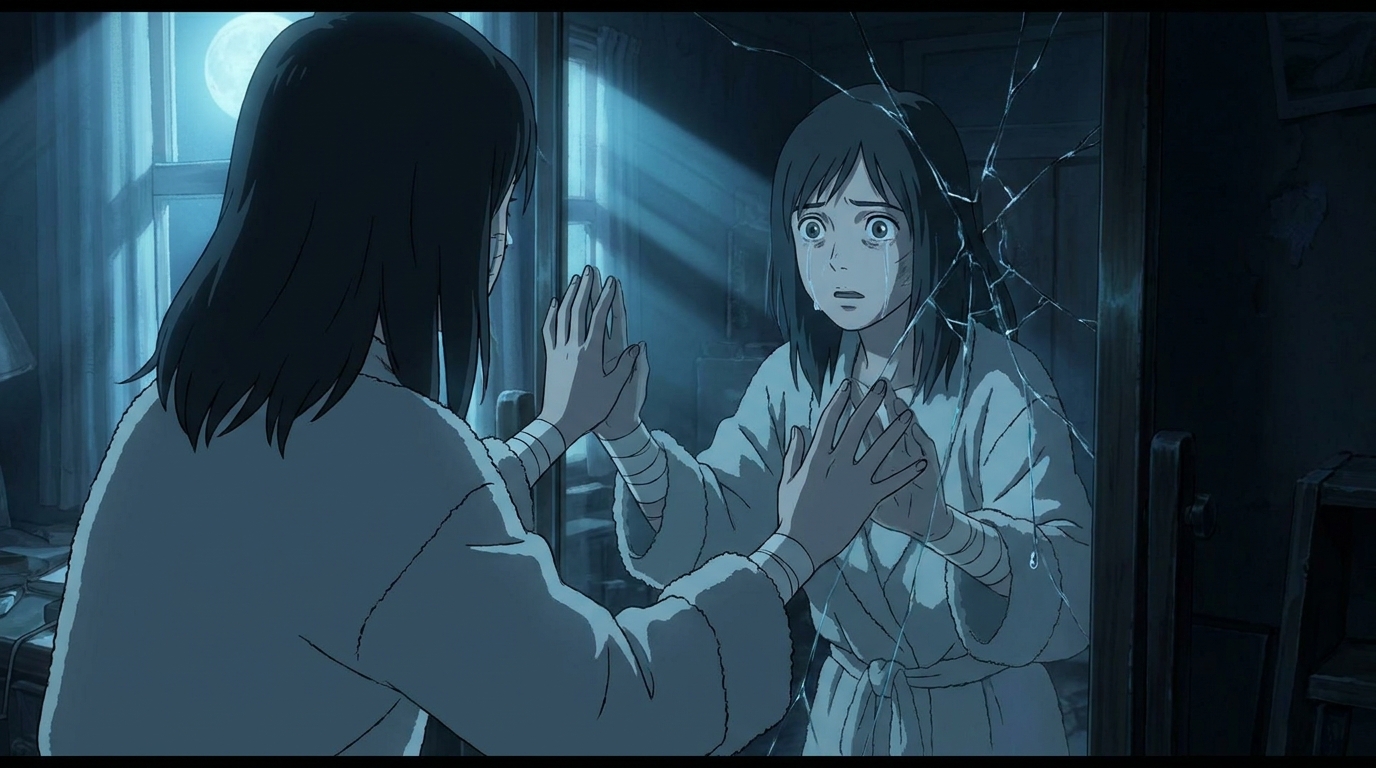
Down the hallway, Ren shrieks her name. The glass girl lunges forward. With a shockwave rattle, the mirror splinters outward—Ayumu stumbles, then vanishes along with her reflection, leaving only salt lines smudged in a wild spiral on the bedroom floor.
Cliffhanger
The house feels empty, though someone sings in the rooms upstairs. Ren drags his arm across the hallway, staring through fragments of glass, muttering Ayumu’s name in a crestfallen drone: “I see you, but you can’t see me.” The voices chase their own echo down black halls.
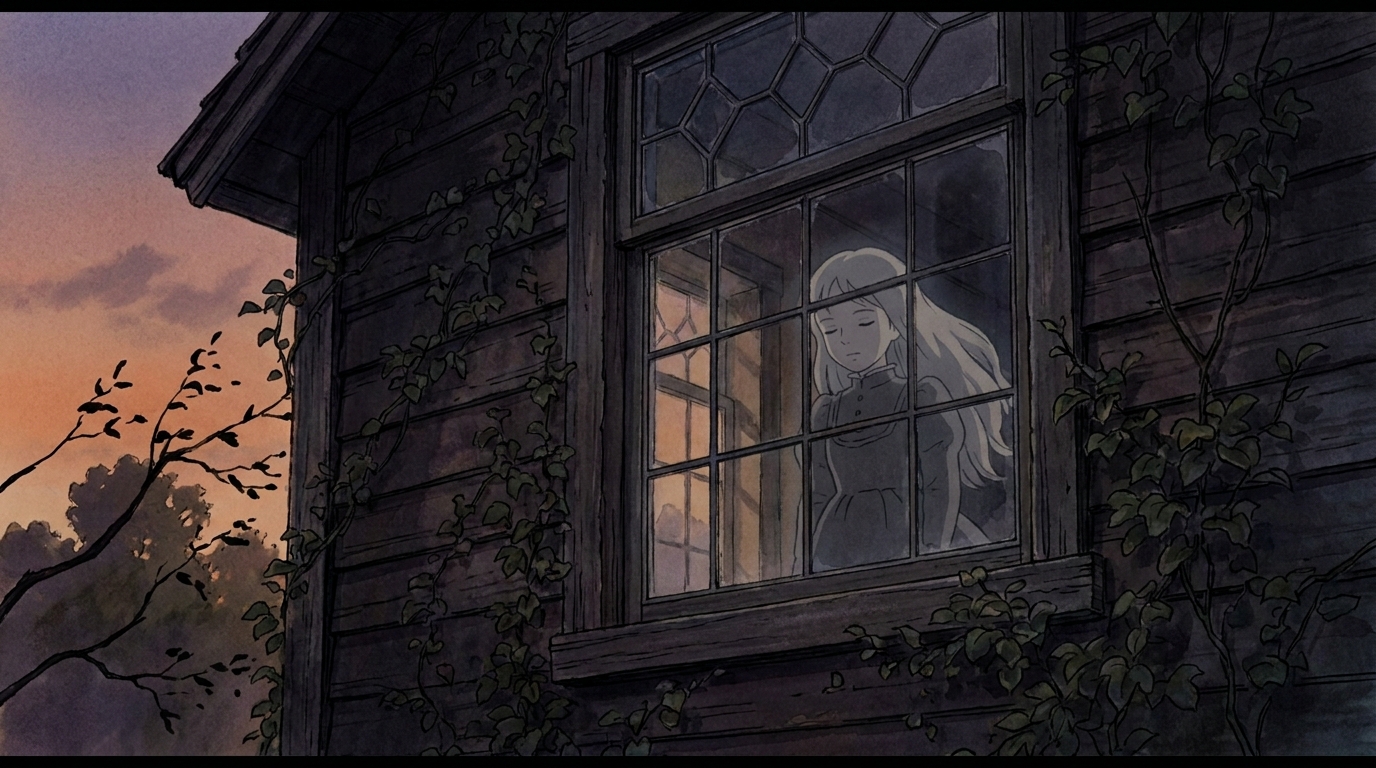
Camera pans up to the window. For a moment, Ayumu’s shape stirs behind the glass, eyes shut, smile bent, page-white. She puts her palm to the inside and mouths a word no one living can seem to say.